
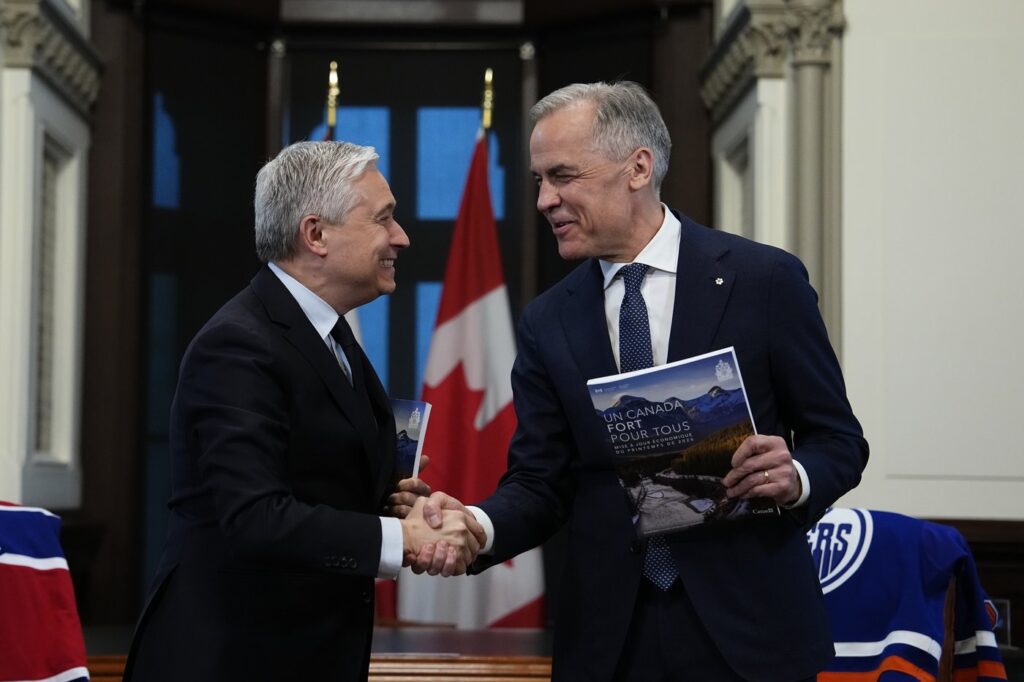
The federal Liberals are preparing for the upcoming Budget 2026, which is set to be tabled on Thursday at 4 p.m. ET under Prime Minister Mark Carney's leadership. This budget is seen as the government's next step toward addressing longstanding economic challenges in Canada.
Budgets not only lay out a government’s expectations for economic growth—including projected spending and borrowing rates—but they also serve as political documents that can initiate new legislation and policy initiatives. As part of Budget 2026, there will be an update on Canada's federal immigration levels plan alongside new spending items.
Following the budget's presentation in the House of Commons, Members of Parliament will engage in debates over the proposed legislation, which may lead to amendments or exclusions over the coming weeks. The Liberal majority government is positioned well to secure approval for the budget.
Under Carney's administration, the Liberals have pledged to enhance productivity, stimulate private investment, and expand infrastructure to help Canadian companies access new markets. The government has framed its increased spending on defense and infrastructure as a response to the trade aggression from the United States and other geopolitical uncertainties. This budget is titled "Maîtres chez nous," which translates to "masters of our destiny," emphasizing the government's goal of securing economic sovereignty.
Analysts expect the federal government to continue accumulating debt, resulting in relatively significant deficits as it seeks to lessen reliance on the U.S. while providing support to industries impacted by tariffs. The annual deficit represents the additional debt that the government incurs in a particular fiscal year to meet its spending obligations. Continuous deficits without a strategic plan for reduction may negatively affect the country’s sovereign credit rating, increasing borrowing costs in the long term.
The parliamentary budget officer has already forecasted that debt-servicing costs will outpace other growing expenses on the government's financial statements. Critics point out that unchecked high debt levels could limit government spending priorities and restrict Canada's ability to respond effectively to future economic shocks. The Liberal government often cites Canada's robust sovereign credit rating compared to other G7 nations as justification for its borrowing plans.
Conservative Leader Pierre Poilievre has been critical of the Liberal government's deficit spending, urging Prime Minister Carney to rein in what he describes as "out-of-control spending." In response, the Liberals have committed to reducing spending on day-to-day operations, ensuring that federal borrowing is directed solely toward capital investments in major projects. Additionally, they aim to lessen deficits as a percentage of the overall economy.
Most financial experts predict that Canada will report slightly reduced deficits in forthcoming years than previously anticipated in the spring economic update. Despite recent spending announcements, heightened global oil prices driven by the conflict in Iran have resulted in increased federal revenues, offsetting some of the expenses.
Observers are keen to see whether the government is embedding permanently high costs into its fiscal outlook, particularly in the context of Budget 2026. Analysts from the Institute of Fiscal Studies and Democracy at the University of Ottawa have emphasized the need for Ottawa to clarify how its elevated borrowing levels will yield tangible economic benefits.
A primary focus of the Liberal strategy is to attract more private investment from both domestic and international sources. Business leaders have been vocal about the necessity for tax reforms to facilitate these investments. One notable spending initiative announced ahead of the budget is the "productivity mega deduction," which will encourage businesses to invest in new equipment and machinery through significant upfront tax write-offs, costing approximately $36 billion over five years.
In a recent address to business leaders, Finance Minister François-Philippe Champagne indicated that the government also plans to alleviate tax burdens for small- and medium-sized enterprises. He remarked that Budget 2026 aims to transform Canada’s growth model, which has struggled with low productivity levels compared to the United States and other peer countries for over a decade.
Much of the Liberal investment agenda is designed to motivate businesses to enhance their tools for workers, a step that economists widely agree is vital for boosting productivity. Carolyn Rogers, the senior deputy governor of the Bank of Canada, highlighted recent signs of improvement in productivity, yet acknowledged that further work remains to be done.