

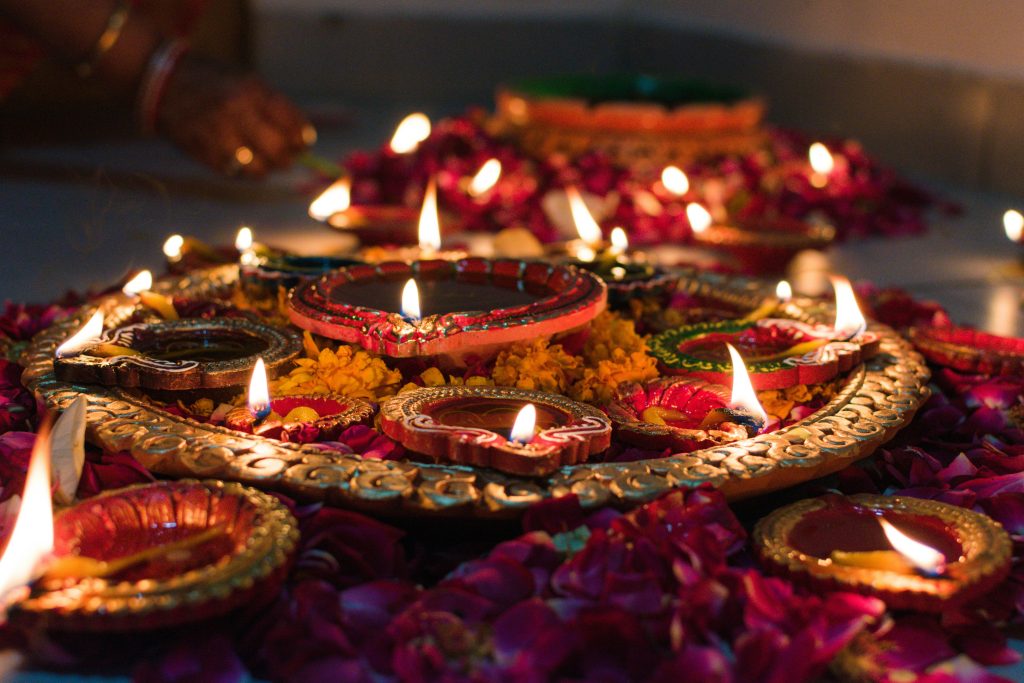
On her first Diwali in Canada, Harminder Grewal made kheer, prayed, and reflected on her family back in India. Having arrived as a new bride in August 1975, she celebrated the Festival of Lights quietly at home with her husband, Surinder Grewal. Recalling that first Diwali, she described how their celebration consisted merely of making kheer and saying prayers, wishing she could share the occasion with family thousands of miles away.
Although a phone call to her family brought her some joy, it was bittersweet given the high cost of international calls — five dollars per minute, as Surinder noted. Fast forward more than five decades, and the landscape of Diwali celebrations in Canada has dramatically changed. Today, families can find a wide variety of traditional sweets, diyas (clay lamps), decorations, and specialty ingredients available at major retailers. Schools and community organizations actively participate in the celebration through activities, performances, and events, showcasing how Diwali has become woven into the fabric of Canadian multiculturalism.
“Diwali means everything to us”
Harminder acknowledges that this transformation was gradual. As she and Surinder became acquainted with other families in Canada, their quiet Diwali gatherings evolved into larger, more communal celebrations. Harminder reminisced about the time when they and friends would work together to create around 100 samosas and various sweets entirely from scratch. Sunanda Sortur, a friend from Karnataka, India, joined the Grewals' celebrations starting in 1996. Their gatherings evolved into learning experiences where they exchanged culinary traditions from their respective regions.
The cultural exchange continues to thrive as evidenced by a recent outing where Harminder and Sunanda were shopping for Diwali supplies. Sortur shared a video of their shopping experience with a friend, who humorously remarked, “Wow, do you live in India or Canada?” This comment illustrates how the commercialization and celebration of Diwali in Canada have reached new heights.
Harminder also has fond memories of incorporating traditional elements into her teaching. She used to bring diyas from India to show her students how to light them authentically. However, she recalls a time when her husband requested to avoid lighting incense sticks at home, worried about possible objections from neighbors. “But now you get everything at stores. It’s amazing,” she said. The evolving norms surrounding the festival reflect the changing dynamics in intercultural appreciation in Canada.
Diwali holds unique significance for different communities: Hindus celebrate it alongside Sikhs who observe Bandi Chhor Divas, and Jains who mark Mahavira Nirvana Diwas. According to Statistics Canada, the 2021 census recorded approximately 828,000 Hindus, 772,000 Sikhs, and 8,300 Jains residing in the country. Public recognition of Diwali has manifested in many ways; for instance, in 2017, Canada Post and India Post collaborated on a series of Diwali stamps unveiled at Toronto City Hall, and since 2020, Canada Post has continued to release Diwali-themed stamps annually.
Major retailers have also noted the growing market for Diwali products. For example, over half of Walmart Canada's stores were stocked with Diwali items by 2025, encompassing food, décor, clothing, and gifts. TD Bank even marketed a one-gram gold bar specifically for Diwali in 2026, tying into the Dhanteras tradition of purchasing precious metals as a symbol of prosperity.
For newcomers, finding familiar items enables the preservation of cherished family traditions despite being far from their homeland. Schools lighting diyas offer children a chance to express their cultural heritage. Retailers benefit from seasonal spending, while community events provide opportunities for neighbors to engage with one another's celebrations and customs. For the Grewal family, the connection to their roots remains strong, demonstrated by their family's custom of lighting a diya at their home in India every Diwali, even though it stands empty. Surinder poignantly remarked, “Diwali means everything to us.”








