
The Carney government has announced a significant commitment to eradicate homelessness in Canada over the next decade, as articulated in the recently unveiled 2026 budget. This ambitious plan allocates a substantial $11.2 billion to address homelessness over the next four years, initiating the funding in the upcoming year, and an impressive total of $17.8 billion available over a ten-year period.
According to the federal government, the strategy aims to "create the conditions to end homelessness" by establishing a new fund that will support various projects focused on health, addiction, and social support services. Finance Minister François-Philippe Champagne emphasized this commitment, labeling it one of the government's "flagship" policies designed to provide comprehensive solutions for individuals experiencing homelessness.
In the budget document, officials highlight their dedication to transforming how Canada approaches homelessness and supports individuals without stable housing. "Every Canadian should have the security of a warm home," the document asserts, framing the initiative as a collective appeal for action from all levels of government, Indigenous entities, the private sector, and the not-for-profit sector to collaborate toward achieving this important goal.
The budget outlines plans to facilitate the construction of new supportive and transitional housing throughout the nation. The proposal suggests that the federal government will cover capital costs for these housing projects, while provincial and territorial governments will be responsible for ongoing operational expenses and services, such as training, income assistance, and health care support for residents.
Furthermore, the government acknowledges its intention to enter into agreements with provinces and territories before next spring's economic update. This collaborative approach is seen as essential to harness the resources and expertise required to maximize the impact of the funding allocated to tackle homelessness.
In addition to addressing homelessness, the federal spending plan also emphasizes the expansion of non-market housing options, with a goal of constructing 200,000 new homes across Canada over the next decade. This strategy includes a dedicated commitment of $2 billion to build new community mental health and addiction facilities and ongoing support for programs focused on preventing veterans' homelessness.
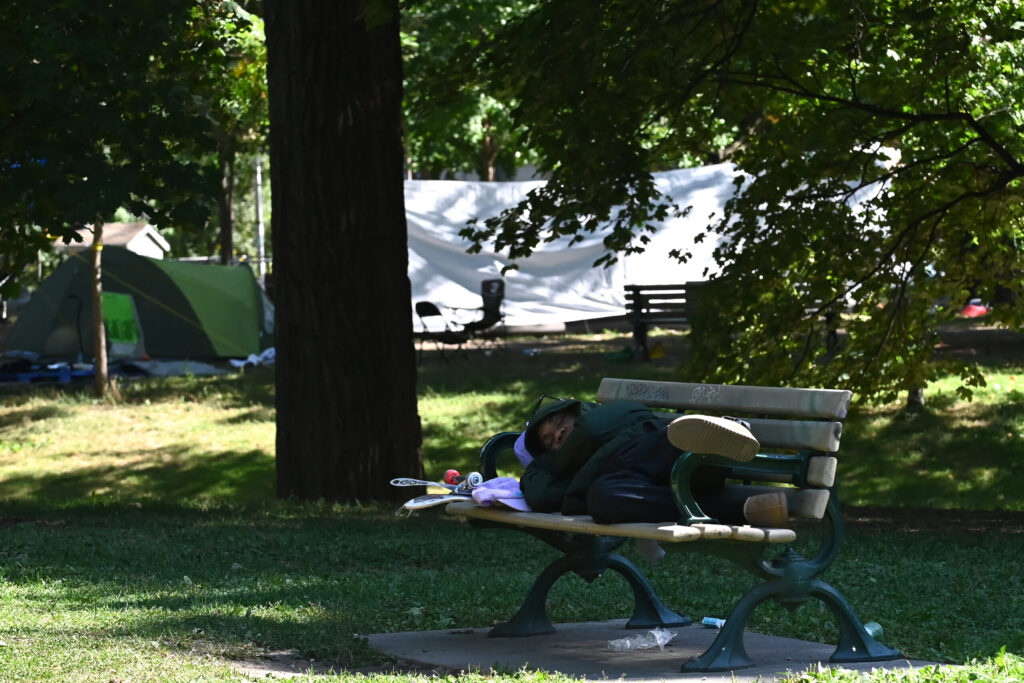
Recent statistics underscore the severity of the homelessness crisis in Canada, with an estimated 65,000 individuals reported as experiencing homelessness in a federal count conducted in 2025. Moreover, a study by Statistics Canada in 2022 revealed that nearly one in eight households has faced some form of homelessness at some point in their lives. Alarmingly, the situation is particularly dire for Indigenous populations, where the rate of homelessness surpasses one in four households.
Overall, the Carney government's comprehensive approach, combining extensive financial commitments with collaborative partnerships, aims to address the complex issues surrounding homelessness in Canada effectively. By focusing on supportive housing, health services, and broader housing initiatives, the government aspires to create a future where stable, secure housing is accessible to all Canadians.