
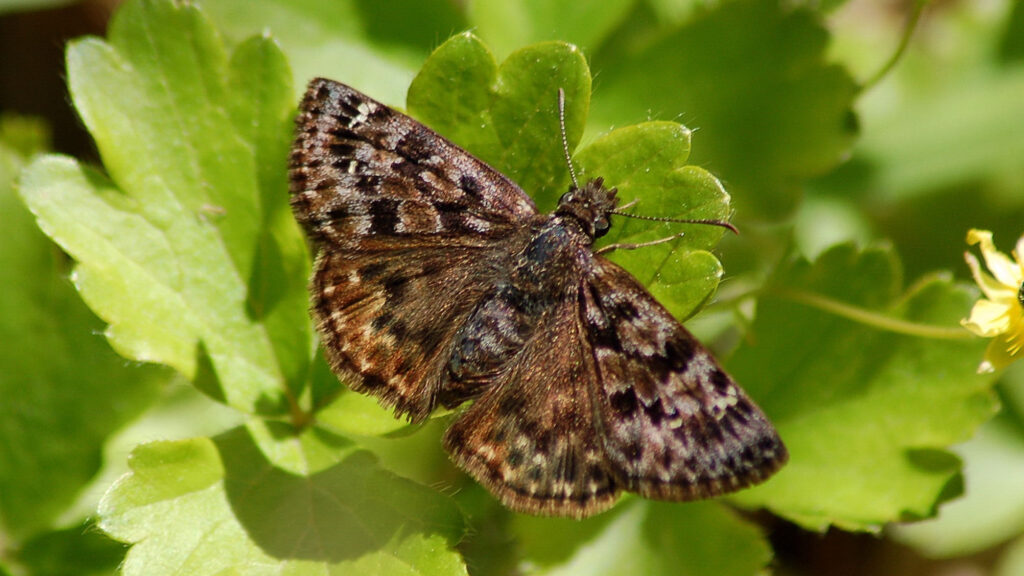
The frosted elfin butterfly, notable for its delicate wings and brown color, has not been sighted in Ontario since 1988. Despite numerous surveys since then, including one conducted in 2019, the small, non-migratory butterfly has remained elusive for nearly 40 years, as reported by the Committee on the Status of Endangered Wildlife in Canada.
A team of Canadian scientists is now undertaking a project aimed at reintroducing this extirpated species to the northern shores of Lake Erie in Norfolk County, an area it once called home. Extirpation refers to a species disappearing from a specific geographic region or habitat, which in this case, relates directly to the frosted elfin butterfly's absence from Ontario.
Ryan Norris, a professor at the University of Guelph’s Department of Integrative Biology, has outlined plans for the team to import frosted elfin butterflies and their eggs from New York. The plan involves breeding these butterflies at the Cambridge Butterfly Conservatory, with a goal to release them into the wild in the spring of 2024, specifically in Port Rowan, located southeast of London, Ontario.
According to Norris, many of the habitats in the area have been restored. Former tobacco fields have now transformed into thriving oak savanna habitats, which provide suitable conditions for the reintroduction of the frosted elfin butterfly. Furthermore, he notes that habitat loss, primarily due to urban development and agricultural expansion, was a significant factor contributing to the butterfly's extirpation.
Norris stated, “We’ve destroyed things in the past, and in some cases we have, for some habitat types, very little left of it, and it used to be much more abundant in places like southern Ontario.” He emphasized the importance of ensuring a sufficient population of wild sundial lupins, the frosted elfin's host plant, before the breeding process can begin.
This project aligns with a broader national effort involving universities, conservation organizations, and government agencies, targeting the conservation of three endangered butterfly species: the frosted elfin, the mottled duskywing, and the curiously isolated hairstreak. The University of Guelph has indicated that coordinating the recovery of these three at-risk species will establish Canada’s first multi-species framework for insect conservation.
The government has allocated $2.4 million in funding to support this initiative. As part of the ongoing conservation efforts, the mottled duskywing—characterized by its dark grey and brown coloring—was reintroduced at Pinery Provincial Park in Grand Bend, Ontario, and in other protected areas in Norfolk County five years ago. Norris reports impressive results, with the population of mottled duskywings hitting several hundred at the Pinery site, nearly 100 at another location, and even expanding to other non-monitored sites.
Norris explained that these successful reintroductions have provided the mottled duskywing with a foothold, offering a chance for long-term persistence in Ontario. The project also seeks to bolster the population of the rare curiously isolated hairstreak butterfly, which is currently found only in Waterton Lakes National Park in southern Alberta. Scientists are exploring options for reintroducing this species in other suitable locations or augmenting the existing population at its current habitat.
The restoration of habitats is deemed essential for the long-term viability of all three butterfly species. Norris cautioned that having the butterfly population concentrated in a single site poses risks if natural disasters were to affect that area. He stated, “I think our hope is if you kind of introduce it into an area that has suitable habitats surrounding it, that they’ll colonize those areas themselves. That’s when you start to get into long-term stability.”
Butterflies play crucial roles as pollinators and serve as important food sources for various animals, making their presence vital to maintaining healthy ecosystems. Norris highlighted that assisting in the revival of butterflies equates to restoring and rewilding Canadian landscapes, a task he finds immensely symbolic.