
The final day of voting for the midterm elections in 2022 arrived amid uncertainty as President Donald Trump attempted to interfere with election processes and cast doubt on potential outcomes, particularly should Republicans face defeat. Early voting turnout had been significantly higher than the previous midterm elections, with millions already having cast their ballots. Despite the president's ongoing rhetoric about election fraud, reports indicated that voting proceeded with relatively few issues.
Throughout the election season, Trump leveraged the power of his presidency with the goal of influencing election outcomes that would determine his party's control of Congress. His administration's Departments of Justice and Homeland Security engaged in efforts to identify non-U.S. citizens participating in elections, including a high-profile operation resulting in over two dozen arrests in California. Moreover, the Department of Justice planned its largest-ever accountability measures for polling sites on Election Day, while Democrats and their allies organized their own extensive monitoring efforts and even filed lawsuits to halt certification of election results in certain states if they did not favor Republicans.
Trump's continuous claims regarding widespread voter fraud sparked preemptive actions from election officials and Democratic groups, who prepared for various scenarios including potential immigration enforcement at polling places or federal officers seizing voting machines. Although Trump's administration claimed no armed federal officials would be present at the polls, tensions remained. Leading up to Election Day, concerns that Democrats held had not materialized, with numerous legal challenges from the Trump administration largely rejected by the courts. Notably, the U.S. Supreme Court dismissed a last-minute appeal aiming to invalidate thousands of ballots cast in California during the search for noncitizen voters.
The Justice Department’s actions thus far had highlighted a broader reality showing that noncitizen voting instances are exceedingly rare, despite the administration's previous assertions. Recent legal failures for the Trump administration included a Supreme Court ruling that blocked his attempt to restrict mail-in voting through modifications to postal operations. This legal loss further underscored the difficulty Trump faced in altering established practices surrounding federal elections, which are primarily governed by states.
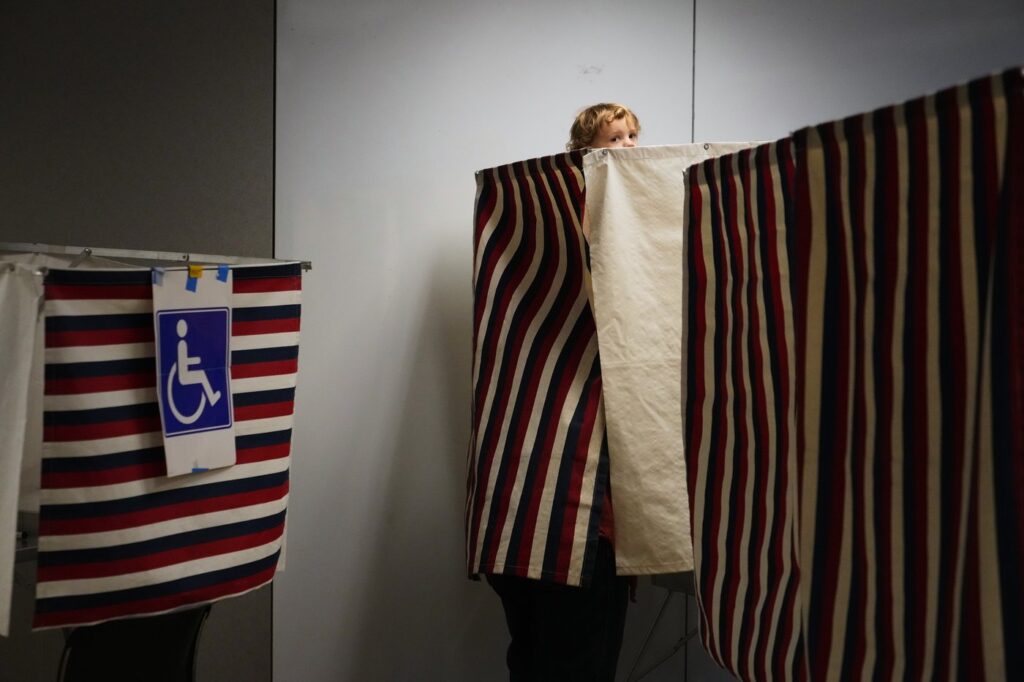
On Election Day itself, polling began across several states, including Connecticut, Indiana, and New Jersey, at 6 a.m. Some voters, however, faced challenges due to severe weather conditions, particularly rain and flood warnings affecting parts of Colorado, Arizona, and New Mexico. While election officials primarily planned to maintain existing polling locations, additional modifications may occur as they monitor weather-related developments.
Election administrators and advocates prompted voters to address potential postal service delays by recommending that late absentee ballots be returned to polling places in person rather than relying on mail delivery. This caution stemmed from previous instances in the primaries, where delays resulted in tens of thousands of voters being disenfranchised due to issues with postmarking ballots. The complications surrounding elections extended beyond logistics; legal tensions between the Trump administration and various voting rights groups, along with Democratic officials, resulted in a series of legal disputes over allegations surrounding noncitizen voting and election monitoring.
As Election Day approached, it became clear that Trump’s legal maneuvers seemed increasingly unlikely to gain traction in the courts. His ongoing narrative questioning the legitimacy of the election became evident when he responded ambiguously to inquiries about accepting the election results, stating, "I will if they are honest." This continued uncertainty further complicated the election atmosphere as officials prepared for an eventful day filled with both voting and complex legal ramifications.