
Democrats achieved a significant victory in the U.S. Senate during the midterm elections, marking a decisive rejection of Republican governance under President Donald Trump. As ballots were counted, it became clear that voters expressed a strong dissatisfaction with issues such as rising prices, the ongoing war in Iran, and governmental corruption. Following this electoral success, Democrats were also set to regain control of the House, flipping seats in various states across the nation.
The election outcomes were a severe setback for Trump, who had embarked on an extensive campaign tour across approximately two dozen states in the lead-up to the elections. Despite his efforts to galvanize Republican voters, the results indicated an overwhelming Democratic wave. With this newfound control, Democrats signaled intentions to conduct numerous investigations into Trump's administration, particularly focusing on how he has benefited financially from his time in office.
In response to the election results, Trump attempted to distance himself from the Republican losses, stating on his social media platform that he was not on the ballot, despite previously urging voters to view the election as a referendum on his leadership. He expressed his determination to veto any legislation passed by the Democrat-controlled Congress, showcasing a red baseball cap emblazoned with the word “veto” in a style reminiscent of his popular campaign merchandise.
In an interview with Fox News, Trump dismissed the idea that the election was a personal defeat, attributing the results to voter dissatisfaction with the candidates rather than his own policies. Historically, the Republican-controlled Congress had supported much of Trump's agenda; thus, the Democratic control of one chamber of Congress is expected to lead to significant changes in the political landscape for the remainder of his term.
Democrats Chart Extraordinary Path to Senate Victory
Typically, midterm elections pose challenges for the president's party. However, Republicans initially believed their Senate majority was secure. Contrarily, Democrats managed to secure wins in some of the most conservative states across the nation. For instance, Josh Turek defeated Republican Rep. Ashley Hinson in Iowa, while Adam Hamilton ousted incumbent Sen. Roger Marshall in Kansas, marking a historic first for the Democratic Party in the state since 1932.
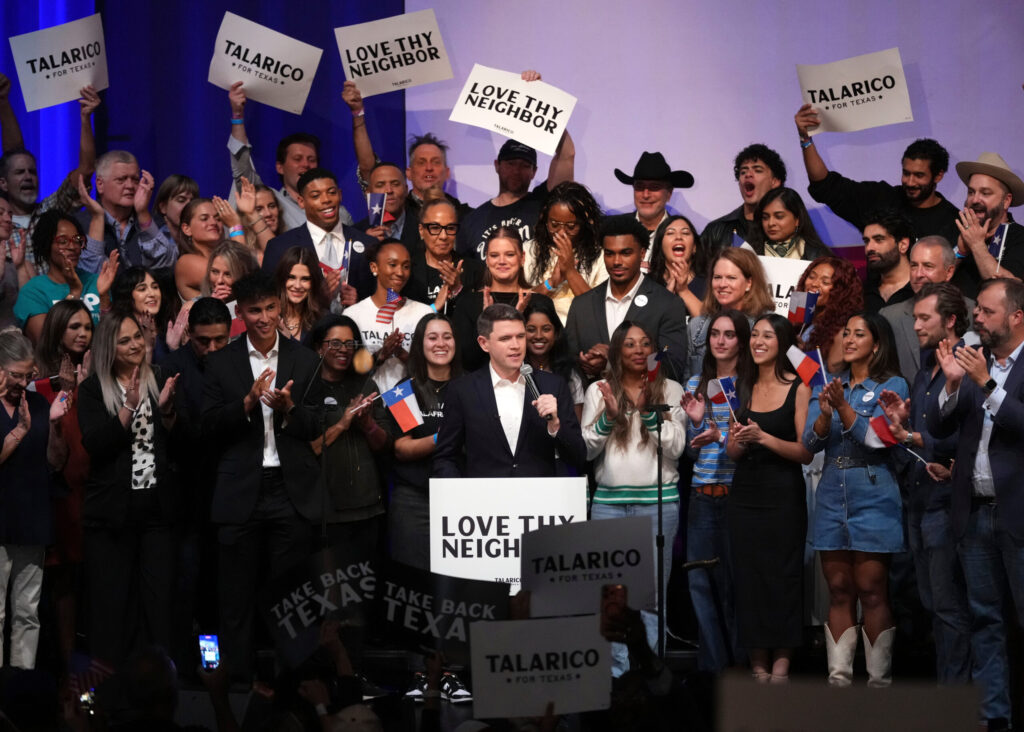
Other notable victories included James Talarico defeating Ken Paxton in Texas and Annie Andrews defeating Darline Graham in South Carolina. Sherrod Brown emerged victorious against Sen. Jon Husted in Ohio, and Roy Cooper claimed an open seat in North Carolina. Democratic Sen. Jon Ossoff successfully won reelection in Georgia against Rep. Mike Collins, and Rep. Chris Pappas triumphed over former Sen. John Sununu in New Hampshire.
Democratic Leader Chuck Schumer announced to reporters that Americans voted for change, claiming a "generational remake of the Senate map." He assured the public that "relief is on the way." In the House elections, Democrats were inching closer to gaining control, with significant defeats for Republican members, including Rep. Tom Kean of New Jersey, who faced personal health challenges and missed several votes prior to the election.
Even as Republicans invested substantial resources into targeted districts, the Democratic tide remained strong. Sen. Ashley Moody was one of the few Republicans to secure her seat in a special election in Florida, succeeding Marco Rubio, who accepted a position as Trump’s secretary of state in 2025.
Electorate Frustration and Unhappiness
Heading into the elections, the electorate harbored deep dissatisfaction regarding the nation's direction. According to The AP Voter Poll, voters expressed frustration and anger, with approximately three-quarters indicating they felt "angry" or "dissatisfied" with the current state of affairs. This discontent was universal, prevalent even in states that generally lean Republican.
The economy, which had previously boosted Trump’s popularity, is now perceived as faltering, with three-quarters of voters describing it as “not so good” or “poor.” Furthermore, about 80% indicated that inflation has inflicted "severe" or "moderate" financial hardship on their households. Government corruption emerged as another critical concern, with half of the voters citing it as a pivotal reason for their choice in the congressional elections, outranking other issues like immigration, the Iranian conflict, and technological developments.
Despite their victory, the Democratic Party's approval ratings are not significantly more favorable than those of Republicans, with just under half of voters expressing a "somewhat" or "strongly" favorable view of the party. Republican efforts to reshape congressional districts encountered hurdles, as Democrats succeeded in winning critical districts in traditionally Republican-leaning states like Florida and Texas.
Ongoing Elections and Future Implications
As the election results continue to emerge, several Senate battlegrounds remain competitive, including Alaska, where the Trump administration has instigated a lawsuit to prevent the certification of results should Republican incumbent Dan Sullivan lose. Additionally, Michigan’s race is under scrutiny, particularly surrounding the contest between Mike Rogers and progressive candidate Abdul El-Sayed, emphasizing internal party tensions related to Israel and its broader implications.
Meanwhile, the gubernatorial races saw significant wins for Democrats in states like Pennsylvania, Illinois, Maryland, Massachusetts, and New York. A stunning upset occurred in Texas, where Gina Hinojosa defeated incumbent Republican Gov. Greg Abbott. Ohio features a noteworthy race as well, with Republican Vivek Ramaswamy losing to Democrat Amy Acton amidst controversies surrounding his campaign.
In Georgia, Democrat Keisha Lance Bottoms became the first Black female governor of any state, while in Florida, Byron Donalds made history as the first Black Republican governor. House Democratic Leader Hakeem Jeffries from New York stands poised to potentially become the first Black Speaker of the House, should his party maintain control, emphasizing a legislative agenda concentrated on reducing living costs and intensifying oversight of the Trump administration.
The impressive Democratic performance during the midterm elections could enhance the party's position for the upcoming presidential cycle, potentially complicating the political landscapes for Republican figures like Vice President JD Vance, who may have been aligning themselves closely with Trump for future momentum.