

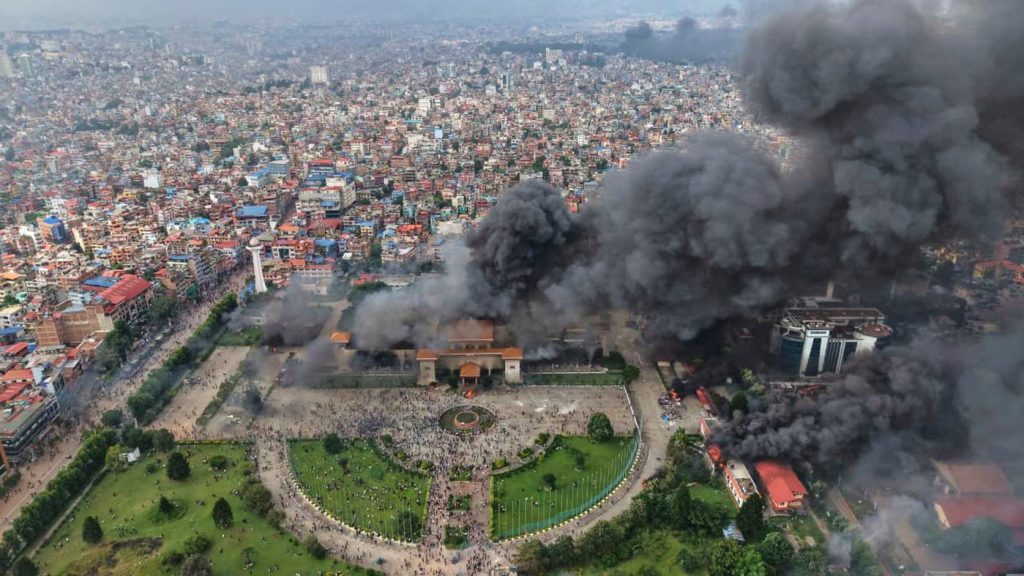
KATHMANDU, Nepal (AP) – A brief ban on social media in Nepal incited violent protests across the capital, leading to significant unrest as demonstrators clashed with authorities. The protests resulted in protesters setting fire to government buildings and residences belonging to political figures, demonstrating widespread frustration with the government's actions. The social media shutdown was ostensibly a measure to control dissent and prevent the organization of protests, but it had the opposite effect, igniting public anger.
Images from the protests depict smoke billowing from the parliament building, the presidential residence, and several key government offices, including the central secretariat where the Prime Minister and essential ministries are located. Notably, the building of Kantipur Publication, the largest media outlet in Nepal, was also damaged and partially torched as part of the protests. These acts of vandalism reflect a deep-seated dissatisfaction among citizens regarding not only the social media ban but also the broader issues of government corruption and mismanagement.
On September 9, 2025, the protests escalated, with demonstrators hurling objects and setting multiple properties ablaze, including vehicles and public structures. Images show the aftermath of the turmoil, with significant destruction evident at key sites like the Singha Durbar, the main government complex, and various local offices. Protesters aimed their anger at symbols of governance, destroying items such as photographs of politicians and setting fire to the residence of Prime Minister Khadga Prasad Oli, highlighting their demand for accountability and reform.
The violence peaked with the setting ablaze of the president's residence, Ram Chandra Poudel, marking a turning point in the demonstrations and serving as a clear message of public discontent. Such extreme measures were indicative of more than mere protest; they reflected a collective cry against perceived governmental oppression and the ongoing issues with corruption that plague the Nepalese political landscape.
In the aftermath of the protests, several buildings were reported to have been vandalized, including the Valley Traffic office and the Nepal Health Ministry building. Local businesses and institutions also bore the brunt of the unrest, such as the Bhatbhatini shopping center, which was left damaged. Photos captured the chaos, showcasing flames rising from not only government properties but also private establishments, reflecting the widespread nature of the unrest.
The series of protests has raised questions about the government's ability to maintain order and address the root causes of the unrest. The violent response to the social media ban and underlying issues emphasizes the fragile state of governance in Nepal and the urgent need for dialogue and reform. The events serve as a stark reminder of the consequences faced by a government that attempts to stifle public discourse by limiting access to communication platforms.
As the protests continue to evolve, the hope for a peaceful resolution and comprehensive reforms in Nepal remains uncertain, with the public's calls for transparency and governmental responsibility growing louder amidst the turmoil.








