

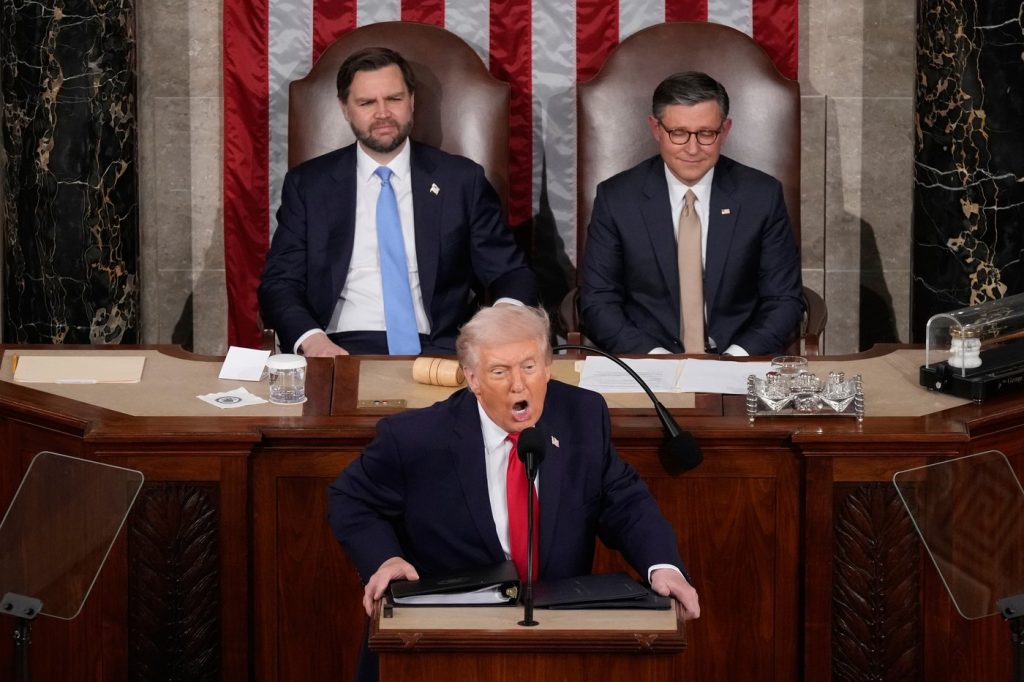
On February 24, 2026, U.S. President Donald Trump delivered a record-breaking 108-minute State of the Union address in Washington, where he defended his controversial immigration policies and global tariffs. The speech occurred at a pivotal moment for the Republican Party, coinciding with rising concerns about voter sentiment ahead of the upcoming midterm elections.
During his address, Trump highlighted various policy changes concerning deportation, the economy, and foreign relations. He aimed to reassure his supporters and party members amidst polling data indicating that issues traditionally considered strengths for him, such as immigration and employment, were losing appeal among independent voters. These independent voters could play a decisive role in the upcoming elections, creating urgency for the Republican Party to regain lost ground.
The performance of Republican members of Congress during the speech indicated a collective solidarity. They engaged actively with Trump’s remarks, frequently standing to applaud him and chanting “U.S.A” as he presented his points. This display of unity reinforced the administration's narrative and its commitment to the policies articulated by Trump.
Despite these efforts, Trump's speech lacked substantial insights or specific plans regarding future policies. Instead, he leaned heavily on assertions about economic improvements, claiming that the economy is on an upswing and that prices are decreasing, even though many Americans may not share this perception in their everyday lives. This disconnect between Trump’s optimistic claims and the sentiments of the general public presents a challenge for his administration as it seeks to appeal to a broader audience.
Additionally, Trump's statements are unlikely to provide the reassurance that both international allies and domestic companies were hoping for in light of recent judicial developments. The U.S. Supreme Court's ruling against Trump's favored tariff strategy last week has raised questions about the stability of trade policies, which could further complicate relations with other nations and impact various sectors of the economy.
Overall, while President Trump aimed to rally his base and reinforce the Republican agenda during his State of the Union address, significant challenges lie ahead as he seeks to navigate the complexities of voter sentiment and the implications of recent court rulings on his administration's trade policies.








