

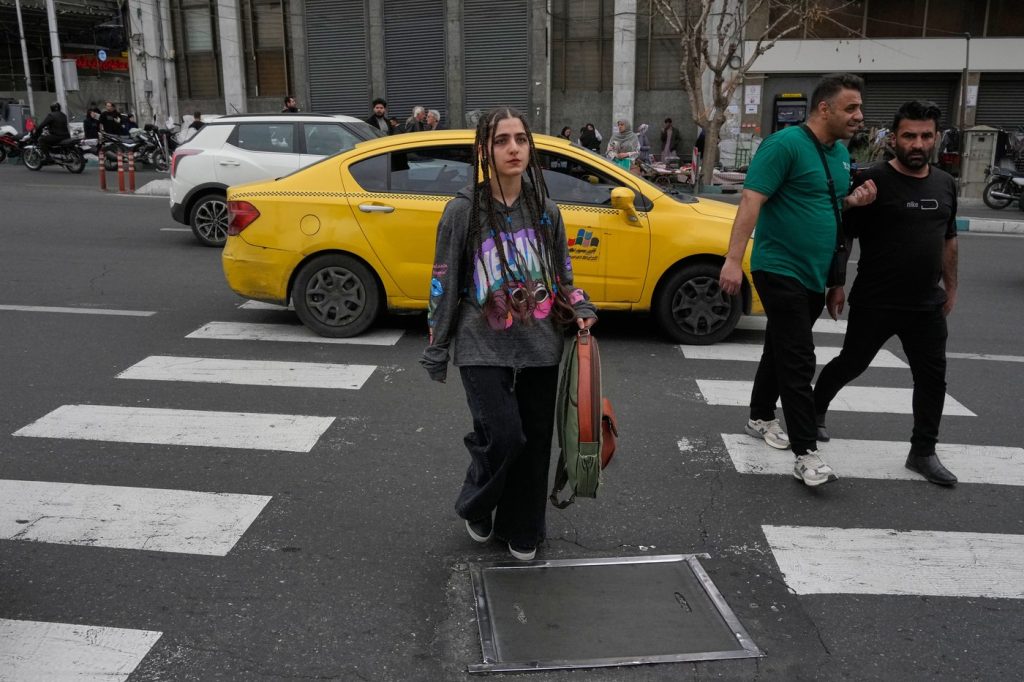
DUBAI, United Arab Emirates (AP) — On Wednesday, Iranian officials articulated strong resistance against U.S. President Donald Trump's pressure tactics in anticipation of crucial talks regarding Tehran's nuclear program in Geneva. They described Trump's remarks as "big lies" while suggesting that negotiations might still lead to an agreement through "honorable diplomacy."
The comments came ahead of Thursday's discussions as the U.S. has mobilized its largest deployment of aircraft and warships to the Middle East in decades. This deployment is a part of Trump's strategy to secure a deal with Iran amid rising dissent in the nation following widespread protests last month.
Trump has consistently warned of military action if negotiations stall, a threat that has raised alarms in the region, particularly as tensions from the prolonged Israel-Hamas conflict remain unresolved. Iranian officials declared that all U.S. military bases in the region would be considered legitimate targets, endangering the safety of thousands of American service members stationed there. Reports indicate that U.S. warships typically based in Bahrain have moved to sea, as per satellite imagery analyzed by the Associated Press.
During his State of the Union speech on Tuesday, Trump addressed Iran, claiming it has developed missiles capable of threatening Europe and U.S. bases globally. He alleged that Iran was intent on restarting its weapons program, particularly involving nuclear arms.
Recent satellite images suggest Iran is working to rebuild its missile production capabilities and improving sites that were previously attacked by the U.S. in June. Tehran has long insisted that its nuclear program is for peaceful purposes. However, Western nations and the International Atomic Energy Agency maintain that Iran pursued a nuclear weapons program until 2003, with enrichment levels reaching up to 60%—a mere technical step from weapons-grade enrichment of 90%.
In response to Trump’s allegations, Iranian Foreign Ministry spokesman Esmail Baghaei drew a parallel between Trump and Joseph Goebbels, the propaganda minister under Adolf Hitler. He accused the Trump administration of engaging in a "disinformation and misinformation campaign" concerning Iran's nuclear and ballistic missile programs.
Trump's assertion of 32,000 deaths during the protests is significantly higher than estimates from various human rights organizations. The U.S.-based Human Rights Activist News Agency has reported more than 7,000 deaths, with many suspecting the true toll is much higher. Iran's government has acknowledged only 3,117 deaths since unrest erupted.
Mohammad Bagher Qalibaf, Iran's Parliament Speaker, warned that the U.S. could choose diplomacy or face potential consequences. He emphasized that if the U.S. engages in respectful dialogue that honors Iranian dignity and mutual interests, Iran would be willing to participate in those discussions. Conversely, he warned that any deception or military action amid negotiations would provoke a strong response from Iran.
The upcoming talks in Geneva mark the third round of negotiations mediated by Oman, a long-standing intermediary between Tehran and the West. However, considerable uncertainty looms over the implications of any failed discussions, particularly relating to military action against Iran. The U.S. has not clarified the objectives of any potential strikes, whether aimed at pressuring Iran into concessions or targeting its leadership, which could lead to a drawn-out military campaign with unpredictable outcomes.
The ambiguity surrounding Iran's nuclear program persists, as the Trump administration's earlier claims of its destruction now seem to contradict ongoing discussions about dismantling any remaining elements. The IAEA has not been permitted to inspect crucial sites to confirm what remains of Iran's nuclear capabilities.
Any military action against Iran could have profound repercussions across the broader region, potentially inciting Tehran to retaliate against U.S.-allied nations or Israel. This uncertainty has led to rising oil prices, reflecting fears of a possible escalation. Satellite images taken on Tuesday indicated that U.S. vessels normally stationed in Bahrain have moved to sea, echoing patterns observed before previous conflicts. The fate of the U.S. Navy's 5th Fleet remains uncertain as tensions escalate.








