

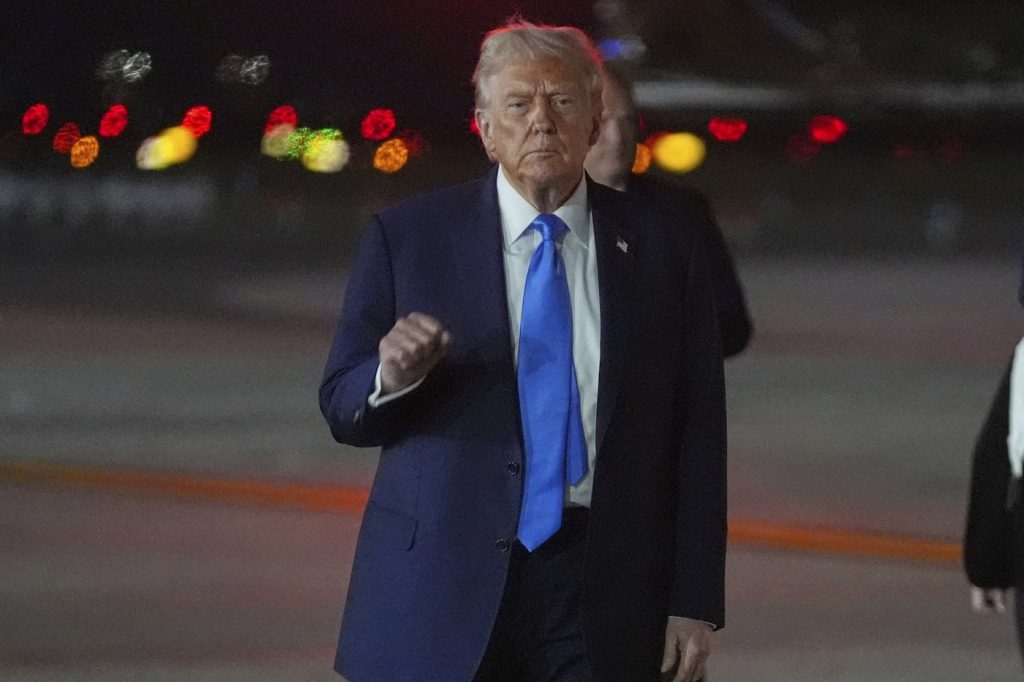
President Donald Trump made a notable return to the United Nations on September 22, 2025, to highlight his second-term foreign policy accomplishments while criticizing the U.N. as an ineffective institution. During his address at the U.N. General Assembly, he warned European nations that their current immigration and green energy policies could lead to their downfall, describing them as a "double-tailed monster" harmful to their heritage and future.
Following his speech, Trump met with U.N. Secretary General Antonio Guterres, where his tone shifted significantly. Trump expressed his support for the U.N., stating, "Our country is behind the United Nations 100%," acknowledging occasional disagreements but emphasizing the organization's potential for fostering peace.
As the top donor to the U.N., Trump has actively diminished U.S. support for the organization since his inauguration. He signed an executive order on his first day that withdrew the U.S. from the World Health Organization and ended American participation in the U.N. Human Rights Council. Additionally, he initiated a review of U.S. memberships in various international organizations to ensure they aligned with his "America First" agenda.
In a humorous moment during his speech, Trump lamented the dysfunction of the U.N., recalling an escalator incident at the U.N. headquarters and noting that he received little from the organization aside from "a bad escalator and a bad teleprompter." Trump highlighted his discussions with Brazilian President Luiz Inácio Lula da Silva, indicating a forthcoming meeting despite current tensions due to tariffs and sanctions in place between the U.S. and Brazil.
The president also used the opportunity to advocate for his administration's immigration policies, arguing that his hardline stance has led to a decrease in illegal crossings into the United States. He criticized the U.N. for allegedly financing migration to the U.S., asserting that the organization should be focused on preventing such "invasions." Trump extended this rhetoric to a general condemnation of open borders, claiming that countries pursuing such policies are "going to hell."
Trump's approach included dismissing scientific predictions about climate change, notably asserting that prior forecasts of global catastrophe had proven incorrect. He characterized climate change initiatives as an economic "scam" and urged European leaders to reconsider their commitments to green energy, predicting that failure to do so would result in their countries' decline.
In addition, Trump threatened Russia with significant tariffs if President Vladimir Putin does not engage in peace talks to end the ongoing conflict in Ukraine, while simultaneously criticizing European nations for their energy purchases from Russia, suggesting they are inadvertently funding the war against themselves.
Trump continued his speech with pointed demands for Hamas to release all hostages in Gaza, criticizing the recognition of a Palestinian state as a reward for violence. He described the Russia-Ukraine war as a protracted conflict that should have been resolved quickly during his administration and called for direct negotiations to reinstate a peaceful resolution.
Through bold statements at the U.N. General Assembly, Trump reiterated his belief that the U.S. is the "hottest country" and the best environment for business, praising the American economy as the "greatest in the history of the world." His remarks reflect a continuity of his previous tactics of leveraging international forums to elevate his domestic agenda and rally support for his policies.
Ultimately, Trump's address aimed to reassert the U.S. position on various global issues while promoting his administration's narrative of American exceptionalism, thereby setting the stage for upcoming international engagements and solidifying his hardline positions domestically and abroad.








