

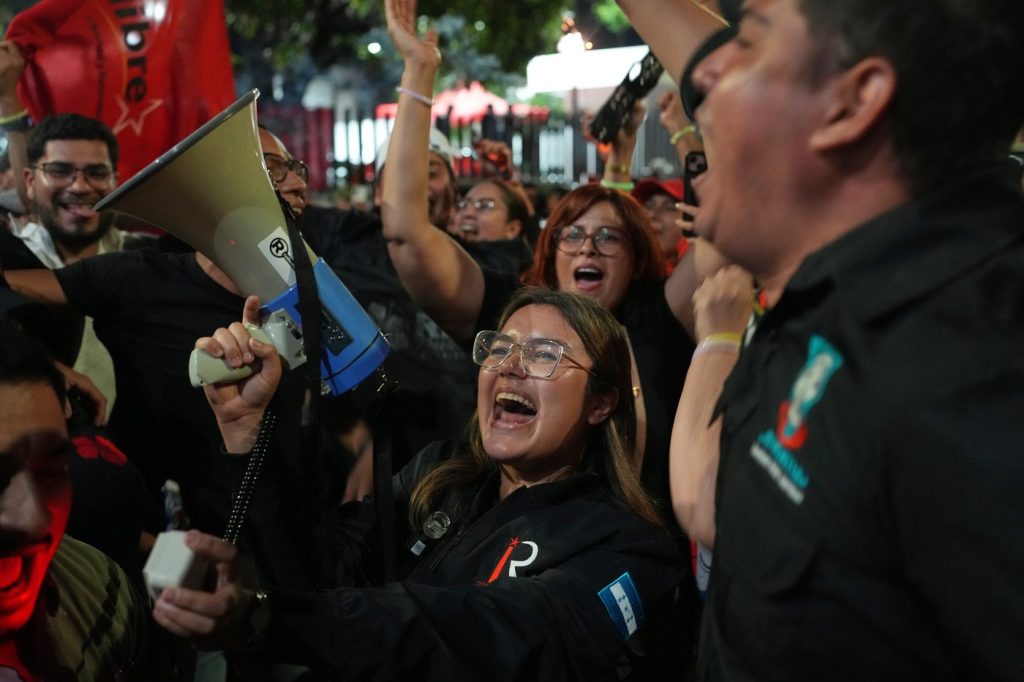
TEGUCIGALPA (AP) — The Trump administration has implemented restrictions on visas for two leftist election officials in Honduras, citing their involvement in interference during the country's special vote counting process following recent elections. The U.S. State Department announced on Friday that it had revoked the visa of Mario Morazán, a magistrate of the Electoral Justice Tribunal, and denied a visa application from Marlon Ochoa, a member of the National Electoral Council. Both officials are affiliated with the ruling leftist party, LIBRE, or Liberty and Refoundation.
In a statement, the State Department emphasized, “The United States will not tolerate actions that undermine our national security and our region’s stability.” The statement further indicated that the U.S. will consider all necessary measures to deter those who hinder the vote count in Honduras.
Nearly 20 days after the elections, Hondurans remain unaware of the final results of the presidential race. A special revision of 2,792 ballot boxes is underway due to alleged inconsistencies and errors, with electoral officials starting this special vote count on Thursday after a week-long paralysis in the counting process. Initially, 99.85% of the votes had been counted, and conservative candidate Nasry Asfura of the National Party, despite facing accusations of election intervention from his opponents, is leading with 40.24% of the votes. Close behind is fellow conservative Salvador Nasralla of the Liberal Party, who has secured 39.64%. In a distant third place is Rixi Moncada of the ruling LIBRE party, with 19.12% of the votes, although Moncada has not accepted the current results.
This incident marks a continued pattern of the Trump administration's involvement in Honduran political affairs during the election season. Over the past year, Trump's administration has taken a notably aggressive stance on issues in Latin America, often employing its influence to support right-wing allies while exerting pressure on adversaries, specifically those from the left. Furthermore, Trump previously granted a pardon to former Honduran President Juan Orlando Hernández, who was sentenced to 45 years in prison by a U.S. court last year for his association with drug trafficking operations.
As the political landscape in Honduras remains uncertain, the implications of U.S. intervention and the ongoing electoral disputes are significant, not only for Honduras but for the region as a whole. The developments regarding the special vote count will likely shape the political climate in Honduras moving forward, as both the Honduran people and the international community closely monitor the situation.








