

ANTARCTICA (AP) - The Southern Ocean is known for its remoteness, yet it is not a peaceful environment. The turbulent waves here can easily engulf boats, creating a constant roar that accompanies the breathtaking scenery of the Antarctic Peninsula, where deep blue waters meet blinding white ice.
Just a few hundred meters off the coast lies a small boat filled with a couple dozen tourists donned in bright red jackets. They are equipped with binoculars, eagerly searching for orcas, seals, and penguins that make this harsh wilderness their home.
They are navigating through the Lemaire Channel, often called the “Kodak Gap” due to its stunning cliffs and ice formations that resemble picture-perfect postcards. For those fortunate enough to reach this far south, the enchanting vision serves as a stark reminder of what is at risk as climate change continues its relentless advance, primarily driven by the combustion of fossil fuels like oil, gas, and coal, leading to a steady rise in global temperatures.
The Antarctic Peninsula stands out as one of the world’s fastest-warming regions. The surrounding ocean acts as a significant reservoir for carbon dioxide, a greenhouse gas that exacerbates global warming. According to the National Oceanic and Atmospheric Administration, the Southern Ocean captures and stores approximately 40% of the CO2 produced by human activities.
On a recent expedition, Gentoo penguins, identifiable by their slender orange beaks and white markings above their eyes, were on display as they alternated between diving into the frigid waters and nesting on the exposed rocks. As global temperatures rise, these penguins are gradually migrating further south, favoring rocky terrains and open waters for foraging, contributing to their growing populations.
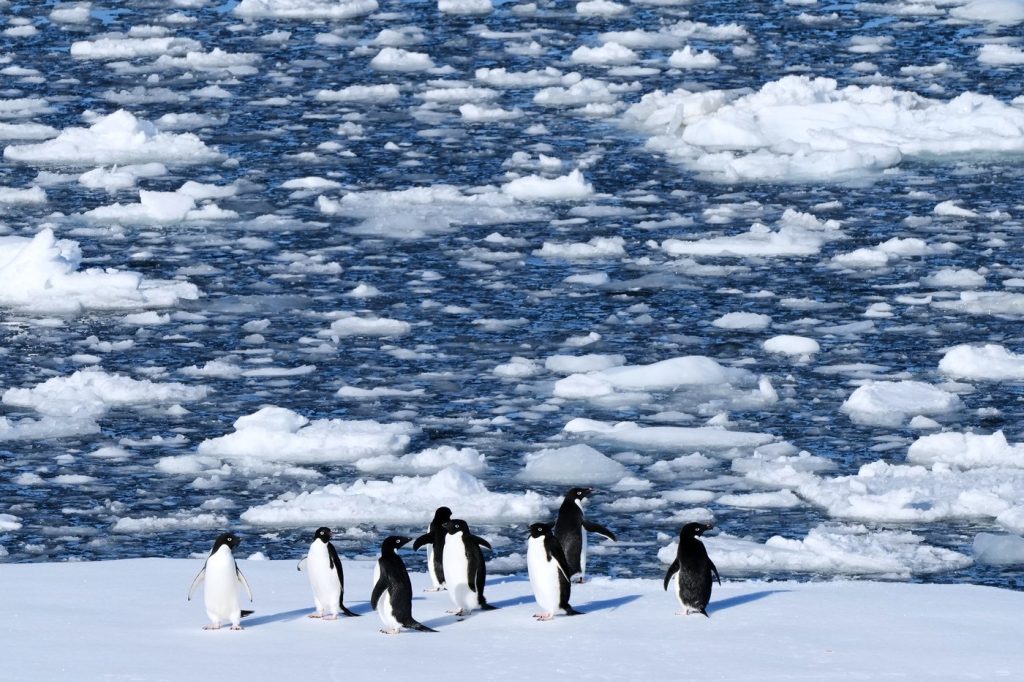
In contrast, the future appears bleak for the Adelie penguin. Known for their stout bodies, short flippers, and bright wide eyes, they are less adaptable to the changing climate. A concerning study predicts that by 2100, around 60% of Adelie penguin colonies in Antarctica may be threatened due to warming temperatures. These penguins rely on ice for resting and evading predators, and warmer waters jeopardize their food supply. A staggering amount of Antarctic ice—approximately 149 billion metric tons—has melted annually from 2002 to 2020, as reported by the National Aeronautics and Space Administration.
For those visiting, Antarctica remains a vast glacial territory, inhabited by select species adapted to endure the extreme conditions. For instance, amidst the tumultuous Drake Passage, tourists gaze in awe as orca whales navigate the narrow waterways, while Pintado petrels swoop overhead.
However, the enchanting vistas of Antarctica are likely to undergo significant transformations in the coming decades. The booming Gentoo penguin populations, along with the decline in floating ice and increasing visibility of bare rocks along the Antarctic Peninsula, highlight an evolving landscape influenced by a warming climate.








