

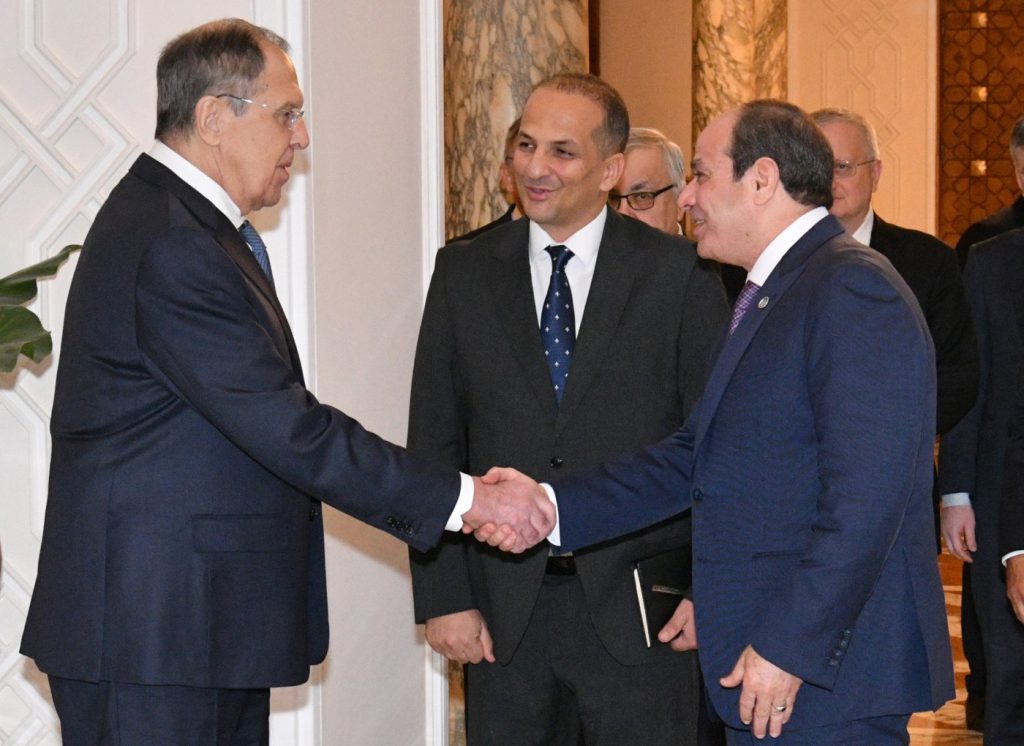
CAIRO (AP) — On Saturday, Egyptian President Abdel-Fattah el-Sissi emphasized the necessity for structural reforms within the United Nations Security Council to provide Africa with a more significant role in global decision-making. His remarks were made at the Russia-Africa partnership conference held in Cairo, which saw attendance from high-ranking officials, including Russian Foreign Minister Sergey Lavrov and ministers from over 50 African countries, alongside representatives from various African and regional organizations.
El-Sissi called for a “more pluralistic” world order, highlighting that “the voice of Africa should be present and influential in making global decisions." He underscored the continent's considerable human, economic, political, and demographic significance. His plea extended to international financial institutions, advocating for reforms to ensure equitable African representation in these entities as well.
Since 2005, the African Union has been pushing for two permanent seats with veto power for Africa in the Security Council. The argument is that such reforms would enhance peace and stability across a continent that has faced numerous conflicts for decades. The Security Council itself, responsible for maintaining international peace and security, has remained unchanged in its configuration since 1945, consisting of five permanent members— the United States, Russia, China, Britain, and France—alongside 10 non-permanent members elected for two-year terms without any veto power.
As part of the ongoing efforts, el-Sissi announced that the Russia-Africa ministerial conference aims to create a structured plan to consolidate partnerships ahead of the upcoming summit of heads of state. Sergey Lavrov reaffirmed Russia's commitment to being a reliable partner for African nations, stating, “We remain a reliable partner for African states in strengthening their national sovereignty... as well as in other dimensions.” He expressed a commitment to leverage the existing potential for practical cooperation.
The momentum for the forum has been bolstered following the 2023 summit that took place in St. Petersburg, Russia, where President Vladimir Putin sought to garner support from African leaders. This outreach is part of Russia's strategy to overcome the political and economic isolation its facing due to the invasion of Ukraine, which has led to significant international backlash. Furthermore, Russia has expanded its military presence in Africa, providing advanced weaponry to various sub-Saharan conflict zones. A Kremlin-controlled military unit has been active in these regions, taking over the responsibilities previously handled by Wagner mercenaries.
This conference reflects ongoing efforts to foster stronger ties between Russia and African nations while simultaneously addressing the broader demand for increased African representation in global decision-making processes. The discussions and outcomes from Cairo could play a crucial role in shaping future interactions and alliances between these regions.








