

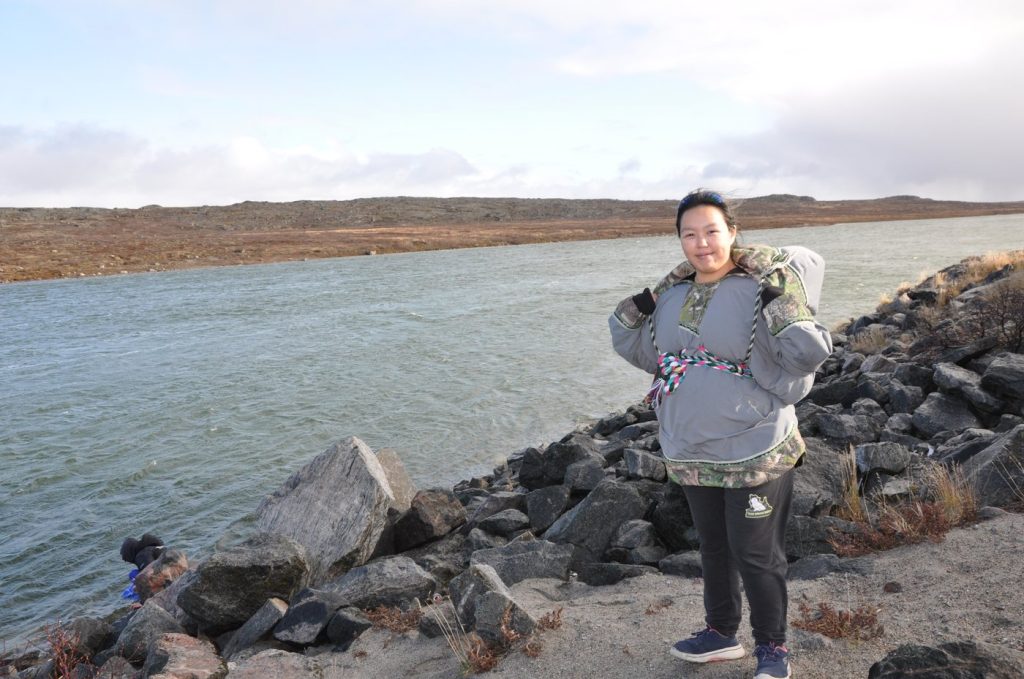
In Quebec's Nunavik region, residents frequently face challenges related to water shortages. This situation is particularly prevalent among the Inuit communities, who have developed a remarkable adaptability to these conditions. Despite running out of drinking water at home or having full wastewater tanks, many residents carry on with their lives without complaint, showcasing their resilience in the unique tundra landscape of the region.
Joshua Nathan Kettler, a 24-year-old Inuit from Inukjuak, reflects on his experience with water shortages. He states, "I'm not stressed about it. We grew up with it, so you have to adapt to it." Kettler describes how the lack of water complicates daily tasks, including picking up his daughter from school and taking time off work when the situation becomes dire. Even though Kettler acknowledges that the situation isn't fair, he expresses gratitude for the efforts of local municipalities to manage the water supply: "I feel blessed to have our municipality constantly working and trying to keep on top of their game."
The struggle for water access is echoed in the nearby community of Puvirnituq, where 79-year-old Marilyn Simpson lives with her partner, Paulusi Angiyou, and their family. Angiyou, who is 75 and has lived through different forms of housing including tents and igloos, remarks, "There’s always a lack of water, it doesn’t matter if it’s run by machine or by hand." Simpson adds that their experiences living without running water have allowed them to adapt better than some other residents.
Former coordinator of the Innulitsivik Health Centre, Manon Rancourt, praises the determination of the Inuit people in the face of adversity, stating, "Resilient – I think that’s the best way to describe them." Rancourt observes that residents seldom complain about their circumstances. However, for young parents like Siasi Padlayat, the stakes are higher. With a baby who no longer breastfeeds, Padlayat finds herself more anxious when the water levels in their reservoir dwindle, knowing that water is essential for preparing formula. In times of low water supply, her partner retrieves water from the river, which they then boil for use.
Kettler shares a similar practice, stating, "Worst case, if everything is out of service, we can go get water in the river." In winter, he utilizes a method of boring holes in ice to collect water for his family's needs. Inukjuak's Mayor Bobby Epoo offers insight into the community's varying attitudes towards water consumption. He estimates that 40 percent of residents are frustrated with the lack of water, another 40 percent have learned to cope with it, while 20 percent are indifferent.
To combat persistent water shortages, residents have devised specific methods for managing their resources. Kettler sometimes disconnects his washing machine to conserve wastewater, while Simpson utilizes bathwater for laundry purposes as a strategy to save drinking water. Liv Larsen, coordinator of material resources for the Inuulitsivik Health Centre, mentions the unpredictable nature of water shortages, noting that solutions are not clear-cut: "It’s hard to put your finger on one thing and say, 'OK, we’ll solve this problem.' Everyone will have to pitch in." She emphasizes the need for federal intervention to improve infrastructure and access to essential services like water.
Dr. Yassen Tcholakov, a public health physician in Nunavik, points out the unique challenges faced by the region, advocating for more intensive resources to enhance living conditions. He acknowledges ongoing plans for capital investment and construction, yet reminds that these long-term solutions are not immediate fixes. Tcholakov emphasizes the necessity for collaboration between communities and the province in order to improve health levels in Nunavik to match those in the rest of Quebec.
This article underscores the resilience and adaptability of the Inuit communities in Nunavik, who, despite facing ongoing challenges surrounding water access, continue to find ways to manage their resources and support one another in their remote and demanding environment.








