

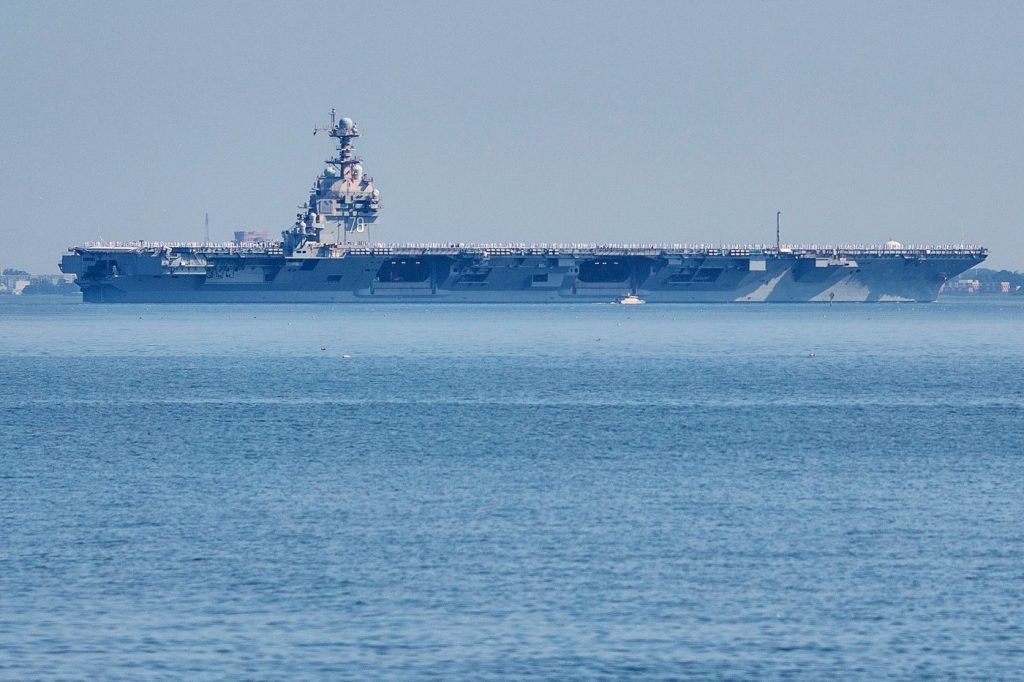
The chairman of the Joint Chiefs of Staff, Gen. Dan Caine, is set to visit American troops in Puerto Rico and aboard a Navy warship on Monday. This visit is significant as the U.S. has recently accumulated an unusually large fleet of warships in the region, a move associated with ongoing military actions against alleged drug-smuggling operations. The U.S. military’s increased presence comes at a time of heightened tensions regarding Venezuela, with U.S. officials indicating potential military action remains a possibility.
During this visit, Caine will be accompanied by David L. Isom, the senior enlisted adviser. Their agenda includes engaging with service members and expressing gratitude for their contributions to regional missions. This marks Caine's second trip to the area since the buildup of military resources began. The U.S. now features an advanced aircraft carrier as part of this deployment, signaling a serious commitment to maritime operations in the Caribbean.
Earlier in September, Caine and Defense Secretary Pete Hegseth visited Puerto Rico, coinciding with the arrival of hundreds of U.S. Marines for what officials termed a training exercise. Hegseth emphasized that these Marines are positioned "on the front lines of defending the American homeland," highlighting the strategic importance of the region to U.S. national security goals.
Caine's current visit aligns with President Donald Trump's contemplation of military intervention in Venezuela, an option under consideration amidst a broader initiative to confront drug trafficking. This effort has intensified with the deployment of American warships and military strikes, which have reportedly resulted in over 80 fatalities among crews of 21 boats engaged in drug trafficking activities. Many analysts interpret these actions as a means of exerting pressure on Venezuelan President Nicolás Maduro to resign.
Moreover, the Trump administration has taken steps to amplify its pressure on Venezuela by designating the Cartel de los Soles, or Cartel of the Suns, as a foreign terrorist organization. This designation is notable as it breaks from the traditional use of the label, previously reserved for groups like the Islamic State and al-Qaida. Instead, the U.S. has categorized eight Latin American criminal organizations involved in drug trafficking, migrant smuggling, and other illicit activities under this classification, reflecting a shift in addressing these threats.
Despite the serious allegations against these organizations, the administration has seldom provided concrete evidence or explicit identification of the groups behind the operations being targeted. Hegseth remarked that the designation of the Cartel de los Soles could yield "a whole bunch of new options" for the United States in dealing with Maduro's regime. However, he did not elaborate on what specific measures might be considered, nor did he confirm if military strikes on land targets in Venezuela were planned.
Caine's visit and the ongoing military actions underscore the complex geopolitical dynamics at play in the Caribbean region. As the U.S. navigates its response to drug trafficking and the political situation in Venezuela, the developments surrounding this military presence will be closely monitored by both domestic and international observers.








