

BEIRUT (AP) – Mireille Khoury lights a candle next to a portrait of her late son, Elias, each evening in her Beirut apartment, surrounded by images of Jesus and the Virgin Mary. Elias was just 15 years old when he died in the August 2020 explosion at the Beirut port, an event that claimed the lives of 218 individuals as a result of improperly stored ammonium nitrate detonating. Since then, Khoury has participated in monthly protests alongside other families seeking justice for the victims.
The number of protesters has dwindled over time as the investigation has stalled and hopes for accountability have diminished. However, the upcoming visit of Pope Leo XIV to Lebanon has reignited a flicker of hope among Khoury and many others in the crisis-battered nation. “We need a lot of prayers, and we need a miracle for this country to continue,” she expressed, as she prepares to join the pope in a silent prayer at the port explosion site on the final day of his visit.
The pope's trip, starting on Sunday, marks his first official foreign visit and fulfills a promise made by his predecessor, Pope Francis, to visit Lebanon. This nation, which is largely Muslim with approximately a third of its population being Christian, is set to host the fourth papal visit in its history. Given Lebanon's current precarious conditions, characterized by regional instability and internal crises, the pope's visit sends a powerful message of support.
Lebanon has faced a myriad of challenges since 2019, including political unrest, the collapse of its currency and banking system, the catastrophic port explosion, and a recent war between Israel and Hezbollah. This conflict has resulted in over 4,000 deaths, including many civilians, and caused approximately $11 billion in damages.
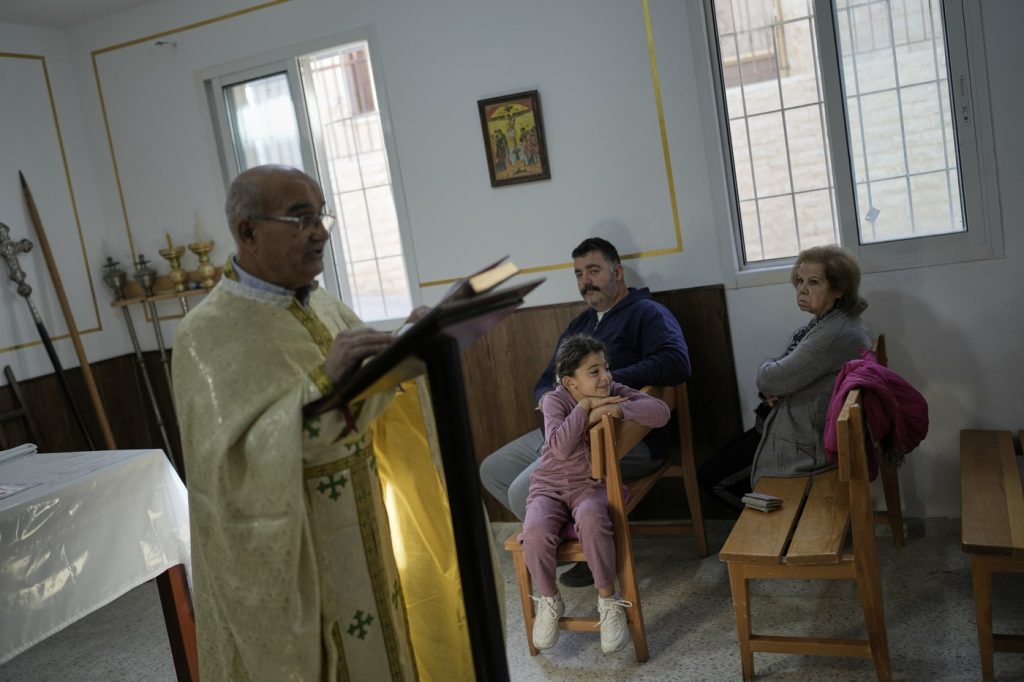
In the village of Dardghaya, which is home to a mixed community of Christians and Shiite Muslims, worshippers gathered for Mass in a small basement room as the local Greek Melkite church sits in ruins following an Israeli strike during last year's conflict. Despite a U.S.-brokered ceasefire in November 2024, Israel has conducted regular strikes in southern Lebanon, aimed at preventing Hezbollah from rebuilding, a situation that has discouraged many congregants from returning to church.
Father Maurice el Khoury, priest of the Dardghaya church, expressed: “We don’t want to say that the pope’s visit is only for the Christians. The pope’s visit is a blessing and salvation for all of Lebanon.” However, there is disappointment among many in southern Lebanon who hoped for the pope to visit their war-torn areas, similar to Pope Francis's visit to Iraq’s Mosul in 2021.
Georges Elia, a member of the Dardghaya congregation, hopes to attend a meeting between the pope and youth groups. He expressed a desire for a surprise papal visit to the south, calling it “a sacred land, where Jesus Christ once walked,” and emphasizing the need for the pope’s presence to help them endure in their homeland.
The historical relationship between Lebanon and the Vatican has been significant, as Lebanon was envisioned as a haven for Christians. The first papal visit to the modern Lebanese state occurred in 1964, during a prosperous period seen as a golden era before the onset of civil wars. Subsequent visits took place during efforts to rebuild after violence and amid the Syrian refugee crisis affecting Lebanon.
The Vatican's involvement in Lebanon has helped create strong ties over time. Historically, the church established various key institutions, fostering relationships not just with Christian communities but also with Muslims and other non-Christian groups. As historian Charles Hayek noted, Lebanese leaders have long understood the importance of lobbying for papal visits to amplify their concerns and needs.
Pope Leo XIV's itinerary includes an interfaith dialogue with leaders of different religious denominations in Lebanon's capital, which has been a site of anti-establishment protests since 2019 and was affected by the port blast. Mireille Khoury reflected on the enduring support from Pope Francis for the families of port blast victims, noting that even when global pressures for accountability waned, the pope continued to advocate for them. She hopes to connect with Pope Leo during his visit, urging him to keep the memory of the port explosion alive and to seek justice for those affected.
Through faith, Khoury finds the strength to persevere, holding onto hope of reuniting with her son one day. “I live by hope,” she states, “that I will be meeting my son one day.”








