

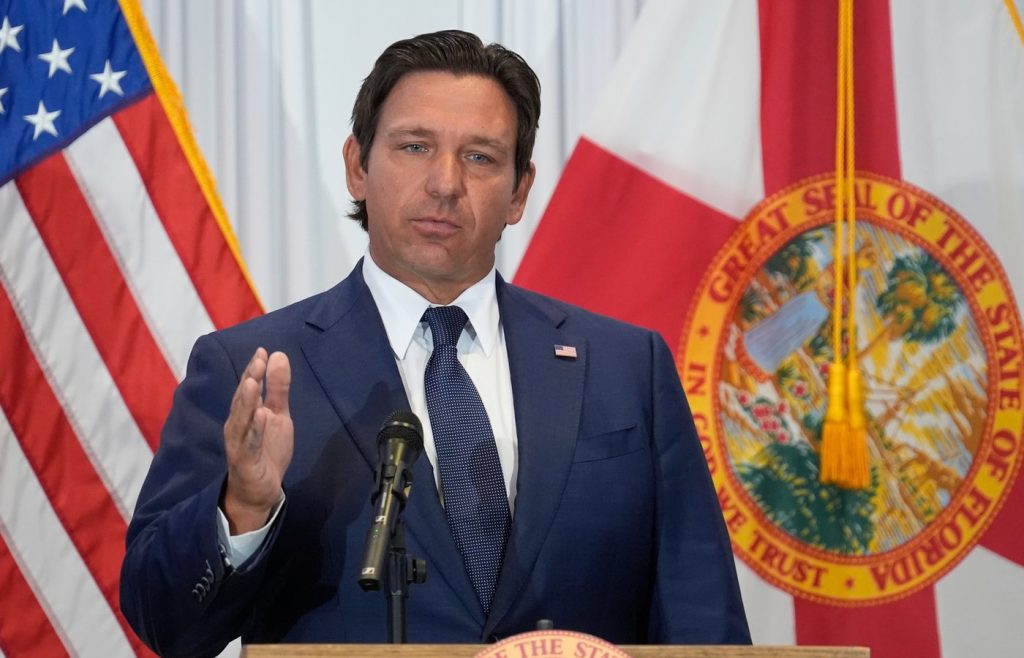
On Monday, Florida Governor Ron DeSantis took a controversial step by designating the Council on American-Islamic Relations (CAIR), one of the largest Muslim civil rights and advocacy organizations in the United States, as a "foreign terrorist organization." This executive order, shared on the social media platform X, aligns with a similar action taken by Texas Governor Greg Abbott in the previous month.
In addition to CAIR, the executive order also identifies the Muslim Brotherhood as a foreign terrorist organization. However, it is important to note that neither CAIR nor the Muslim Brotherhood holds this designation from the U.S. government, which has its own criteria and processes for labeling foreign terrorist entities.
The executive order instructs Florida state agencies to refuse contracts, employment, or funding to both CAIR and the Muslim Brotherhood, as well as to individuals or organizations that provide material support to them. This directive demonstrates a proactive stance by the DeSantis administration to limit the influence and operational capacity of these groups within the state.
In response to the executive order, CAIR and its Florida chapter announced plans to file a lawsuit against Governor DeSantis. They characterized the proclamation as "unconstitutional" and "defamatory," highlighting their intent to challenge the order through the legal system. The organization, which was founded in 1994, has developed a network of 25 chapters across the United States, advocating for the rights of Muslims and working to combat discrimination.
Similarly, CAIR recently initiated legal action against Governor Abbott’s order in Texas, claiming that it was inconsistent with the United States Constitution and lacked any legal backing in Texas state law. This ongoing legal battle reflects the broader struggle over civil rights and the portrayal of Muslim organizations in the current socio-political climate.
The Muslim Brotherhood, established nearly a century ago in Egypt, has branches globally and presents itself as a movement that renounced violence decades ago. Leaders of the organization assert that their goals include establishing Islamic governance through peaceful means, such as elections. However, critics, including various authoritarian regimes in the Middle East, perceive the Muslim Brotherhood as a significant threat, contributing to the complexities surrounding the group's reputation.
As the situation unfolds in Florida and Texas, the implications of these designations will continue to reverberate, raising questions about civil liberties, the interpretation of terrorism, and the impact of such executive actions on the Muslim community in the United States.








