

ATLANTA (AP) — A growing number of Millennial and Generation Z Christian influencers are stepping into a space within American religion, engaging vast audiences across digital platforms. These influencers are providing biblical responses to difficult questions that often go unanswered in traditional Sunday sermons. Megan Ashley, a 35-year-old podcaster, shares her insights through her show “In Totality,” emphasizing her role as a source of practical and accessible help for young believers navigating their faith from Monday to Saturday.
Coming from diverse backgrounds, these influencers openly address issues such as anxiety, dating, and cultural dilemmas, while exploring the complexities of the Bible. Their efforts are seen as a response to a climate of declining church attendance, which has left many young people searching for deeper meaning in a culture that often appears devoid of it. Lecrae Moore, a Christian rapper and podcaster, emphasizes the transformative truth these influencers make accessible, suggesting that they foster a unique existential and supernatural experience that impacts the lives of their followers.
Ashley and Moore are part of a collective of approximately six influential figures cited in the report, many of whom operate independently from traditional church structures. They often avoid being confined by denominational labels, describing their mission as reaching out to those who feel disconnected or marginalized in their faith journeys. Some influencers have grown up in church environments, while others have turned to Christianity after experiencing personal hardships related to secular lifestyles.
Arielle Reitsma, host of the podcast “Girls Gone Bible,” which garners over a million monthly listeners, states that they aim to normalize struggles and imperfections in faith, suggesting that it is okay to not have everything figured out. This sense of community and shared experience is prevalent as they connect with their audiences through both online formats and in-person events.
These influencers utilize social media effectively, resonating with a demographic that feels alienated by traditional religious figures. Zachary Sheldon, a media and religion lecturer at Baylor University, recognizes the positive aspects of these influencers' work while cautioning against granting them too much authority based solely on their online presence and appeal. By encouraging church attendance, these figures aim to reach a wide array of individuals, particularly the increasing number of young Americans report feeling disconnected from religion. According to Pew Research Center, only 41% of people aged 18-35 believe in God with certainty, a notable decrease from 65% in 2007.
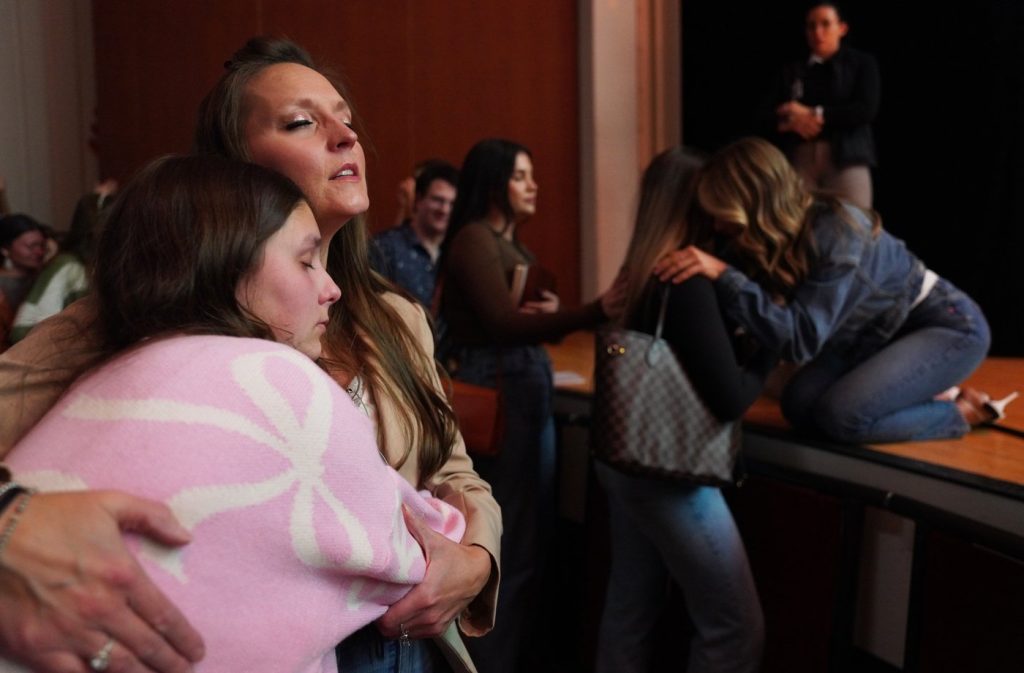
Angela Halili, co-host of “Girls Gone Bible,” highlights a shift in young people's spiritual hunger as they begin to encounter Jesus through digital avenues. Their podcast, launched over two years ago, has translated into live events where they share personal stories of overcoming addiction and mental health struggles. Their message centers on God's capacity for healing and performing miracles in the lives of their listeners.
Despite their focus on uplifting narratives, these influencers acknowledge the challenges of living a Christian life. Megan Ashley points out that while faith may not always yield results in expected ways, it fosters a sense of growth and closeness to God. The podcast “With the Perrys,” run by Jackie Hill Perry and her husband Preston Perry, engages with complex themes, advocating for prayer and biblical reading as tools for enduring hardships.
At just 22 years old, Bryce Crawford utilizes his platform to interactively discuss Christianity in diverse settings, including Pride parades and festivals. His approach emphasizes kindness over condemnation, aiming to foster understanding among various worldviews. Crawford’s empathetic methodology, including one-on-one dialogues, has attracted a following despite his controversial stances on certain lifestyle choices.
However, the rise of online Christianity isn't without its hurdles. Influencers like Jackie Hill Perry express concerns that focusing on online debates can detract from the fundamental messages of love and grace. Additionally, the digital realm often amplifies cultural and political divides within Christian communities, leading to backlash for expressing views on sensitive topics.
Many followers appreciate these influencers for offering relatable narratives that contrast sharply with traditional, formal portrayals of faith. Olivia Singleton, 24, seeks out younger, approachable role models such as those in the influencer community, finding that they foster a sense of companionship in navigating faith together.








