

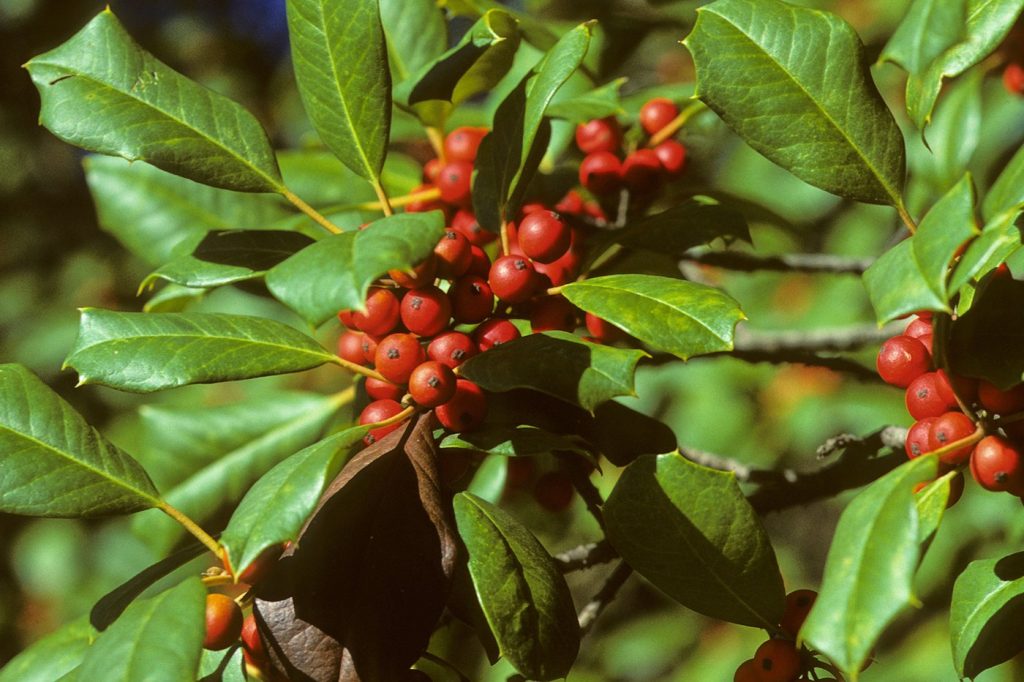
Hollies have become a popular decorative element during the holiday season, seen in wreaths, boughs, holiday cards, and more. However, many gardeners may wonder if this festive plant is thriving in their own gardens. There are numerous holly species and hybrids worldwide, with over a dozen varieties native to the continental United States.
Historically, ancient pagans fashioned holly branches into wearable crowns, believing that displaying them could ward off evil spirits and hasten the arrival of spring. This tradition was later adopted by early Christians, who interpreted the evergreen nature of holly as a symbol of eternal life. While hollies can't promise eternal life, their striking red berries and deep-green leaves provide aesthetic value year-round and serve as an essential food source for birds and other wildlife during the winter months. However, it is worth noting that the berries are considered toxic to humans.
The optimal time to plant hollies is early spring, following the last hard freeze but before summer heat sets in. Proper watering is crucial during the plant's first year as it establishes its roots. Most hollies are dioecious, meaning that individual plants are either male or female, and for the female plants to bear berries, a male must be in proximity. One male can efficiently pollinate around ten female plants within a 50-foot radius.
When selecting hollies, it's essential to look for plant tags that indicate their gender, which is often indicated by the variety name. For instance, 'China Girl' is a female variety, while 'China Boy' is male. Some female varieties, like 'Greenleaf,' may not be immediately recognizable, so consulting with nursery staff can be helpful.
Here are four holly favorites to consider for your garden:
Yaupon Holly (Ilex vomitoria)
Native to the southern Atlantic coast and the Southeast and Southwest of the United States, Yaupon Holly can be found in various forms, including dwarf, weeping, or upright varieties. This species is hardy in USDA zones 7-9 and is tolerant of sun and shade. It thrives in any soil type, provided it is moist and well-draining.
American Holly (Ilex opaca)
Also known as Christmas holly, this slow-growing, pyramidal species is native from the East Coast to Missouri and Texas. It can reach heights of 25-60 feet (8-18 meters) and is hardy in zones 5-9. American Holly prefers acidic, well-draining sandy or loamy soil and thrives in both sun and shade.
Blue Holly (Ilex x meserveae)
Known as Meserve Holly, this European hybrid features blue-green spiny leaves and typically grows to heights of 2-8 feet (0.6 to 2.4 meters) with a width of 6-8 feet (1.8 to 2.4 meters). It is suitable for USDA zones 5-7 (possibly zone 8) and should be planted in full sun to partial shade in moist, well-draining, acidic soil.
Winterberry Holly (Ilex verticillata)
Unlike the other species, Winterberry Holly is deciduous, losing its leaves in autumn. However, its impressive red-orange berries become the most notable feature during winter, showcasing their colors against bare branches. Native to the eastern U.S. and Canada, it reaches heights of 3-8 feet (0.9 to 2.4 meters) and thrives in zones 3-9 in a range of light conditions and well-draining, moist, acidic soil.
English or Common Holly (Ilex aquifolium)
This species, native to Europe, West Asia, and North Africa, has become invasive in various regions of the U.S., particularly in the Pacific Northwest and California. These plants were initially valued for their resilience, longevity, and evergreen nature. However, their rapid spread has raised concerns about their impact on local ecosystems, rendering them a 'weed of concern' in several areas. It's essential to avoid planting English Holly in regions where it poses a threat to native vegetation.
In summary, hollies provide not only seasonal beauty but also essential ecological benefits in the garden. When choosing the right variety, it’s vital to consider their specific growing requirements and potential invasiveness in certain areas.








