

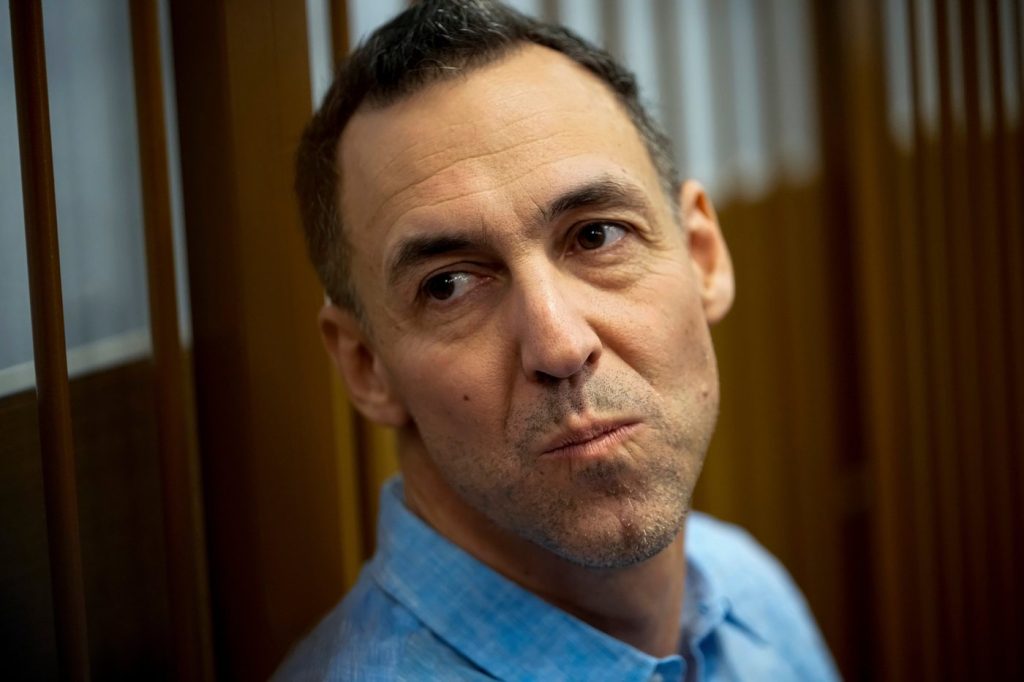
On Thursday, the Kremlin confirmed that it is in communication with French authorities regarding the situation of Laurent Vinatier, a French political scholar currently serving a three-year sentence in Russia. Reports indicate that he is facing new espionage charges. Dmitry Peskov, the Kremlin spokesman, stated to reporters that Russia has made an offer to the French concerning Vinatier, and suggested that it is now up to France to respond. He refrained from offering any specific details, citing the sensitive nature of the situation.
The French Foreign Ministry, addressing the issue, mentioned that they had no comment at this time. Peskov's comments emerged following an inquiry by journalist Jérôme Garro from the French TF1 TV channel during President Vladimir Putin’s annual news conference on December 19, 2024. Garro asked if Vinatier’s family could anticipate a presidential pardon or his potential release as part of a prisoner exchange. Putin, claiming to know "nothing" about the case, assured that he would look into the matter.
Vinatier was arrested in Moscow in June 2024, with Russian authorities accusing him of not registering as a "foreign agent" while collecting information about military activities that could threaten national security. According to the law under which he was charged, such violations could lead to a maximum penalty of five years in prison. His arrest came amidst rising tensions between Moscow and Paris after comments made by French President Emmanuel Macron regarding the deployment of French troops in Ukraine.
During the trial, Vinatier's defense team requested a fine rather than prison time; however, in October 2024, the court handed him a three-year prison sentence, which the French Foreign Ministry described as “extremely severe” and subsequently called for his immediate release. The ministry has urged the abolition of laws that designate individuals as foreign agents, which subject them to additional scrutiny and restrictions, arguing that such legislation systematically violates fundamental freedoms such as the freedom of association, opinion, and expression.
Vinatier is an adviser for the Centre for Humanitarian Dialogue, a Switzerland-based NGO, which stated in June 2024 that it is doing everything possible to assist him. In a plea for leniency ahead of his sentencing, Vinatier highlighted his responsibilities to his two children and elderly parents. The charges against him arise from laws that mandate individuals collecting military-related information to register as foreign agents with the authorities.
Human rights activists have condemned these laws and connected legislation as part of a broader Kremlin crackdown on independent media and political dissent aimed at stifling criticism of the ongoing war in Ukraine. In August 2025, Russian state news agency Tass reported that Vinatier had been charged with espionage, referencing court documents but lacking specific details. Individuals convicted of espionage in Russia typically face prison sentences ranging from 10 to 20 years.
Over the past few years, Russia has detained various foreigners—primarily U.S. citizens—on different criminal charges, subsequently releasing them in prisoner swaps with the United States and other Western countries. One notable prisoner exchange occurred in August 2024, which resulted in the release of American journalists Evan Gershkovich and Alsu Kurmasheva, as well as Paul Whelan, and Russian dissidents in a multinational arrangement that liberated approximately two dozen individuals.








