

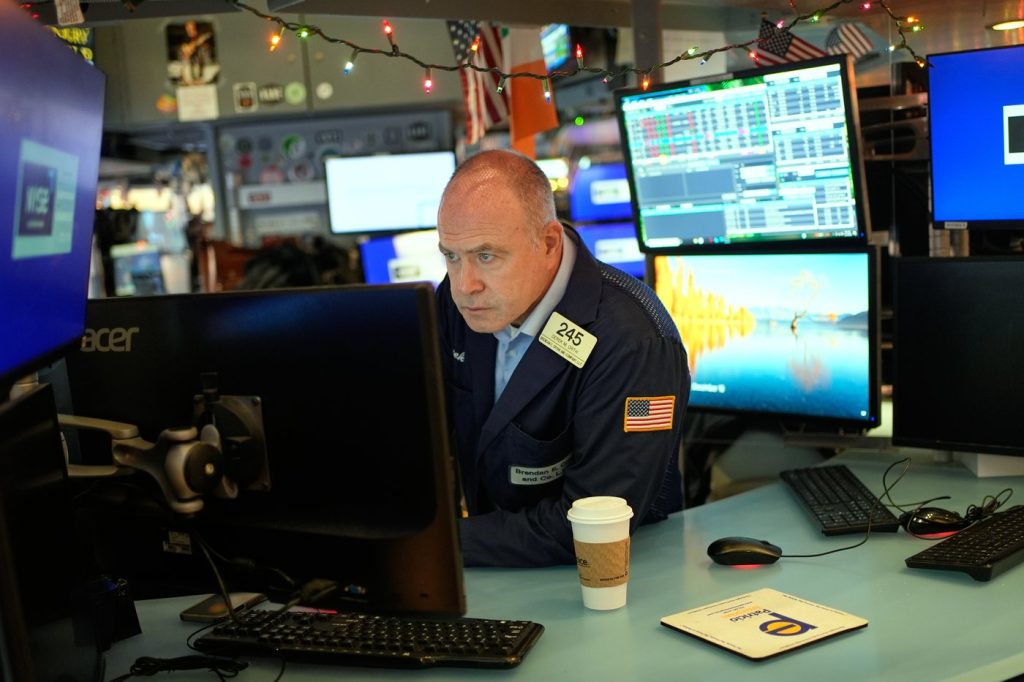
BANGKOK (AP) — Asian shares were mixed on Thursday, December 25, in thin holiday trading, with many markets in the region closed for Christmas. The trading situation was characterized by light volumes, as most investors had closed out their positions for the year ahead of the holiday.
In Tokyo, the Nikkei 225 index edged up 0.1% to reach 50,407.79, marking a nearly 30% increase for the year. The exchange rate also saw fluctuations, with the dollar slipping to 155.85 Japanese yen from 155.94 yen, while the euro climbed slightly to $1.1786 from $1.1780.
Meanwhile, markets in mainland China showed some advancement, with the Shanghai Composite Index rising by 0.5% to 3,959.62. However, the Hong Kong exchange remained closed. Investors were buoyed by a statement from the People’s Bank of China (PBOC), which pledged to ensure an adequate money supply to support financing, economic growth, and inflation targets. Earlier in the week, the PBOC had decided to keep its key short-term lending rates unchanged.
Contrarily, shares fell in Thailand and Indonesia, contributing to the mixed sentiment across the Asian markets. In the United States, the previous day saw the S&P 500 index rise by 0.3% to 6,932.05, while the Dow Jones Industrial Average increased by 0.6% to close at 48,731.16. The Nasdaq composite also added 0.2%, reaching 23,613.31. This upward trend in U.S. markets was seen amidst a general end-of-year optimism.
Trading on Wednesday was described as extremely light due to early market closures for Christmas Eve, with U.S. markets set to reopen for a full trading day on Friday. Despite the impending holiday, the S&P 500 has recorded over a 17% gain this year, thanks to favorable perceptions regarding the deregulatory policies of the Trump administration alongside optimism regarding artificial intelligence and its potential impact on profitability across various sectors.
Looking ahead, investor focus is likely to remain on the trajectory of the U.S. economy and the Federal Reserve’s stance on interest rates. There are expectations that the Fed will maintain current interest rates during its January meeting. The latest economic data suggested strong growth, with the U.S. economy expanding at an annual rate of 4.3% in the third quarter, the fastest growth observed in two years, largely driven by consumer spending despite inflationary pressures.
Nevertheless, there are indicators of shaky consumer confidence, given concerns over elevated price levels. The labor market appears to be showing signs of weakening, while retail sales have softened in recent reports. Notably, the number of Americans applying for unemployment benefits has decreased, indicating a stable labor market even as some signs of softness emerge. For the week ending December 20, U.S. applications for jobless claims fell by 10,000 to 214,000, remaining below analyst forecasts of 232,000.
In corporate news, Dynavax Technologies experienced a notable surge of 38.2% following the announcement of its acquisition by Sanofi. The French pharmaceutical giant is acquiring the California-based vaccine maker in a deal valued at approximately $2.2 billion, enhancing its portfolio with Dynavax’s hepatitis B and shingles vaccines, the latter still in development. On the other hand, shares of Novo Nordisk rose by 1.8% after securing U.S. regulatory approval for a pill version of its weight-loss medication, Wegovy. However, Novo Nordisk shares remain down roughly 40% for the year due to rising competition in the weight-loss medication market, particularly from Eli Lilly, whose shares have increased by 40% this year.
In commodity markets, U.S. crude oil settled at $58.35 a barrel, while Brent crude finished at $61.80 a barrel, remaining within a steady range amidst ongoing economic conditions.








