

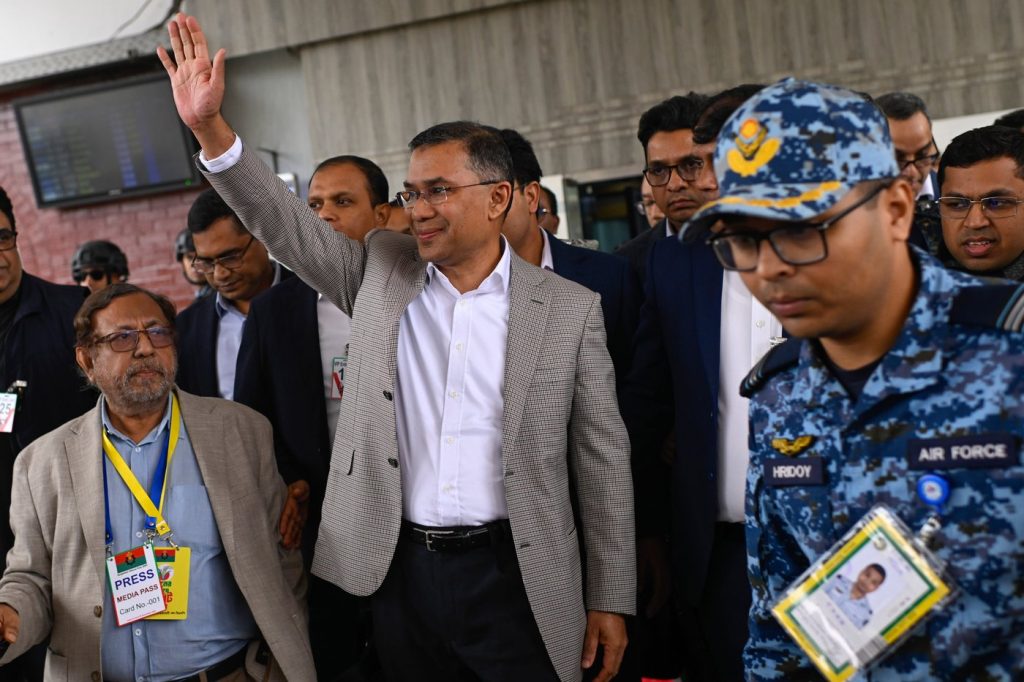
DHAKA, Bangladesh (AP) – Tarique Rahman, the son of a former prime minister, has returned to Bangladesh after over 17 years in self-imposed exile, positioning himself as a potential frontrunner for the upcoming elections scheduled for February 12, 2026. Rahman, who had moved to London in 2008 for medical treatment following allegations of torture during detention under a military-backed government, landed at Hazrat Shahjalal International Airport in Dhaka early Thursday morning.
Rahman, aged 60, serves as the acting chairman of the Bangladesh Nationalist Party (BNP), one of the country’s two major political parties. His arrival in Bangladesh has attracted significant attention, especially as the nation braces for elections under the current interim government led by Nobel Peace Prize laureate Muhammad Yunus. Supporters welcomed him in massive numbers, with many camping overnight to express their loyalty. Rahman’s party leaders indicated that they anticipated “millions” of supporters to turn out for his reception.
Following his arrival and the public reception, Rahman is expected to visit his critically ill mother, Khaleda Zia, a former prime minister who led a coalition government from 2001 to 2006. Zia, who began her political career after the assassination of her husband in a military coup in 1981, was a key figure in Bangladesh's political landscape alongside Sheikh Hasina. Zia’s leadership was marked by significant political turmoil, particularly during her tenure which ended with the rise of a non-elected government amid widespread unrest.
Sheikh Hasina, the current ruling party leader, was sentenced to death in absentia in November 2025 for crimes against humanity related to her government’s response to a mass uprising that culminated in 2024. Hasina, who fled to India after her conviction, has faced challenges with extradition requests not being approved by the Indian government. This political backdrop adds to the significance of Rahman's return, as he steps onto the stage during a turbulent political era in Bangladesh.
Rahman’s political career took a hit during Hasina's lengthy rule since 2009, facing multiple criminal charges, including those related to a grenade attack in 2004. However, under the Yunus government, Rahman has been acquitted of all charges, allowing him to reclaim his political footing. Even during his absence, he remained the de facto leader of the BNP, participating in meetings and rallies through online platforms, which highlights his influence within the party despite geographical separation.
As Bangladesh finds itself at a political crossroads, the interim government struggles with maintaining order and restoring democracy after Hasina's extended premiership. With increasing accusations from global human rights organizations, including Human Rights Watch and Amnesty International, concerning the erosion of democratic rights and concerns about rising Islamism, the political landscape remains fraught with challenges. Rahman, who initially supported Yunus when he assumed power, faces the delicate task of navigating these political waters while uniting his party as they approach the pivotal national elections.
In summary, Tarique Rahman's return marks a significant moment in Bangladeshi politics, reviving interest and anticipation regarding the upcoming elections. With his mother’s declining health and the tense political environment, Rahman’s next steps could have profound implications for the future direction of the country.








