

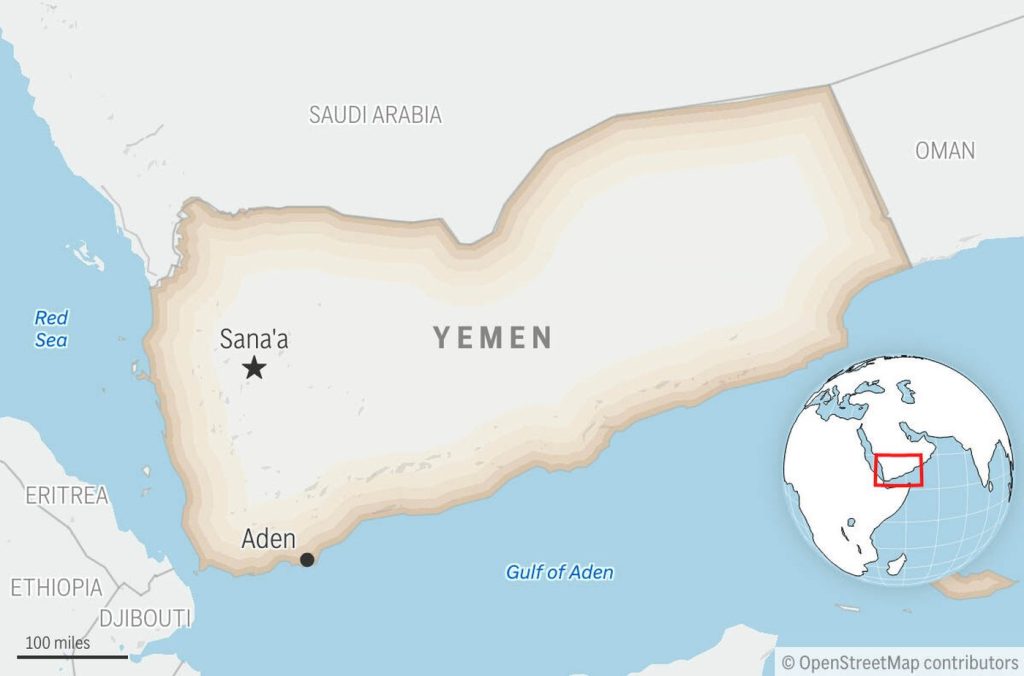
DUBAI, United Arab Emirates (AP) — On Christmas morning, Saudi Arabia issued a formal call for Emirati-backed separatists in Yemen to withdraw from the governorates of Hadramout and Mahra, regions currently under their control. This declaration appears to threaten an internal confrontation within an already fragile coalition that is actively engaged in fighting the Houthi rebels.
The statement from the Saudi Foreign Ministry directed public pressure toward the Southern Transitional Council (STC), a force historically supported by the United Arab Emirates (UAE). Saudi Arabia's military efforts in Yemen have included backing other factions, notably the National Shield Forces, in a conflict initiated against the Iranian-aligned Houthis since 2015.
In its warning, the Saudi Foreign Ministry stated that the actions of the Southern Transitional Council have led to "an unjustified escalation that harmed the interests of all segments of the Yemeni people" as well as damaging the southern cause and coalition efforts. It emphasized the need for unity among all Yemeni factions and called for restraint to avert destabilization that could lead to "undesirable consequences."
Saudi Arabia is currently seeking a return to stability through mediation efforts aimed at persuading STC forces to revert to their previous positions outside Hadramout and Mahra and to hand over military camps to the National Shield Forces. The Saudi Ministry noted that the efforts to restore the situation are ongoing.
As the Southern Transitional Council has increasingly showcased the flag of South Yemen — a region that functioned as a separate entity from 1967 until 1990 — there were calls for demonstrations in Aden supporting the political forces advocating for South Yemen’s secession. However, it remains uncertain if these demonstrations will proceed in light of the latest Saudi announcement. Aden serves as a stronghold for anti-Houthi forces in Yemen.
This escalating situation has begun to strain the bilateral relations between Saudi Arabia and the UAE. Although both countries maintain close ties and are members of the OPEC oil cartel, they have also competed for influence and business opportunities in recent years. The dynamics within the coalition are increasingly complicated as both nations back opposing factions in Yemen, while also facing a similar situation in Sudan, where they support rival forces in an ongoing conflict.
The backdrop of this confrontation is Yemen's ongoing plight, which has seen widespread destruction and a humanitarian crisis since the Houthi rebels seized the capital, Sanaa, in September 2014, forcing the internationally recognized government into exile. Although Tehran denies supplying the Houthis with arms, evidence including Iranian-manufactured weaponry found on battlefields and in ships directed toward Yemen raises questions regarding support for the rebels amidst a U.N. arms embargo.
The conflict, fueled by a Saudi-led coalition armed with U.S. weaponry and intelligence since March 2015, has resulted in over 150,000 fatalities, including combatants and civilians, exacerbating what is now regarded as one of the worst humanitarian disasters in the world.
In recent months, the Houthis have significantly disrupted maritime traffic in the Red Sea, launching attacks on numerous vessels. Some shipping routes have seen a return to activity, but many companies persist in rerouting their vessels around the Cape of Good Hope to avoid potential threats in the Red Sea and the Gulf of Aden.
The potential for further chaos in Yemen raises concerns about renewed U.S. involvement. Earlier in the year, the Biden administration conducted military strikes against Houthi positions, following an intense bombing campaign initiated during the Trump administration. The Houthis have also announced a funeral for prominent fighters, which adds another layer of complexity to the already volatile situation.
Additionally, the Houthis have ramped up threats against Saudi Arabia and captured several employees from U.N. agencies and other humanitarian organizations, alleging without corroboration that they are spies, a claim that has been strongly denied by the U.N. and other related entities.








