

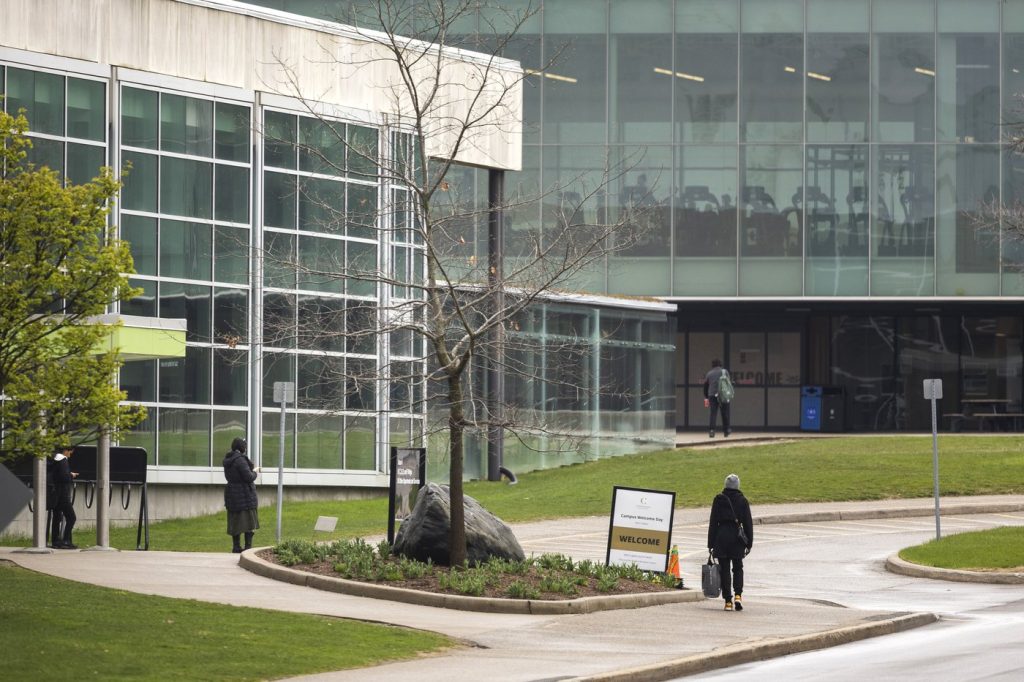
TORONTO – The tightening of Canada's international student regulations has significantly impacted higher education in Ontario, particularly affecting college students who fear that they will bear the brunt of cancelled programs and service disruptions.
Colleges throughout Ontario have announced the suspension of numerous programs due to a federal cap on international students, who typically contribute substantial tuition fees that are vital for college budgets. The federal government has recently declared plans to issue fewer international student visas in the coming years, aiming to reduce Canada’s temporary population. Specifically, the Immigration Department plans to grant up to 408,000 study permits in 2026, down from 437,000 in 2025 and 485,000 in 2024.
Toby Lew, Director of Education and Equity at the student association of George Brown Polytechnic, noted that students are apprehensive about how these changes will impact their academic experience. He remarked, “Many students were reeling from the fact that some of the programs that were highly popular amongst international students or were funded through international student funding were getting cut.” Recently, seven sought-after hospitality programs, including food and nutrition management, event planning, and hotel operations management, have been terminated.
Lew emphasized that both domestic and international students are feeling the consequences of these cuts, which he believes are a direct outcome of federal policy decisions. He stated, “That was quite an interesting experience seeing how so many students are directly affected by the cap.” Additionally, the students’ union is experiencing financial difficulties and is adjusting its services, including food support programs, to accommodate the declining enrollment at the college. “We have to really pivot our strategy in terms of what type of services and how we provide those services for our students,” Lew explained.
Despite these challenges, George Brown College did not respond to inquiries from The Canadian Press regarding these changes. The disruptions to student services were compounded by a nearly five-week strike involving full-time college support staff, which caused cancellations of in-person classes and activities at various campuses including Mohawk College in Hamilton and St. Clair College in Windsor, Ontario.
In November, members of the union representing the 10,000 support staff ratified a new three-year contract, citing job security concerns amid widespread campus closures and layoffs in the college sector. Colleges Ontario, the advocacy organization representing the 24 public colleges in Ontario, reported that around 600 programs have already been suspended, resulting in over 8,000 job losses.
The Ontario Public Service Employees Union (OPSEU), which represents college faculty and support staff, has called upon the Ontario government to intervene following Conestoga College's issuance of nearly 400 layoff notices. Of these, 181 are full-time faculty positions across several campuses, alongside 197 support staff positions. Leopold Koff, president of the local OPSEU branch, criticized the restructuring of the workforce as a move to increase job precarity, saying, “It’s inhumane; it’s union-busting.”
Jerry Thomas, president and CEO of the student union at Fanshawe College in London, Ontario, reported that the college is also undergoing cuts and restructuring, including the closure of the Office of the Ombuds due to budget constraints. This office played a crucial role in providing impartial support for students' academic and non-academic concerns. He highlighted that Fanshawe was one of the rare institutions in Ontario to offer such services on campus.
Thomas also expressed his concern over reductions in mental health resources at Fanshawe, with fewer counselors available to assist students. According to his understanding, approximately 40 programs are expected to be suspended by next year. In response, Kyle Rooks, a spokesperson for Fanshawe, denied claims of reduced student services despite the closure of the Office of the Ombuds. He stated that students still have access to similar services and assured that efforts are being made to enhance efficiency within counseling services.
Rooks confirmed that Fanshawe is making “difficult but necessary steps,” including program closures to address a projected $70-million deficit over the next two years, caused by declining international enrollment, stagnant provincial funding, and rising operational costs. He reassured that the institution aims to maintain the quality of education and support for currently enrolled students.
Thomas reflected on the overshadowing impact of the recent support workers’ strike, stating that the ramifications of the international student cap will likely unfold in the coming years. He expressed deep concern about the long-term implications of these adjustments on students' educational experiences.








