

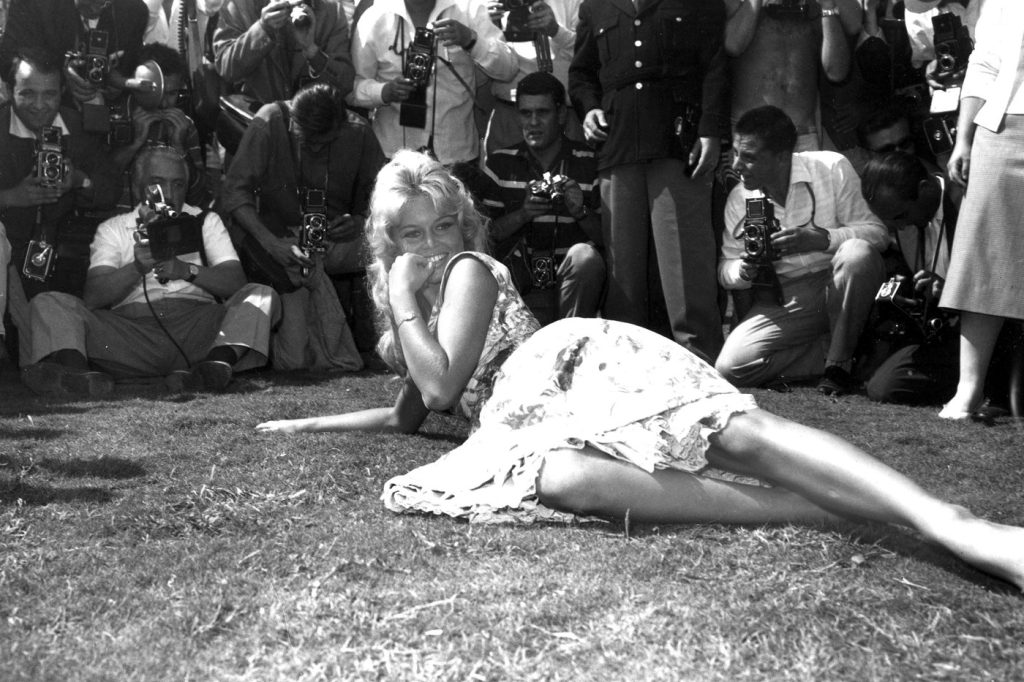
NEW YORK (AP) – Brigitte Bardot, renowned not only as a 1960s French sex symbol but also as an actor, singer, and dedicated animal welfare activist, has significantly impacted popular culture. Bardot, who passed away on Sunday in southern France, served as a muse for many artists, especially musicians, and her name has become synonymous with a type of classic beauty.
In contemporary music, Bardot is often referenced as a symbol of desire rather than just a person, representing the ideal of a bombshell. Even decades after her peak fame on screen, her name continues to echo in the work of contemporary artists, despite her controversial past. Bardot was convicted five times in French courts for inciting racial hatred and made provocative remarks about the #MeToo movement.
Bardot's legacy, albeit complex, lives on in various songs that mention her. Across genres and languages, many artists have invoked her image to convey themes of beauty and desire. The following is a selection of notable songs referencing her.
“I Shall Be Free,” by Bob Dylan (1963): This track from the iconic album The Freewheelin’ Bob Dylan features a verse where Dylan mentions Bardot alongside other cultural icons, embodying the essence of classic beauty and fame.
“Alegria, Alegria,” by Caetano Veloso (1967): A significant piece from the tropicalismo movement, it includes Bardot in a poetic line that reflects the intersection of love and political commentary in Brazilian music.
“Bonnie and Clyde,” by Serge Gainsbourg and Brigitte Bardot (1968): This duet, penned by Gainsbourg for Bardot, intertwines the romantic allure of their collaboration with themes of danger and rebellion, hearkening back to the infamous outlaw couple.
“I Think I’m Going to Kill Myself,” by Elton John (1972): In this track, John references Bardot as part of a line suggesting that her presence brings joy and allure, showcasing the timeless fascination with her persona.
“Message of Love,” by The Pretenders (1981): This song expresses the social power of Bardot, with lead singer Chrissie Hynde using her name to illustrate the overwhelming feeling of love.
“We Didn’t Start the Fire,” by Billy Joel (1989): In this historical narrative, Bardot is mentioned alongside significant events and figures, signifying her importance in the cultural landscape.
“Stratford-On-Guy,” by Liz Phair (1993): This indie rock anthem uses Bardot to describe an insular community, conveying a sense of glamour and longing amidst the mundanity of life.
“Warlocks,” by Red Hot Chili Peppers (2006): In this funk-infused track, the lead vocalist compares someone’s beauty to Bardot, evoking an image that resonates with fans of both the band and Bardot.
“Tyrant,” by Kali Uchis featuring Jorja Smith (2017): In a dreamy collaboration, the artists equate a passionate encounter with the essence of Bardot, highlighting her continued relevance in contemporary discussions of beauty and romance.
“Lacy,” by Olivia Rodrigo (2023): Here, Rodrigo expresses jealousy while likening a compelling woman to Bardot, reinforcing the notion of her as a timeless symbol of allure and desirability.
“Red Wine Supernova,” by Chappell Roan (2023): The song opens with a nod to Bardot, portraying her iconic status in the context of an addictive crush, emphasizing her impact on a new generation of artists.
This diverse range of songs illustrates Bardot’s enduring legacy and her role as an emblem of beauty and desire in music that spans decades and genres.








