

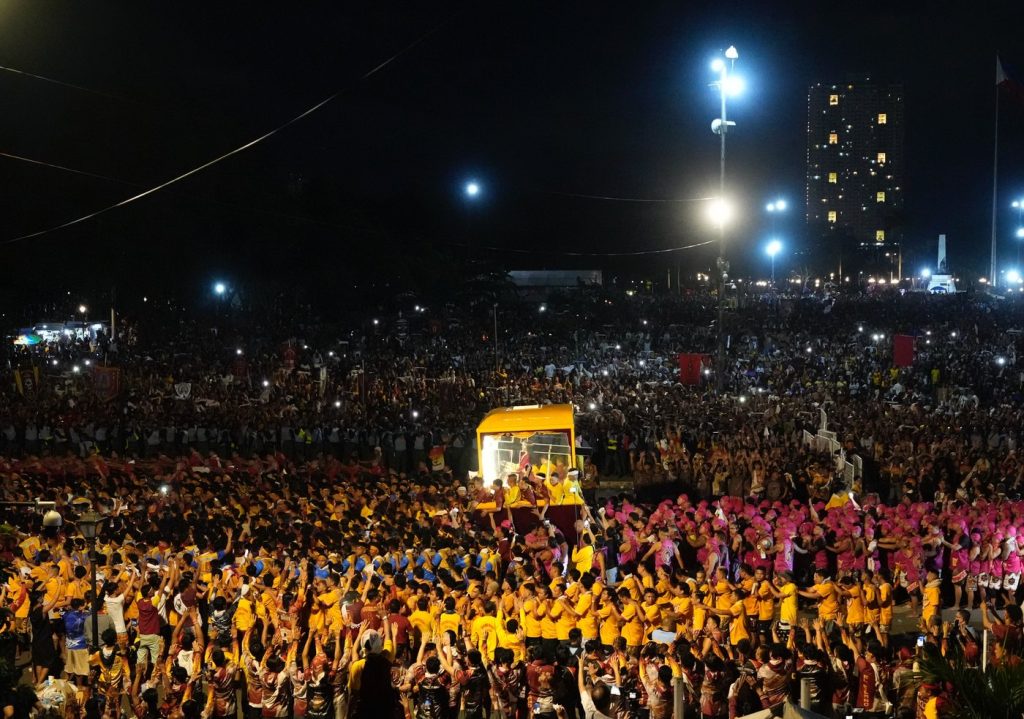
MANILA, Philippines (AP) – A large gathering of predominantly barefoot Filipino Catholics participated in the annual procession featuring a centuries-old statue of Jesus Christ in the capital city on Friday. The event was marked by expressions of outrage regarding a significant corruption scandal affecting influential legislators.
Following a midnight mass attended by tens of thousands at a seaside park in Manila, the wooden statue of Jesus the Nazarene was placed on a four-wheeled open carriage before dawn, marking the start of the procession. The event, which Manila Mayor Isko Moreno estimated could attract millions of devotees throughout the day, is recognized as one of Asia's major religious spectacles, meandering through nearly six kilometers (3.7 miles) of the city’s congested roads, near the heavily guarded presidential palace.
The authorities deployed approximately 15,000 police officers, supported by intelligence agents, to maintain order during the event. Strict regulations were set in place, including a ban on firearms and liquor, prohibitions on drones and backpacks, and jamming cellphone signals along the route. First-aid stations staffed by government and Red Cross medics were established throughout the procession.
By mid-morning, hundreds of thousands of devotees, many dressed in maroon shirts depicting the Nazarene, rushed to get close to the carriage. Numerous individuals attempted to climb aboard the carriage or threw small towels at volunteers to wipe parts of the statue, believing that the figure of the Nazarene could cure ailments and foster better health, employment opportunities, and a more enriching life.
The procession coincided with rising public outrage over a major corruption scandal that emerged last year, implicating numerous members of both the House of Representatives and the Senate. These officials reportedly received substantial kickbacks from construction companies involved in numerous substandard or nonexistent flood control projects across the archipelago, which is vulnerable to some of Asia's deadliest flash floods.
Several government engineers and construction executives are currently detained and facing corruption trials. Frustration among the populace has been mounting due to the slow progress in executing President Ferdinand Marcos Jr.'s commitment to imprison lawmakers accused of wrongdoing by last Christmas. Many participants in the procession echoed chants of "jail them now, jail them now."
The corruption issues reportedly date back years, under the administration of former President Rodrigo Duterte, and could implicate many officials and legislators known for their luxurious lifestyles, including fleets of luxury cars and private jets, which have sparked protests, some led by the dominant Roman Catholic Church.
In his homily during the mass at the Rizal Park grandstand before the procession began, Bishop Rufino Sescon denounced officials implicated in the corruption scandal who have declined to resign amidst public outcry. He criticized their refusal to step down, stating, "In our country today, there are those who refuse to step down even though they made mistakes and got caught, even though they are causing hardship to the people."
Among the participants was 62-year-old Venus Lopez, who carried a replica of the Nazarene statue. She expressed similar sentiments, urging corrupt government officials to leave power, stating, "They don’t deserve to be seated in power," and expressing her intention to pray for the removal of corrupt officials from government.
The life-size statue, adorned with a crown of thorns and a cross, is believed to have been brought from Mexico to Manila in 1606 by Spanish missionaries. Despite a shipboard fire that nearly destroyed it, the statue survived, leading many to believe its endurance throughout disasters marks it as possessing mystical powers.
This annual spectacle showcases the distinct form of Catholicism practiced in the Philippines, where folk superstitions intertwine with religious beliefs. In another tradition, dozens of Filipinos have been known to nail themselves to crosses on Good Friday, emulating Christ’s suffering to attract large crowds each year.








