

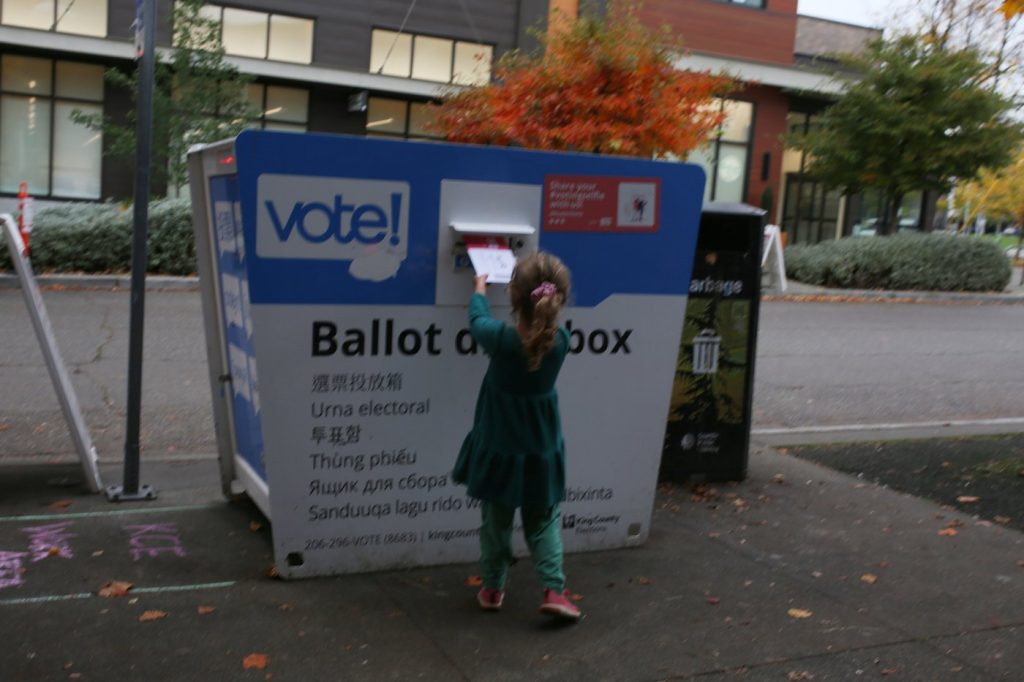
SEATTLE (AP) – A significant ruling occurred on Friday when a federal judge blocked President Donald Trump’s administration from enforcing most provisions of his executive order related to elections, particularly against the vote-by-mail states of Washington and Oregon. This decision represents a latest setback in Trump’s attempts to impose stricter voting regulations, including requirements for documentary proof of citizenship to register and mandates that all ballots must be received by Election Day.
U.S. District Judge John H. Chun, based in Seattle, deemed that these requirements overstepped the president’s authority. His ruling aligned with earlier decisions made in a Massachusetts case brought forth by 19 states and another litigation in Washington, D.C., initiated by Democratic and civil rights groups.
Washington Attorney General Nick Brown expressed that the ruling was a monumental victory for voters within Washington and Oregon, emphasizing that the ruling underlined the constitutional principle that only states and Congress hold the power to regulate elections. This statement reflects a broader sentiment among state officials against perceived overreach by federal authorities, particularly in the realm of voting rights.
The executive order, issued in March, sought to impose new stipulations requiring voters to present documentary proof of citizenship at registration and insisted that mail-in ballots be received by Election Day. Furthermore, it threatened to jeopardize federal funding for states not adhering to these directives.
Officials in both Oregon and Washington, which allow ballots to be counted as long as they are postmarked by Election Day, cautioned that enforcing such requirements could lead to the disenfranchisement of thousands of voters. For instance, during the 2024 general election, state officials in Washington counted nearly 120,000 ballots that, while received post-Election Day, were postmarked appropriately. In contrast, Oregon officials reported accepting nearly 14,000 such ballots.
Judge Chun’s ruling pointed to the violation of the separation of powers principle, a crucial element of the U.S. Constitution, which allocates the responsibility of regulating federal elections to Congress and individual states. This distinction reinforces the autonomy of state election laws and procedures, particularly in jurisdictions that have adopted innovative voting methods.
Washington and Oregon proceeded with their lawsuit independently of other states, citing their unique status as exclusively vote-by-mail jurisdictions and the specific harm they would incur from the executive order's implementation.
While Trump and other Republican leaders have campaigned on the notion that significant numbers of non-citizens are casting votes, evidence suggests that non-citizen voting is a rare occurrence. Individuals who are caught attempting to vote without legal permission face severe consequences, including felony charges and deportation.
This ruling not only protects the rights of voters in Washington and Oregon but also further delineates the boundaries of presidential power concerning electoral regulations, emphasizing the legislative authority vested in Congress and states. As states continue to navigate the complexities of voting laws and regulations, this ruling sets a precedent that may influence future discussions around electoral integrity and accessibility.








