

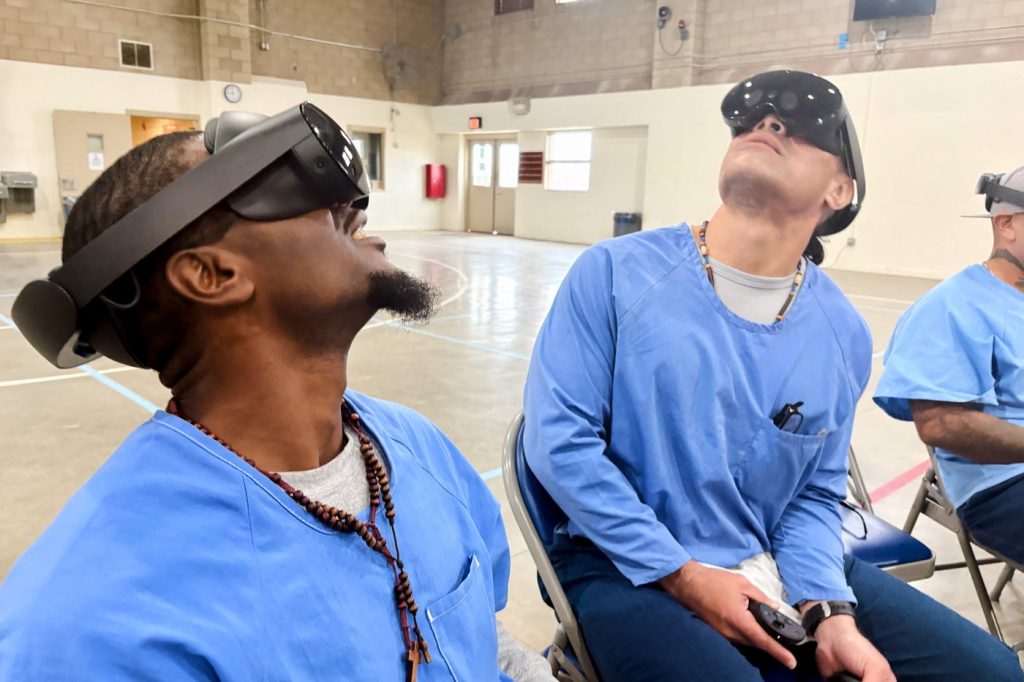
In Chowchilla, California, an innovative program is utilizing virtual reality (VR) technology to provide incarcerated individuals with unique experiences that include both travel and essential job training. Jacob Smith, an inmate at Valley State Prison who has been behind bars for two decades, detailed his first encounter with VR, reminiscing about his virtual trip to Thailand. The initiative, led by the Los Angeles-based nonprofit Creative Acts, aims to offer inmates a short escape from their current realities while equipping them with skills vital for successful reintegration into society.
During a weeklong event last month, inmates at Valley State Prison gathered in a common area, donning VR headsets to embark on various virtual journeys. These experiences ranged from exploring global hotspots like Bangkok to participating in simulated job interviews designed to prepare them for employment upon release. Smith expressed that the workforce has undergone significant changes, making the job application process daunting, especially for those who will have been incarcerated for years. He now volunteers to help his peers navigate the program and process their emotions triggered by the VR experiences.
Creative Acts founder Sabra Williams describes the VR equipment as a "hope machine." The program, which evolved from an arts initiative incorporating various forms of creative expression, highlights the disconnect many former inmates feel with modern society due to the rapid advancement of technology during their time in prison. Williams has often heard from those released that they find everyday tasks, such as using an ATM or shopping at a grocery store, bewildering.
To address this issue, Williams and her team initially created a collection of YouTube footage to simulate common activities. Eventually, they began producing tailored VR content that encompasses travel, job training, civic engagement, conflict resolution, artistic expression, and mindfulness practices, aiming to educate and inspire inmates.
Nancy La Vigne, the dean of Rutgers-Newark School of Criminal Justice, supports the application of VR in the rehabilitation process. She suggests that technology could offer vital life skills training for individuals who have been away from reality for extended periods, helping them navigate scenarios like visiting the DMV or commuting on public transportation. Additionally, research from the American Psychological Association indicates that viewing nature videos can help reduce aggression levels among inmates, further suggesting that VR could have a calming effect.
Despite the benefits, La Vigne raises concerns about accessibility, noting that not all inmates may have equal opportunities to experience VR. She emphasized that the technology cannot simply be distributed or sold in prison commissaries, highlighting the practical challenges of expanding such programs.
Richard Richard, a former inmate, first used a VR headset six years ago and now volunteers for Creative Acts. He finds it impactful to witness fellow inmates engage with the technology, reporting significant emotional breakthroughs among users as they confront past traumas and challenges. Richard believes that even though inmates are physically confined, VR allows for a mental and spiritual transcendence, providing a much-needed respite from the prison environment.
Utilizing a donation of 100 Oculus headsets from Meta, Creative Acts conducts its program thrice a year across four California prisons, catering to both general population inmates and those in solitary confinement. Youth offenders are also included in the initiative. Williams hopes to expand the Reach of this transformative program and its VR offerings statewide and nationally.
In August, the California Department of Corrections and Rehabilitation announced the introduction of VR at the California Men’s Colony in San Luis Obispo County, highlighting its potential to heal trauma and enhance emotional regulation, ultimately aiding successful reintegration.
Inmates participating in the introductory VR experiences have often been moved to tears, with many expressing astonishment at the beauty the world offers. Williams reports that many inmates have never ventured beyond their prison block, making their first virtual trip particularly poignant as they realize they are part of a broader, beautiful world beyond confinement.








