

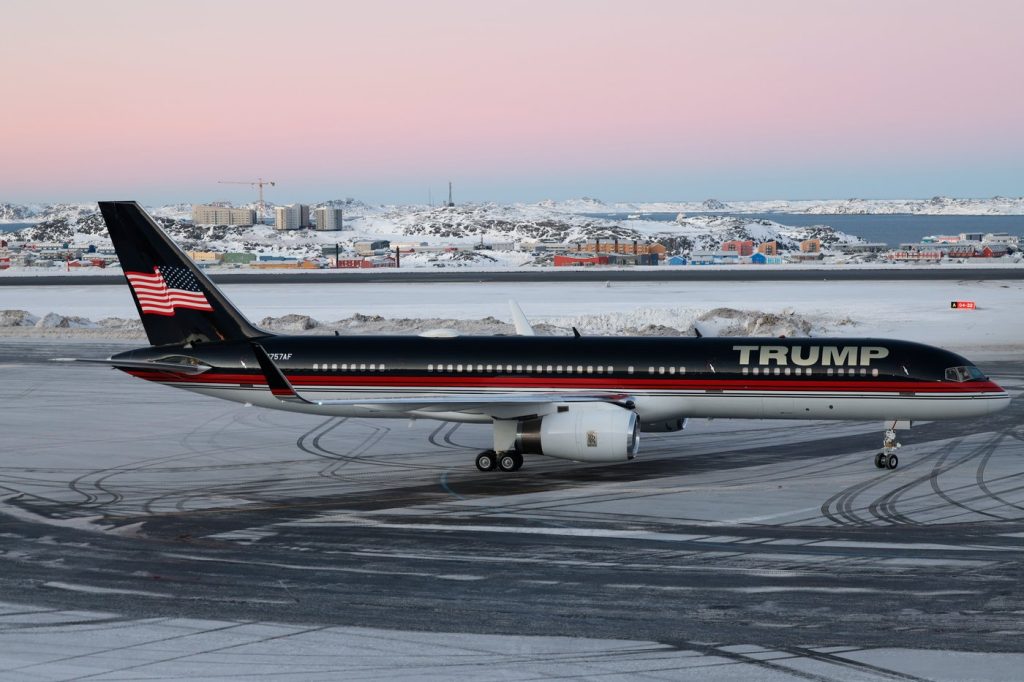
U.S. President Donald Trump has expressed interest in acquiring Greenland, a strategically located and mineral-rich island that is a semiautonomous region of NATO ally Denmark. Trump's administration has been actively considering various options, including military force, to achieve U.S. control over the island. Recent meetings among officials from Denmark, Greenland, and the United States are part of this renewed push from the White House.
During a recent interview, Trump stated he intends to do "something on Greenland, whether they like it or not," adding that if it cannot be accomplished "the easy way," the U.S. would pursue the "hard way" without detailing what that approach might entail. He articulated his desire for ownership, suggesting that it would provide elements that cannot be obtained through mere agreements.
Danish Prime Minister Mette Frederiksen has warned that a U.S. takeover of Greenland could signify the end of NATO, stressing that Greenland's population, approximately 57,000, largely opposes becoming part of the United States. The island does not have its own military, with defense responsibilities falling on Denmark, which has a significantly smaller military compared to the U.S.
The potential for military action has raised concerns regarding its impact on global relations. Experts have pointed out that such a move could plunge NATO into a crisis, fundamentally altering U.S. relationships with its allies. While Trump claims that control of Greenland is crucial for American security, experts in Arctic politics argue that the perceived military threats from Russia and China are overstated, as there is no substantial naval presence from these nations in the region.
Despite this, Trump’s administration has been vocal about the intent to acquire Greenland, with U.S. Secretary of State Marco Rubio clarifying that the administration aims to buy the island rather than resort to military intervention. Previous attempts by Danish and Greenlandic officials to communicate that the island is not for sale have gone unheeded, leaving uncertainties about the potential cost of such a purchase and the parties involved in the transaction.
Another avenue for increasing U.S. influence in Greenland could be through diplomatic channels without outright control. Analysts suggest that enhancing military cooperation, similar to the Compact of Free Association deals in the Pacific with nations like Palau and Micronesia, could allow the U.S. to exert significant influence over security matters while providing economic assistance to Greenland.
Greenlandic politician Aaja Chemnitz has expressed that the people of Greenland favor greater rights and independence but do not wish to join the United States. The idea of influence operations to persuade Greenlanders to align with U.S. interests is considered likely to be unsuccessful due to the small population and linguistic barriers. Furthermore, covert influence efforts allegedly conducted by individuals connected to Trump have raised alarms for Danish officials.
Should the U.S. succeed in acquiring Greenland, experts argue that it would come with substantial financial obligations to ensure that Greenlanders maintain access to welfare benefits currently provided through Danish citizenship. Historically, the American military presence in Greenland has been on a decline, reducing from thousands of personnel in 1945 to around 200 today at the Pituffik Space Base, which is crucial for missile detection and defense operations.
U.S. Vice President J.D. Vance has criticized Denmark for allegedly neglecting missile defense obligations in Greenland. However, analysts suggest that such criticisms may be unfounded, given the strategic importance of the Pituffik base for early missile detection. The likelihood of updating the defense agreement with Denmark is uncertain, particularly as Greenland seems to serve a strategic purpose for Trump in diversifying news coverage away from domestic issues.








