

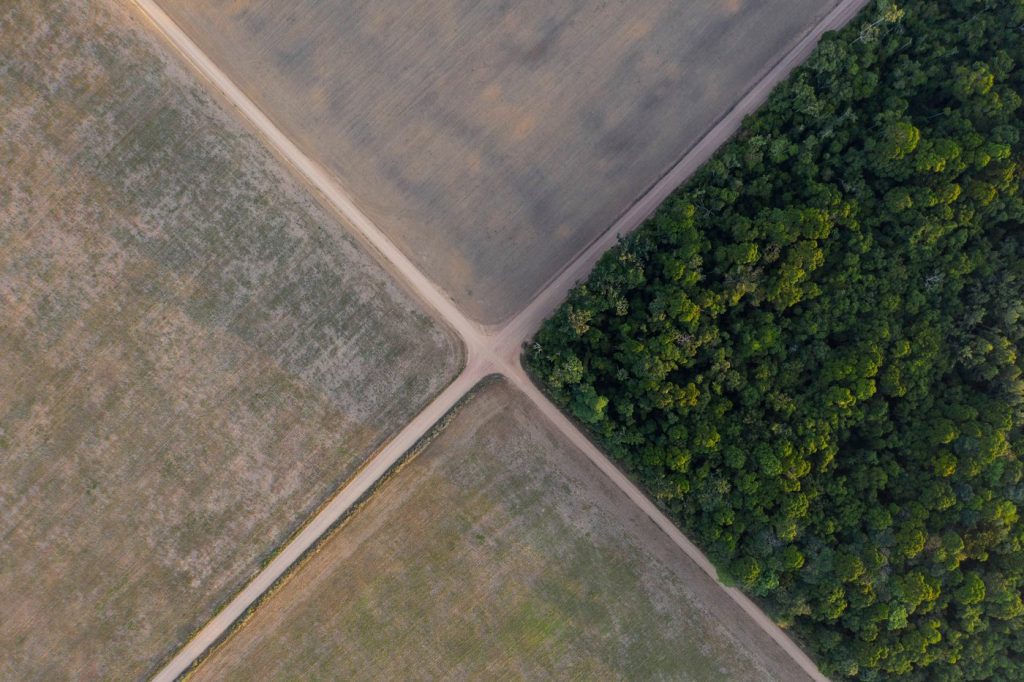
SAO PAULO (AP) – For almost two decades, Brazil's largest soy producers have assured buyers that their harvests, representing the world’s biggest production, were not cultivated on land that had been cleared from the Amazon rainforest. This commitment, known as the soy moratorium, has been acknowledged as a significant factor in reducing deforestation rates in the Amazon. However, this situation shifted dramatically this week when the largest grain traders announced their intent to withdraw from the agreement, posing a serious threat to its continuity and to President Luiz Inácio Lula da Silva’s promise to eradicate deforestation by 2030.
On Monday, the Brazilian Association of Vegetable Oil Industries (ABIOVE), which represents some of the world’s largest soy traders, declared its decision to no longer participate in the moratorium. Environmentalists and government officials responded by stating that this withdrawal essentially marks the end of the agreement, despite no official declaration of termination from any of the participants. André Lima, secretary for deforestation control and land-use planning at Brazil’s Ministry of the Environment, likened the situation to a marriage where only one partner remains committed, indicating that the moratorium's effectiveness has come to a halt.
Brazil stands as the largest soybean producer globally, contributing roughly 40% of the total global supply. In the 2024-25 season, the country produced an impressive 171.5 million metric tons, as reported by the U.S. Department of Agriculture. Key members of ABIOVE include major companies such as Cargill, Cofco International, Bunge, Amaggi, and JBS. The Amazon rainforest, the largest of its kind in the world, is crucial for climate regulation, impacting areas far beyond South America. Experts warn that significant loss of the forest could accelerate global warming and disrupt agriculture across diverse regions, including the U.S. Midwest and parts of Europe.
The moratorium was established in 2006 in response to mounting pressure from environmental groups and international buyers, serving as a voluntary commitment rather than a legally binding law. Its fundamental premise included a ban on the purchase of soy cultivated on land in the Amazon that had been cleared after July 2008. In 2016, the moratorium was renewed indefinitely, premised on the understanding that it would persist until members collectively decided it was no longer necessary. The system operated with the aid of satellite monitoring and government farm registries to identify deforestation within the Amazon biome, holding traders accountable for purchasing from any non-compliant farms.
According to Imaflora, a Brazilian agriculture and conservation group, deforestation in areas monitored by the moratorium decreased by 69% from 2009 to 2022, during which soybean crops in the Amazon rose by 344%. This increase was attributed primarily to the conversion of land previously used for cattle ranching. However, the withdrawal of key soy traders from the moratorium followed a change in legislation in the state of Mato Grosso, eliminating significant tax benefits for companies participating in the agreement as of January 1.
Mato Grosso is Brazil's leading soy-producing state, with Lucas Beber, president of the state’s Soy Producers Association, noting that companies involved in the moratorium receive approximately 4 billion reais ($743.5 million) annually in tax incentives. In response to the withdrawal, Lima from the Environment Ministry stated that while the moratorium effectively concluded a successful twenty-year cycle, companies are still prohibited from purchasing soy harvested from illegally deforested lands and will face penalties for non-compliance. He warned that the termination of such a pledge could potentially facilitate soy production on land that was legally deforested in the past.
The atmosphere among soy producers suggests they have long felt the moratorium imposes stricter regulations than existing Brazilian environmental laws. Under national guidelines, farmers in the Amazon must maintain 80% of their land while having the legal allowance to clear the remaining 20%. They argue that the moratorium unjustly targets soy farmers compared to other agricultural activities and was designed to cater primarily to European market demands, which only constitute less than 14% of Brazil's soy exports.
Experts have raised concerns that ending the soy moratorium legally could lead to increased deforestation. Ana Paula Valdiones of Observa-MT, a policy watchdog based in Mato Grosso, stated that the repeal of the moratorium would significantly compromise environmental conservation efforts. Furthermore, Greenpeace has warned that the conclusion of this commitment could unleash uncontrolled soy expansion in the Amazon, resulting in heightened deforestation rates and increased greenhouse gas emissions. Preliminary research by the nonprofit Amazon Environmental Research Institute estimates that ending the moratorium could elevate deforestation levels by as much as 30% by 2045, undermining Brazil’s environmental targets.
While Lima questioned the assumptions behind this research, he acknowledged that the growth of the soy market would likely lead to legitimate deforestation, which currently accounts for about 10% to 15% of total forest loss. But he emphasized that overall deforestation rates could still continue to decline, albeit at a slower pace, contingent on the government’s continued enforcement of environmental regulations.








