

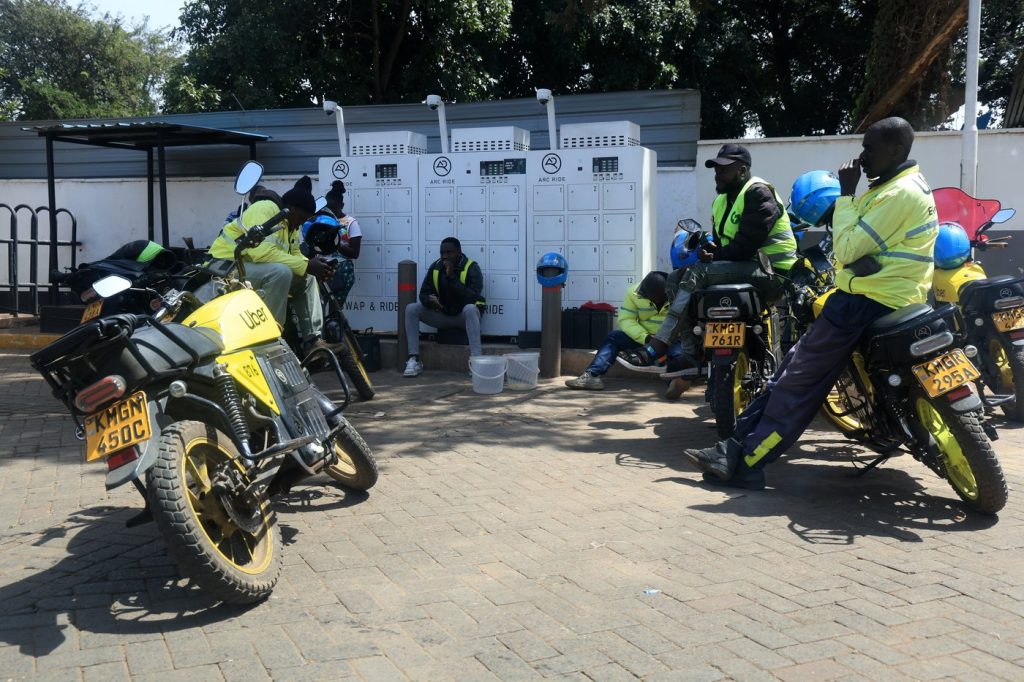
NAIROBI, Kenya - Electric motorcycles, gaining traction in Africa, have become the focus of concerns raised by podcaster and radio presenter Francis Kibe Njeri. He highlights a significant challenge faced by riders: the lack of standardized batteries that can be swapped across networks and the issue of motorcycles being remotely disabled after periods of inactivity. As electric motorcycles, or e-bikes, continue to rise in popularity on the continent, several companies, including Ampersand, ARC Ride, and Roam, have emerged to meet the growing demand.
According to Spiro, Africa’s largest e-bike firm, they have established over 1,200 battery charging and swap stations and have deployed approximately 60,000 electric motorcycles by late 2024. Njeri’s widely shared posts underscore how the remote lockout features of certain operators’ motorcycles can leave riders stranded, emphasizing the need for open and standardized battery systems. “It is not fair that we purchase the bikes, but the battery remains the property of the manufacturer,” Njeri stated.
In November, hundreds of e-bike riders took to the streets in both Nairobi and Mombasa, demanding more accessible battery-swap stations and open access across networks. Oscar Okite, a rider based in Nairobi, shared his frustration, stating, “I lose up to 500 Kenyan shillings ($4.50) every time I can’t find a swap point.” He highlighted that while e-bikes reduce operating costs, the limited availability of swap stations curtails earnings potential.
Electric motorcycles with replaceable lithium-ion batteries are more cost-effective than gas-powered bikes, with riders able to save up to 40% on daily operating expenses. However, there remain considerable disparities in the availability of swap stations. Urban areas like Nairobi boast several established networks, but access remains limited in outlying regions. Njeri stressed, “It’s great when I’m near a proper swap site, but go two or three towns away and you’re likely to be stuck.”
The landscape of Africa's electric motorcycle market is defined by vertically integrated systems, where vehicles, batteries, and charging infrastructure are designed to function exclusively within particular brands. Recent data from the Africa E-mobility Alliance indicates East Africa leads with over 89 active e-mobility companies, while Southern Africa follows with 46, and West Africa with 39. Only six companies operate in Central Africa, showing a significant concentration of e-bike companies across specific regions.
The continuous investment in e-mobility reveals East Africa attracts the most with investments totaling $207 million as of September, compared to West Africa’s $173 million and Southern Africa’s $100 million. Although battery-swap networks are essential for the e-bike business, critics argue the proprietary nature of systems limits growth potential. Eric Tsui, commercial manager at Watu Africa, pointed out that the absence of interoperability among charging and battery-swapping stations hinders the sector's expansion. “From a financing and consumer perspective, the worst-case scenario is having many swap stations that cannot serve all riders,” he stated.
Establishing shared swap networks is crucial for the growth of electric mobility; however, the high investment costs pose challenges. The construction of networks involves infrastructure, security, software systems, and maintenance, requiring millions of dollars before companies see returns. Moreover, the process of standardizing battery sizes and payment systems among various firms involves complex negotiations.
Despite these challenges, some companies are exploring changes. Spro’s CEO, Kaushik Burman, indicated openness to network sharing if done safely, while Ampersand has outlined plans to extend its battery-swap network to other motorcycle makers, marking a potential shift in the industry. “This open-platform approach means more manufacturers can enter the market without the need to build separate charging infrastructure,” commented Ampersand CEO Josh Whale, who advocates for a more inclusive model where electric bikes adhere to established safety standards.
Riders, however, underscore the urgency for these changes. Kevin Macharia, an e-bike rider in Nairobi, expressed his frustration, stating that not being able to swap batteries on time is detrimental to his business. “We went electric to earn more, not stand by the roadside,” he lamented.








