

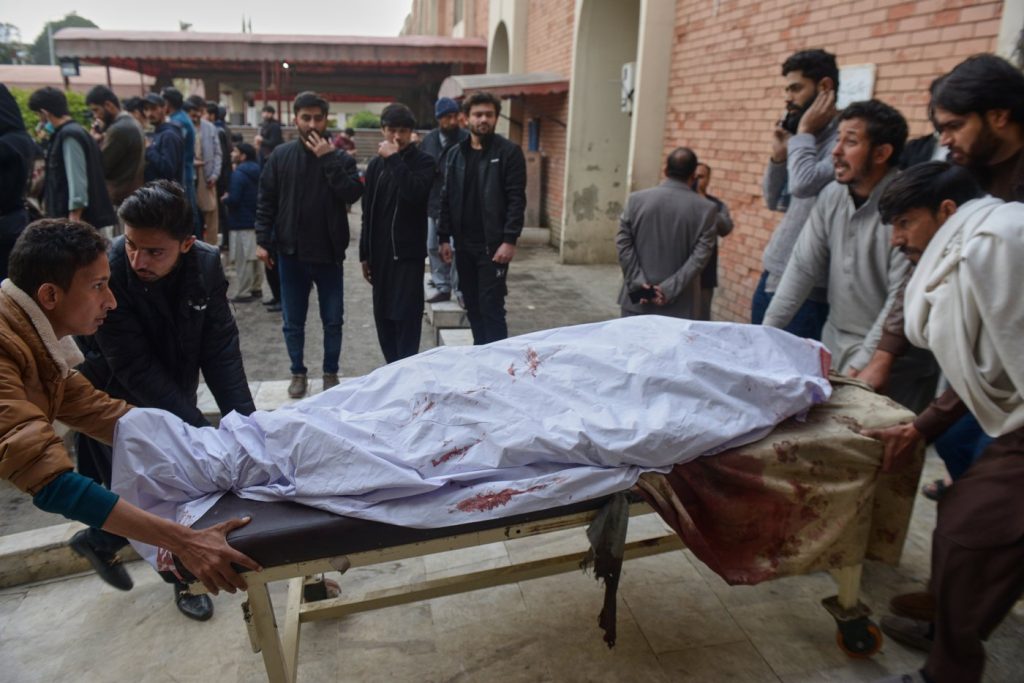
Islamabad (AP) - An affiliate of the Islamic State group has claimed responsibility for a deadly suicide bombing that occurred inside a Shiite mosque on the outskirts of Pakistan’s capital, Islamabad. The attack took place on February 6, 2026, resulting in the deaths of 31 individuals and injuring at least 169 others. Mourners gathered on Saturday at the same mosque under tight security to pay their respects to the victims.
The regional Islamic State affiliate, known as Islamic State in Pakistan, released a statement via its Amaq News Agency, detailing that the attacker engaged in gunfire with security personnel before detonating his explosive vest after gaining access to the mosque's inner gate. They described Pakistani Shiites as "legitimate targets," claiming that they act as a "human reservoir" for recruits to Shiite militias battling the Islamic State in Syria.
This suicide bombing represents the most devastating incident in Islamabad since a tragic 2008 suicide attack at the Marriott Hotel, which claimed 63 lives and wounded over 250 people. The attack on the mosque comes amid a rising trend of militant violence in Pakistan, with Prime Minister Shehbaz Sharif's administration under pressure to address security concerns. Authorities confirmed that the attacker was a Pakistani national who had recently traveled to Afghanistan.
In response to the bombing, several suspects, including family members of the bomber, were apprehended during late-night raids in Islamabad and northwestern Pakistan. A police officer lost his life during these operations. At least 2,000 mourners attended the funerals for the victims, which drew senior government officials and members of the Shiite community. Additional funerals for others who lost their lives were planned in their respective hometowns.
The Islamic State, a Sunni extremist group, has a history of targeting Pakistan's Shiite minority in an effort to incite sectarian discord in a nation where the majority adheres to Sunni Islam. The group previously claimed responsibility for another deadly attack in 2022 at a Shiite mosque in Peshawar, resulting in 56 fatalities and 194 injuries.
Pakistan's Defense Minister, Khawaja Mohammad Asif, remarked that the attack illustrated the potential for militants based in Afghanistan to conduct operations within Pakistan’s capital. His comments prompted a swift condemnation from Afghanistan's Taliban government, which described the defense minister's statements as "irresponsible." The Taliban has been accused by Pakistan of harboring militants, including factions of the Pakistani Taliban, which Kabul denies.
The attack has drawn widespread international condemnation, with responses coming from nations including the United States, Russia, and the European Union. Prime Minister Sharif expressed gratitude for the global messages of sympathy and support following the "heart-wrenching" suicide attack, emphasizing the critical role of international cooperation in Pakistan's counterterrorism initiatives and assuring that the perpetrators would be brought to justice.
Although Islamabad has historically seen fewer attacks compared to other regions of Pakistan, there has been a notable rise in militant violence of late. This surge has been largely attributed to Baloch separatists and the Tehrik-e-Taliban Pakistan (TTP), a distinct group that maintains alliances with Afghanistan's Taliban.








