

Ever since a controversial video was posted on President Donald Trump's social media account, the White House has provided a series of inconsistent responses. Initially, the administration dismissed criticism as "fake outrage," later removed the post, and assigned blame to a staff member. Despite this, Trump asserted to reporters that he did not feel he made a mistake in posting the video, claiming that no one previewed the part that portrayed former President Barack Obama and former First Lady Michelle Obama in a derogatory manner.
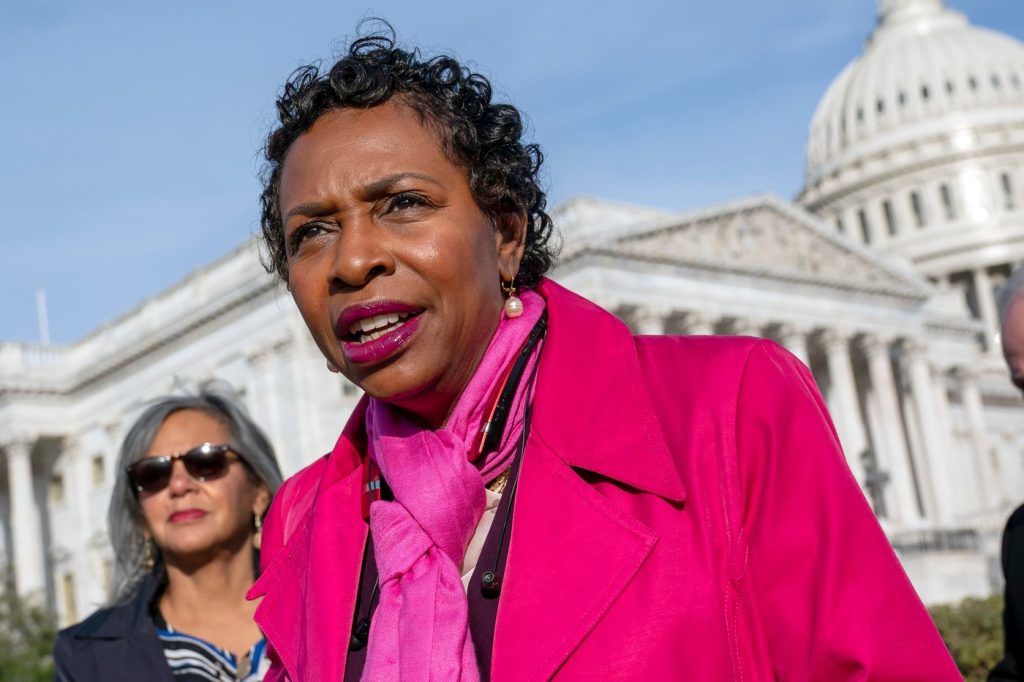
Rep. Yvette Clarke, chair of the Congressional Black Caucus and a Democrat from New York, offered an alternative viewpoint. She explained to the Associated Press that the video was clearly intended to harm and offend, stating, "It’s very clear that there was an intent to harm people, to hurt people, with this video." Clarke shared her feelings on the matter shortly after the video was deleted, and her words reflected a deep disapproval of the White House’s actions. She quoted her mother saying, "Too late. Mercy’s gone," emphasizing the gravity of the situation.
In response to an inquiry about her initial reaction to the video, Clarke did not hold back her critique. She described the current administration as "bigoted and racist," noting that the American public is frequently confronted with offensive or cruel acts from the White House. For her, this behavior has become emblematic of the administration's modus operandi.
When asked if she believed the White House's explanation of the post being a mistake made by an aide, Clarke expressed skepticism. She contended that such behavior would not occur if there wasn’t a pervasive toxic and racist atmosphere within the White House. Clarke pointed out the irony that in 2026, the United States would be celebrating significant anniversaries, including the 250th anniversary of its founding and the 100th anniversary of the commemoration of Black history, yet the White House continued to release harmful material.
Regarding communication between the White House and the Congressional Black Caucus, Clarke confirmed that there had been no outreach from the administration, and she expressed little expectation for any engagement. In her view, proactive dialogue should take place before such "juvenile antics" occur.
As Republican criticisms of Trump’s actions grew more pronounced than in previous controversies, Clarke noted that this shift might be influenced by the impending elections. She suggested that her colleagues understand the implications of aligning themselves with the racist imagery presented in the video and the potential repercussions on their political careers.
Trump's rare retraction of the post led to further speculation about his motivations. Clarke characterized the move as more about political expediency than a genuine sense of morality or accountability. Her remarks echoed sentiments of skepticism about Trump's true intentions, reinforcing her perspective that it was too late for genuine apologies to resonate.
Clarke expressed hope for a change in the administration's approach, particularly given the potential impact of the president’s actions on young Black children. She emphasized the importance of positive leadership and expressed a willingness to allow for change, though she remained skeptical about Trump's capacity to reform his behavior.
Lastly, Clarke called for a collective stand against the racism and hatred emanating from the President and his administration, emphasizing the video’s intent to harm. She highlighted that the video's prolonged availability, remaining online for 12 hours, only underscored the malice behind its posting.








