

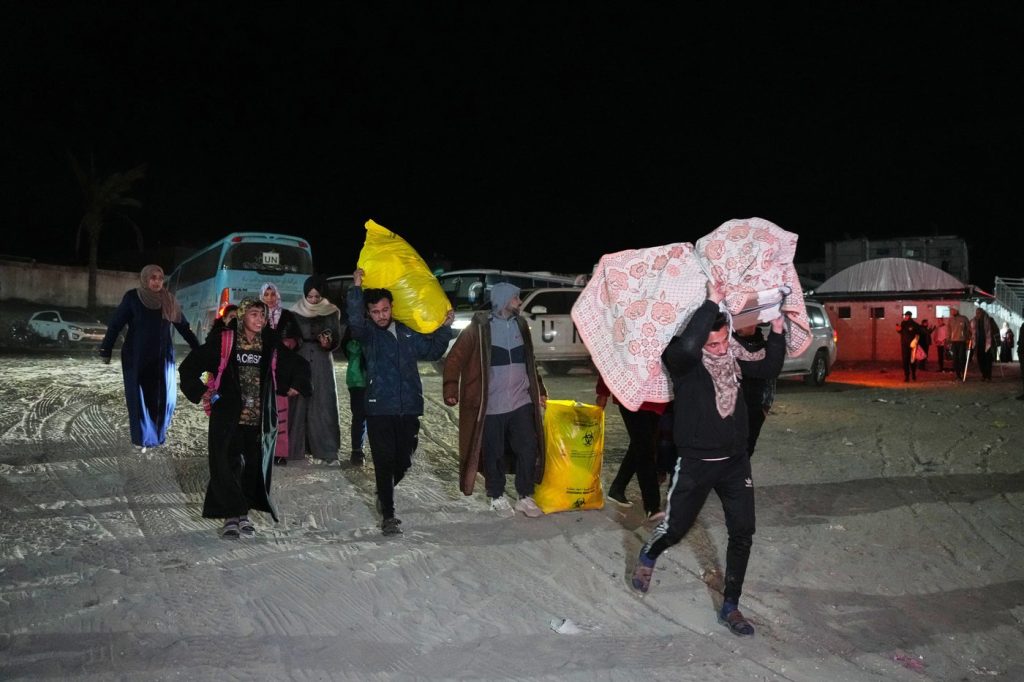
CAIRO (AP) – Palestinians from both sides of the Rafah crossing between Gaza and Egypt gathered on Sunday, seeking to cross the border for the first time since its reopening in 2024. This reopening is one of the main conditions tied to the recent U.S.-backed ceasefire. The timing coincides with Israeli Prime Minister Benjamin Netanyahu's anticipated visit to Washington, where discussions will primarily focus on Iran, as reported by his office.
Since the Rafah Crossing opened last week, following pressure from U.S. officials and the return of the last hostage held in Gaza, only a limited number of Palestinians have successfully crossed. In the first four days of its operation, the crossing allowed just 36 Palestinians in need of medical care to leave for Egypt, accompanied by 62 caregivers, according to United Nations data. Palestinian authorities estimate that nearly 20,000 individuals in Gaza are currently seeking medical treatment unavailable within the region, and those who have managed to cross have reported delays, harassment, and mistreatment by both Israeli military forces and an Israeli-backed Palestinian armed group known as Abu Shabab.
On Sunday morning, a group of Palestinian patients and their families gathered at a Red Crescent hospital in Khan Younis, located in southern Gaza, to prepare for their journey to the Rafah crossing for essential medical care abroad. Among them was Amjad Abu Jedian, who was shot by an Israeli sniper in July 2024 while working at the Bureij refugee camp. His mother, Raja Abu Jedian, recounted how he was initially scheduled to leave on the first day of the crossing's reopening but was among those denied passage when only five patients were permitted to travel that day. However, the family received confirmation from the World Health Organization that he was included in the group set to depart on Sunday.
Raja expressed her hopes for the proper treatment of the patients during their evacuation and urged the Israeli military to simplify the process. However, the Israeli defense branch responsible for overseeing Rafah's operations did not confirm the crossing's opening immediately.
In addition, reports from the Egyptian state-run Al-Qahera News indicated that a group of Palestinians also arrived on the Egyptian side of the Rafah crossing with the intention to return to Gaza. Those who made this return journey described extensive delays and invasive searches conducted by Israeli authorities and the Palestinian armed group Abu Shabab. The crossing operations are managed by a European Union mission alongside Palestinian officials, while Israel conducts its screening several kilometers away.
Initially, the Rafah crossing reopened on February 2 as part of a fragile ceasefire agreement that halted hostilities between Israel and Hamas. However, misunderstandings surrounding its reopening led to closures on Friday and Saturday. Before the escalation of conflict, the Rafah crossing was the only passageway for Palestinians not controlled by Israel. Since Israel took control over the Palestinian section of Rafah in May 2024, travel through the crossing had been incredibly restricted.
As per the newly negotiated restrictions, only 50 individuals per day would be allowed to return to Gaza, alongside 50 medical patients, who are permitted two companions each. However, the actual number of crossings in both directions has been significantly lower than anticipated.
Lidman reported from Tel Aviv, Israel. The Associated Press contributed to this report.








