

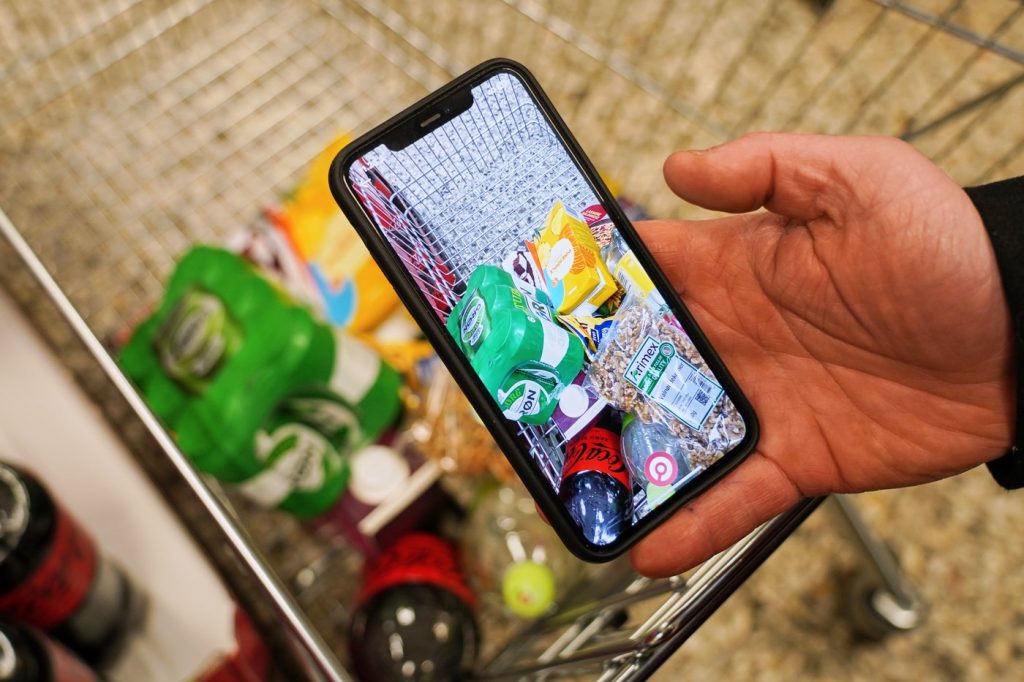
COPENHAGEN, Denmark (AP) – The developers of mobile applications aimed at helping consumers identify and boycott American products have reported a significant increase in interest in Denmark and other regions, particularly following escalating tensions linked to U.S. President Donald Trump's intentions regarding Greenland. The "Made O'Meter" app saw approximately 30,000 downloads over a three-day span during the peak of this diplomatic crisis in late January, contributing to over 100,000 downloads since its launch in March.
Created by Ian Rosenfeldt, a digital marketing professional based in Copenhagen, the app was developed after he joined a Facebook group advocating for the boycott of U.S. products. Rosenfeldt noted that many users were frustrated and unsure how to effectively boycott American goods. They found it challenging to determine the origin of products using barcode scanners, which led to the need for a more practical solution to make informed choices.
The latest iteration of the "Made O'Meter" employs artificial intelligence to recognize and analyze multiple products simultaneously, recommending similar alternatives made in Europe. Users can customize their preferences, such as opting for "No USA-owned brands" or "Only EU-based brands," with the app claiming over 95% accuracy in its results. Rosenfeldt provided a demonstration at a Copenhagen grocery store, highlighting how users can take pictures of products and obtain detailed information to guide their purchasing decisions.
Initially, after its launch, the app experienced a decline in usage, but this changed dramatically in January when Trump intensified his rhetoric regarding the acquisition of Greenland, a mineral-rich territory of Denmark. On January 23, the app reached a peak of almost 40,000 scans in one day, a stark contrast to the mere 500 daily scans recorded during the previous summer. Although usage has decreased since then, there remain around 5,000 daily scans, with over 20,000 registered users predominantly in Denmark, along with users from Germany, Spain, Italy, and even Venezuela.
Rosenfeldt expressed the emotional impact of these diplomatic tensions, saying, “It’s become much more personal,” referring to the feeling of losing an ally. Following Trump's threat to impose new tariffs on Denmark and other European nations that rejected his claims on Greenland, he later retracted these threats, stating an agreement had been reached regarding access to the territory, although details remain scarce.
The U.S. initiated technical discussions in late January to establish an Arctic security arrangement with Denmark and Greenland, affirming that sovereignty is non-negotiable. Although Rosenfeldt acknowledges that boycotts may not significantly affect the U.S. economy, he hopes to signal to supermarkets and promote greater reliance on European products.
Another Danish app, "NonUSA," surged past 100,000 downloads by early February, driven by similar sentiments. Co-creator Jonas Pipper reported over 25,000 downloads on January 21. At one point, the app recorded 526 product scans within a minute. Approximately 46,000 users are from Denmark, and around 10,000 from Germany. Pipper noted that users reported feeling a sense of empowerment through the app, as if gaining back control in the situation.
However, despite the growing popularity of these apps, their practical effectiveness is called into question. Christina Gravert, an associate professor of economics at the University of Copenhagen, pointed out that only about 1 to 3% of products on Danish grocery shelves are American, primarily comprising nuts, wines, and candy. Furthermore, there is extensive use of American technology in Denmark, such as Apple products and Microsoft software.
Gravert, an expert in behavioral economics, observed that boycott campaigns often have short-lived effects and that meaningful change typically necessitates organized efforts rather than individual consumer actions. She suggested that larger supermarket brands may consider adjusting their stock based on consumer preferences, which could influence imports.
Recent observations at a Copenhagen grocery store revealed mixed opinions among shoppers regarding the boycott. Morten Nielsen, a 68-year-old retired navy officer, expressed that while he supported the boycott, he acknowledged limited awareness of American goods, focusing primarily on well-known brands. Conversely, 63-year-old retiree Charlotte Fuglsang shared her love for America and her reservations about protesting in this manner.








