

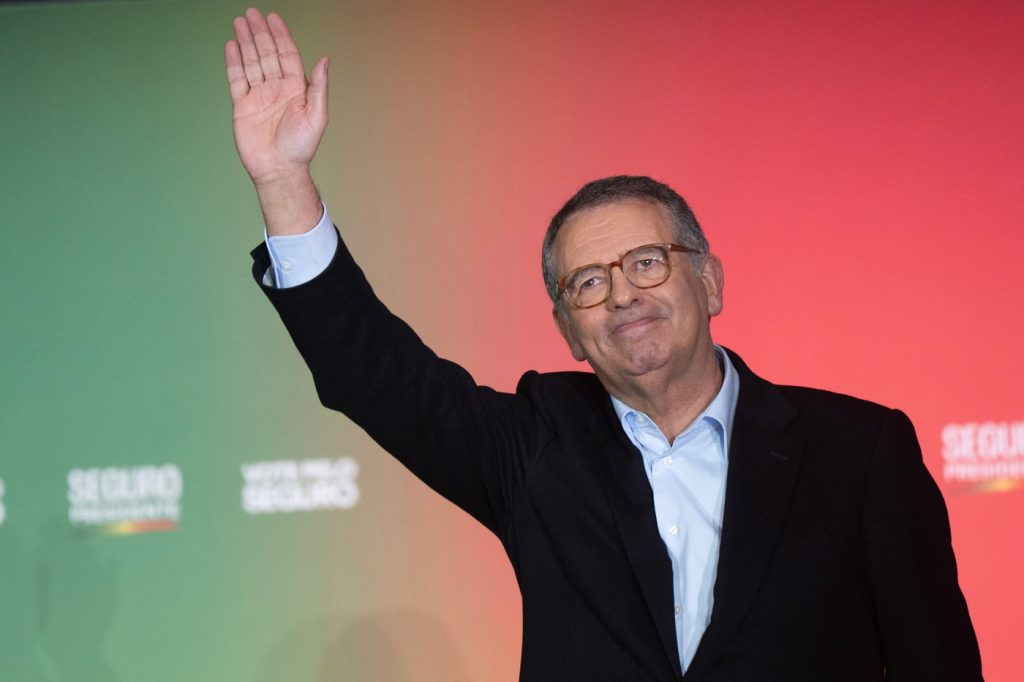
LISBON, Portugal (AP) — In the recent runoff presidential election held on Sunday, center-left Socialist candidate António José Seguro is heavily favored to defeat hard-right populist André Ventura. This election is particularly significant, as it will assess the depth of support for Ventura's confrontational political style, reflecting broader trends in recent European politics.
Recent opinion polls indicate that Seguro is expected to secure twice as many votes as Ventura in this decisive head-to-head matchup. In the initial round of voting last month, no candidate was able to achieve the required majority of over 50%. The competition marks a milestone for Ventura and his Chega (Enough) party, which has rapidly emerged as an influential force within the Portuguese political landscape amid a wider European shift towards right-wing populism.
Polling stations opened at 8 a.m. on a rather overcast day and were scheduled to close 12 hours later. Portuguese broadcasters anticipated publishing exit polls by the close of voting, with official results expected to be available by 11 p.m. (2300 GMT). Approximately 11 million Portuguese citizens were eligible to cast their votes during this election.
António José Seguro, a seasoned politician from the Socialist Party, has branded himself as a moderate candidate who seeks cooperation with Portugal's center-right minority government. He repudiates Ventura’s anti-establishment and anti-immigrant rhetoric, focusing instead on bridging divides across the political spectrum. Secure has received backing from other mainstream political figures across both the left and right, all of whom are keen to halt the rise of populism in the country.
Traditionally, the role of the Portuguese president has been largely ceremonial, positioned above everyday political disputes and responsible for mediating conflicts. Although the president lacks direct executive power, the head of state retains significant influence, with the authority to veto legislation and even dissolve parliament, triggering early elections if deemed necessary.
In May, Portugal experienced its third general election in a span of just three years, leading to significant political instability, the worst seen in decades. The need for a steady leader to navigate these turbulent waters has never been more crucial. Ventura, known for his eloquence and theatrical speaking style, has taken a combative approach to politics, rejecting compromise in favor of a more confrontational engagement. His primary focus has been on what he labels excessive immigration, a topic that has gained attention as the presence of foreign workers has increased in Portugal over recent years.
Ventura has stirred controversy with campaign advertisements proclaiming messages such as “This isn’t Bangladesh” and “Immigrants shouldn’t be allowed to live on welfare.” Despite founding his party less than seven years ago, his forceful rhetoric has resonated with a substantial segment of the electorate, propelling it to become the second-largest party in the Portuguese parliament following the general election on May 18.
In the upcoming months, the election winner will succeed the incumbent center-right President Marcelo Rebelo de Sousa, who has reached the end of his two five-year terms. The stakes are high in this election, as it represents not only a contest between two distinct political ideologies but also a larger battle over the future direction of Portuguese society.








