

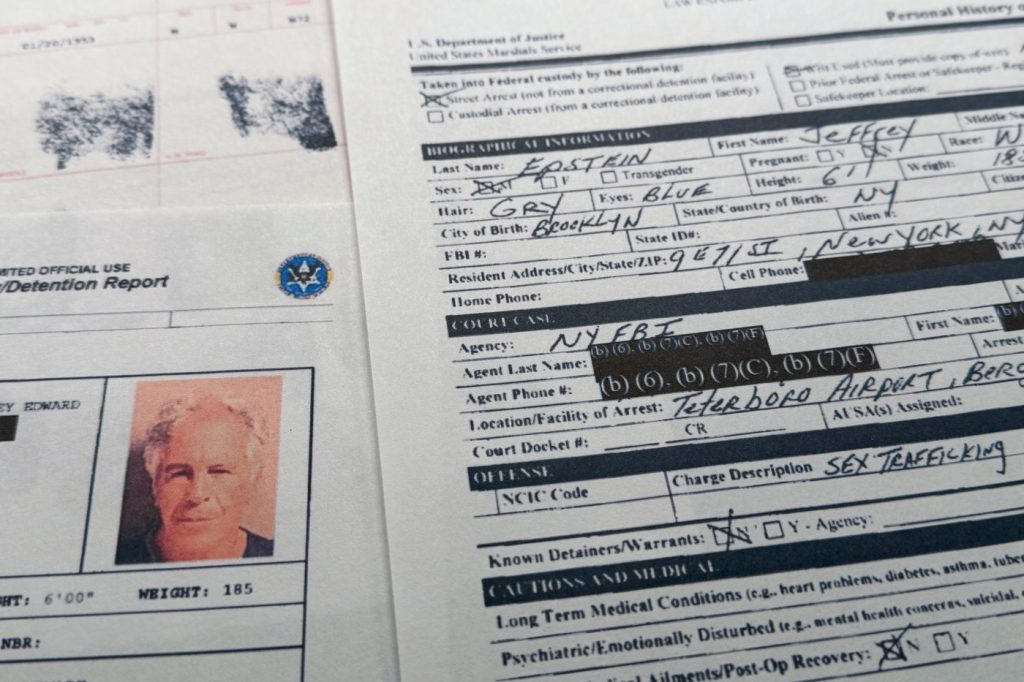
The FBI has gathered significant evidence that Jeffrey Epstein sexually abused underage girls; however, it found little proof that the financier was operating a sex trafficking ring catering to influential men. An extensive review of internal Justice Department records by the Associated Press reveals these findings, including the absence of video or photographic evidence showing other individuals involved in Epstein's criminal activities.
Documents drawn from the investigation show that videos and photographs seized from Epstein's residences in New York, Florida, and the U.S. Virgin Islands did not depict any victims being abused, according to a prosecutor's memo from 2025. Furthermore, an examination of Epstein’s financial transactions disclosed no involvement in criminal activity or connections to influential figures despite payments made to various entities. These financial records were examined by investigators and deemed unrelated to illicit actions, as noted in a 2019 internal memo.
Agents summarizing the investigation in July 2024 indicated that "four or five" alleged victims had claimed abuse by other individuals. Nonetheless, the agents determined that the evidence was insufficient to pursue federal charges against those implicated.
The investigation into Epstein's activities began in 2005 after the parents of a 14-year-old girl reported molestation at his Palm Beach residence. Then-Miami U.S. Attorney Alexander Acosta later negotiated a plea deal that allowed Epstein to plead guilty to state charges of soliciting prostitution from minors. This deal resulted in an 18-month jail sentence, with Epstein being released by mid-2009.
In 2018, renewed media interest, fueled by a series of articles from the Miami Herald regarding Epstein’s plea deal, prompted federal prosecutors to re-examine the allegations. Epstein was subsequently arrested in July 2019, but he died by suicide in his jail cell a month after his arrest.
In the ensuing year, Ghislaine Maxwell, a close associate of Epstein, was charged with recruiting several of his victims and participating in their abuse. Maxwell was convicted in 2021 and is currently serving a 20-year prison sentence.
Despite the insights gained during the investigation, the evidence gathered was insufficient to implicate any co-conspirators. Investigators scrutinized various allegations, including those made by Virginia Roberts Giuffre, who accused Epstein of facilitating sexual encounters with powerful men, including former Prince Andrew. Although Giuffre's abuse by Epstein was confirmed, inconsistencies and inaccuracies in her accounts led investigators to question the veracity of her assertions concerning other individuals.
Moreover, the investigation yielded substantial digital evidence, including numerous photographs and videos, but none of them revealed criminal activities involving Epstein's associates, as reported by then-Assistant U.S. Attorney Maurene Comey. Investigators came across numerous nude images of females but did not find any that implicated others in Epstein's illicit actions. Financial records indicated Epstein made payments to over 25 women believed to be models, yet there was no evidence of prostitution or trafficking other women to men.
Efforts to locate a so-called "client list" were fruitless. In early 2025, a query from then-FBI Deputy Director Paul Abbate indicated skepticism regarding the existence of such a list, prompting investigations that concluded no such documentation was found during the inquiry. The lack of this purported list added a layer of complexity to perceptions surrounding Epstein’s network.
In conclusion, as the Associated Press and other media organizations continue to sift through millions of pages of newly released documents under the Epstein Files Transparency Act, the findings offer both clarity and confusion surrounding Epstein’s operations and connections. Observations suggest that, despite the severity of the claims against Epstein, the hard evidence needed to support broader allegations against a network of powerful individuals remains elusive.








