

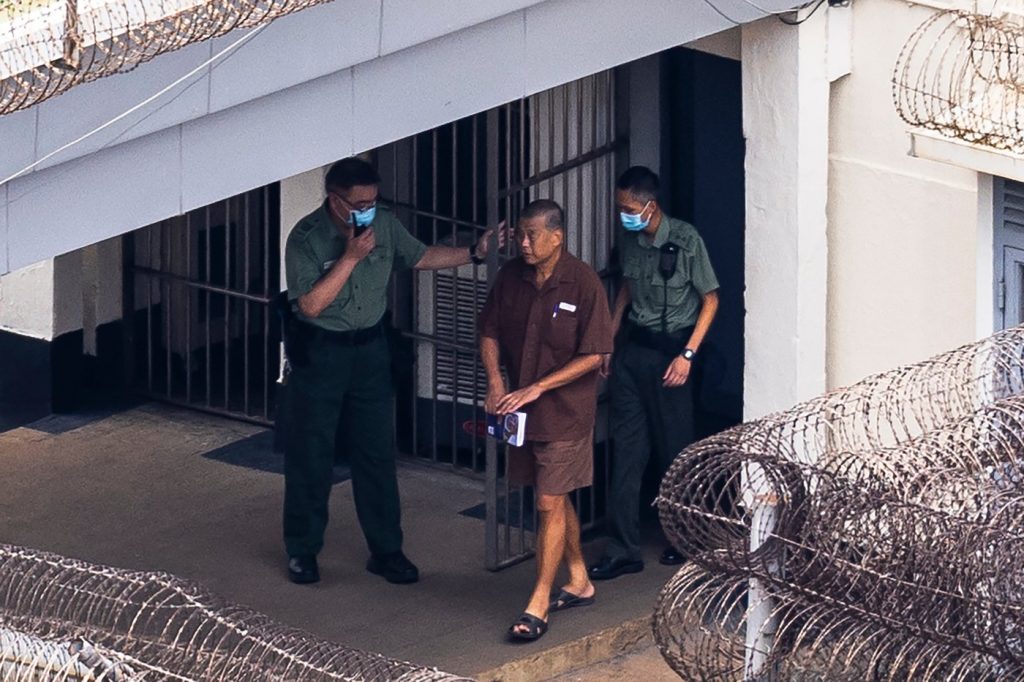
HONG KONG (AP) – The sentencing of former media mogul Jimmy Lai on Monday has sparked widespread concern from foreign governments and human rights organizations. Meanwhile, Chinese and Hong Kong authorities have defended the verdict, asserting that it reflects the spirit of the rule of law.
Jimmy Lai, a 78-year-old prominent advocate for democracy, was sentenced to 20 years in prison after being found guilty in December of conspiracy to collude with foreign powers and conspiring to publish seditious articles. His co-defendants, who accepted guilty pleas to charges related to collusion, received prison sentences ranging from six years and three months to ten years.
In response to the sentencing, various foreign governments and rights groups have called for Lai's release. However, China's Foreign Ministry has labeled Lai as a Chinese citizen, urging other nations to respect its sovereignty and the rule of law in Hong Kong.
From Australia, Foreign Minister Penny Wong expressed grave concern regarding the sentences imposed on Lai and his co-defendants, emphasizing that they adversely affect free speech in Hong Kong. She urged China to cease its suppression of freedom of expression, media, and civil society, and to repeal the controversial security law under which Lai was convicted.
In the United Kingdom, Foreign Secretary Yvette Cooper described Lai's sentencing as a politically motivated prosecution aimed at suppressing his right to freedom of expression. She voiced her apprehension for Lai's health and called for his release on humanitarian grounds to reunite him with his family, highlighting that for the 78-year-old, this amounted to a life sentence.
In Beijing, Foreign Ministry spokesperson Lin Jian defended the legal proceedings, asserting that Lai is a major figure behind anti-China activities in Hong Kong. Lin emphasized that these judicial processes constitute Hong Kong's internal affairs and requested foreign countries refrain from intervening. Furthermore, Beijing's office addressing Hong Kong affairs stated that Lai's sentence exemplifies Hong Kong's commitment to safeguarding national security and demonstrates the rule of law.
Hong Kong Chief Executive John Lee weighed in by denouncing Lai's actions as heinous, claiming he had used his media outlet, Apple Daily, to incite hatred and demand foreign sanctions against China and Hong Kong. Lee stated that Lai's 20-year prison sentence underscores the rule of law and reflects public sentiment for justice.
In Taiwan, the Mainland Affairs Council condemned the Chinese and Hong Kong governments for their human rights violations under the guise of national security, advocating for Lai's release. The council reminded Taiwanese citizens to regard Hong Kong's plight as a cautionary tale to protect their own freedoms.
Human rights organizations have also reacted strongly against the sentencing. Amnesty International characterized it as yet another grim chapter for Hong Kong. Sarah Brooks, Amnesty's deputy regional director, condemned the imprisonment of a 78-year-old man merely for exercising his rights. Similarly, Thibaut Bruttin, Director General of Reporters Without Borders, emphasized that the court's decision highlights the severe decline of press freedom in Hong Kong and reflects governmental disdain for independent journalism. Bruttin called for heightened international pressure to prevent a situation akin to the fate of Liu Xiaobo, a previous advocate for press freedom who died in prison.
The events surrounding Jimmy Lai's sentencing encapsulate the intersection of law, media freedom, and human rights in Hong Kong, raising critical questions about the future of democracy and free expression in the region.








