

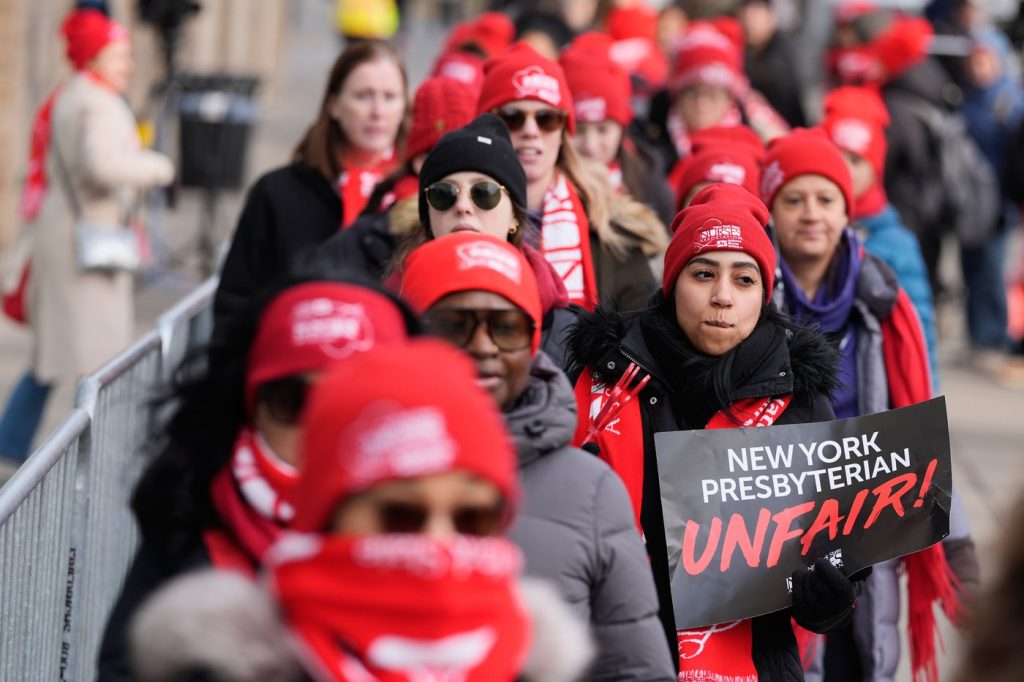
NEW YORK (AP) – Nurses and two major hospital systems in New York City have reached a tentative agreement to end a nearly monthlong strike, which began on January 12. The strike was primarily focused on addressing concerns over staffing levels, workplace safety, health insurance, and other critical issues affecting nurses' working conditions.
The agreement, announced on Monday, involves the Montefiore and Mount Sinai hospital systems, affecting approximately 10,500 of the nearly 15,000 nurses who participated in the strike. However, the nurses at NewYork Presbyterian Hospital remain on strike. The union representing the nurses indicated that members at Montefiore and Mount Sinai hospitals would vote this week on whether to ratify the contracts and return to work.
The three-year deal includes a 12% pay raise over three years and guarantees that nurses’ health benefits will remain unchanged, with no additional out-of-pocket expenses. Additionally, the agreement introduces new protections against workplace violence and offers specific protections for transgender and immigrant nurses and patients. It also incorporates safeguards against the use of artificial intelligence in healthcare settings, as per the union’s communication.
Nurses at Montefiore, Mount Sinai, and Mount Sinai Morningside and West are set to begin voting on the ratification of their contracts soon, with expectations to return to work as early as Saturday if the agreements are approved. A spokesperson for Montefiore stated that its nurses are scheduled to vote on Wednesday regarding the contract.
The hospital systems maintained that their operations were running smoothly during the strike, with complex procedures such as organ transplants and cardiac surgeries largely unaffected. Nevertheless, many medical centers had to cancel scheduled surgeries, transfer certain patients, and discharge others prior to the strike to manage their resources effectively.
Throughout the strike, staffing levels emerged as a central issue for many nurses, who expressed feeling overwhelmed by their workloads. They argued that hospital administrations were unwilling to commit to manageable staffing levels that would ensure patient safety. The hospitals contended that they had added nursing jobs in recent years to recover from the pandemic-induced staffing crisis.
Concerns surrounding workplace security gained heightened visibility following two separate incidents involving armed individuals at hospital locations. These incidents prompted the nurses’ union to advocate for additional security measures and workplace upgrades as part of their contract negotiations. The hospitals argued that the union's demands were excessive, noting that unionized nurses already earn average salaries between $162,000 and $165,000 annually, excluding benefits.
The nurses countered this assertion by highlighting that top hospital executives earn millions in salaries, a point underscored by support from public figures, including New York City Mayor Zohran Mamdani and independent U.S. Senator Bernie Sanders. They joined the strikers on the picket lines throughout the duration of the protest.
It is important to note that not every hospital within the affected systems participated in the strike, and public hospitals in the city were also not involved. Other private hospitals managed to reach last-minute agreements with the nurses' union before the strike commenced. A similar strike in early 2023 saw nurses from the Mount Sinai and Montefiore systems negotiating contracts that included a 19% salary increase over three years and provisions to enforce staffing improvements.








