

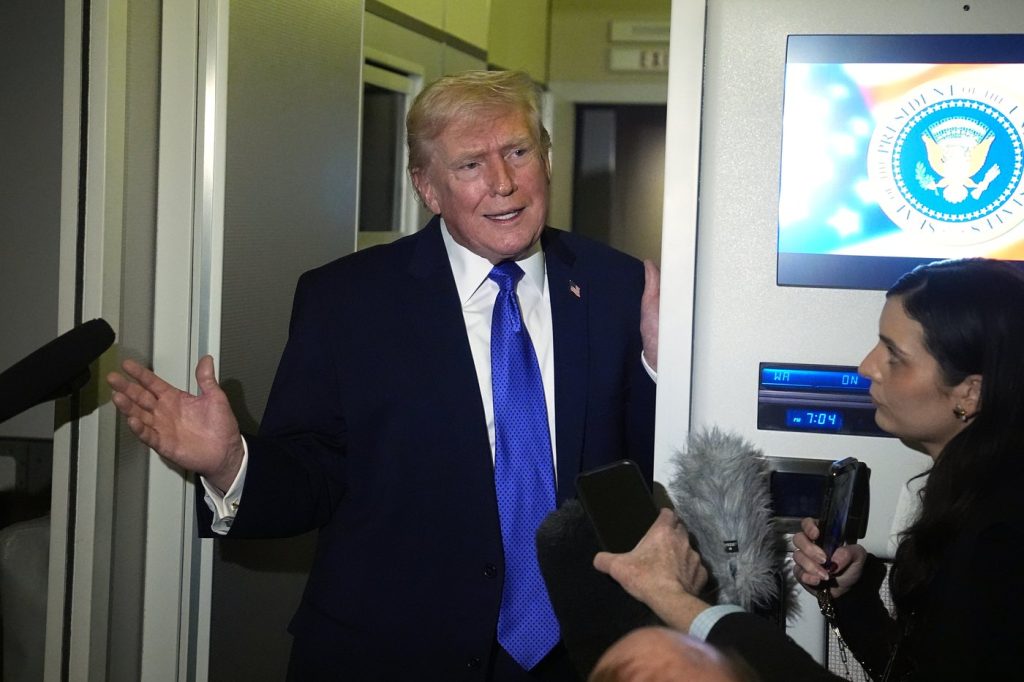
WEST PALM BEACH, Fla. — On Monday, President Donald Trump criticized Maryland Governor Wes Moore for the perceived inadequate response to a major sewage spill caused by a pipe rupture in January. This incident led to a significant amount of sewage flowing into the Potomac River, located northwest of Washington, D.C. Despite Trump's criticisms, it should be noted that the ruptured pipe falls under the jurisdiction of the District of Columbia's water authority and is federally regulated by the U.S. Environmental Protection Agency (EPA).
The damaged pipe, known as the Potomac Interceptor, was installed in the 1960s and is operated by DC Water, the utility service for the district. While spending the holiday weekend in Florida, Trump took to social media to express his concerns, stating he would not tolerate "incompetent Local 'Leadership'" turning the Potomac into a "Disaster Zone." He also claimed to have ordered federal authorities to step in and coordinate the response efforts.
In response to Trump's accusations, Ammar Moussa, a spokesperson for Governor Moore, stated that EPA officials did not attend a recent legislative hearing regarding the cleanup process. Moussa noted that the Trump administration has largely avoided its responsibilities concerning the repair and cleanup of the spill, which University of Maryland researchers estimate to be one of the largest sewage incidents in U.S. history. He emphasized that the Trump administration's claims were misguided and pointed out that federal authorities should be in charge of the situation.
DC Water CEO David L. Gadis confirmed that his organization has been collaborating with the EPA since the collapse of the Potomac Interceptor. Following an inspection of the pipeline, it was revealed that the blockage inside the collapsed sewer line is more severe than initially thought. A large rock dam about 30 feet from the rupture has been discovered, requiring treatment and delaying the response to the current spill, which is expected to take four to six more weeks for emergency repairs.
The White House has indicated that Maryland's slow coordination with federal agencies on the ruptured pipe, along with inadequate updates on the state’s water and wastewater infrastructure, has prompted Trump's criticism. As of now, the drinking water remains safe, but officials have advised the public to avoid unnecessary contact with the Potomac River, refrain from fishing, and keep pets away from the water.
This conflict between Trump and Moore is not isolated. They have frequently clashed over various issues since Trump returned to the White House in 2022. The president expressed his decision to exclude Moore and Colorado Governor Jared Polis from an upcoming White House dinner for governors, citing dissatisfaction with Moore's management of the sewage spill and safety in Maryland's largest city, Baltimore. Trump has threatened to deploy National Guard troops to address crime in the city, while Moore and other Democratic officials argue that crime rates in Baltimore have reached historic lows.
Additionally, the Trump administration has raised concerns over Moore's management of construction and infrastructure projects, particularly the rebuilding of Baltimore's Francis Scott Key Bridge, which collapsed after a massive container ship accident in March 2024. These ongoing tensions suggest a challenging dynamic between federal and state leadership, particularly regarding infrastructure and public safety.
In summary, Trump's sharp criticism of Moore amid the sewage crisis highlights ongoing conflicts between the federal government and state leaders. As the situation unfolds, both parties appear committed to addressing the substantial ecological effects of the spill, while also navigating their political disputes.








