

Here is a roundup of stories from The Canadian Press designed to bring you up to speed...
Carney Set to Announce Defence Industrial Strategy Today
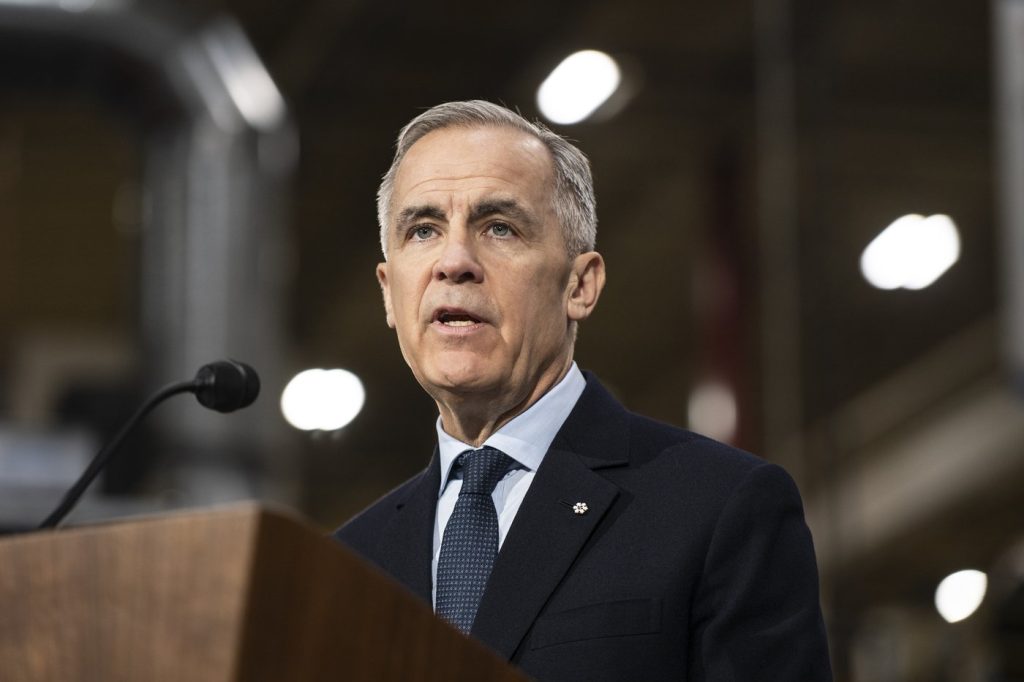
Prime Minister Mark Carney is expected to publicly unveil his new "Buy Canadian" plan for military supply and the growth of Canada’s domestic defence industry. The plan, valued at $6.6 billion, aims to prioritize the production of military equipment within Canada and increase the proportion of defence contracts awarded to Canadian firms. Additionally, it is projected to create up to 125,000 new jobs over the next decade.
The strategy seeks to nurture small and medium-sized businesses, encouraging more entities to enter the defence sector. Initially slated for release last year, the road map has faced numerous delays, ultimately leaking to an international news publication over the weekend, generating significant interest and anticipation.
Portables Arriving in Tumbler Ridge, B.C.; Safety a Priority
In Tumbler Ridge, B.C., the co-founder of an advocacy group supporting victims of mass shootings emphasizes the importance of restoring a sense of safety for students returning to school. Anita Busch, associated with the U.S.-based organization Victims First, stated, "No kid can learn in fear." The British Columbia government has announced that a series of portable classrooms will be introduced throughout the week, ensuring students can resume their education outside of the setting where a tragic shooting occurred, resulting in the loss of five students and an educator just last week.
While the return date for classes has not yet been confirmed, the government is taking steps to provide a safer learning environment for the affected students.
Calls for Canada to Respond to U.S. Fuel Blockade Against Cuba
Canada is facing increasing pressure to respond to the United States' recent expansion of restrictions on fuel imports to Cuba. For over a year, Global Affairs Canada has issued warnings about critical shortages of basic necessities—including food, medicine, and fuel—across Cuba. The situation worsened in January when the U.S. gained control over Venezuela’s oil reserves, cutting off Cuba’s primary fuel source.
Canadian airlines have halted flights to the island due to fuel shortages, while international carriers, such as Air France, have begun adding refueling stops in nearby countries. Furthermore, U.S. President Donald Trump has threatened tariffs on nations providing oil to Cuba, leading to energy rationing in the island nation. These recent developments intensify the longstanding American embargo, which Canada has consistently refrained from emulating.
Provinces Brace for Challenges Ahead of 2026 Budget Season
As Canada’s provinces prepare for the 2026 budget season, they face a new set of challenges, as well as some unexpected resilience against U.S. trade pressures. An analysis by Desjardins highlights that despite earlier pessimism regarding economic outlooks, many provinces are entering this budget cycle in a stronger position than anticipated.
Randall Bartlett, deputy chief economist at Desjardins, noted that recent developments since last fall's fiscal updates have illustrated the complex and volatile environment in which economists and policymakers operate. A year ago, the economic forecast for the provinces was significantly bleaker, largely due to President Trump's threats of tariffs and uncertainty about trade relations.
While tariffs have negatively impacted sectors like Ontario's steel industry and Quebec's aluminum manufacturing, Bartlett points out that exemptions for certain goods compliant with the Canada-U.S.-Mexico Agreement mitigated some of the adverse effects, allowing for improved economic stability.
StatCan to Release January Inflation Data
Statistics Canada is set to release new inflation data for January, with expectations that the annual inflation rate will hold steady at 2.4 percent, according to a Reuters poll of economists. However, some experts caution that this figure may rise due to changes in tax laws from the previous year that could distort annual price comparisons.
This upcoming report will be the Bank of Canada's first comprehensive look at inflation since it opted to maintain its benchmark interest rate at 2.25 percent in late January.








