

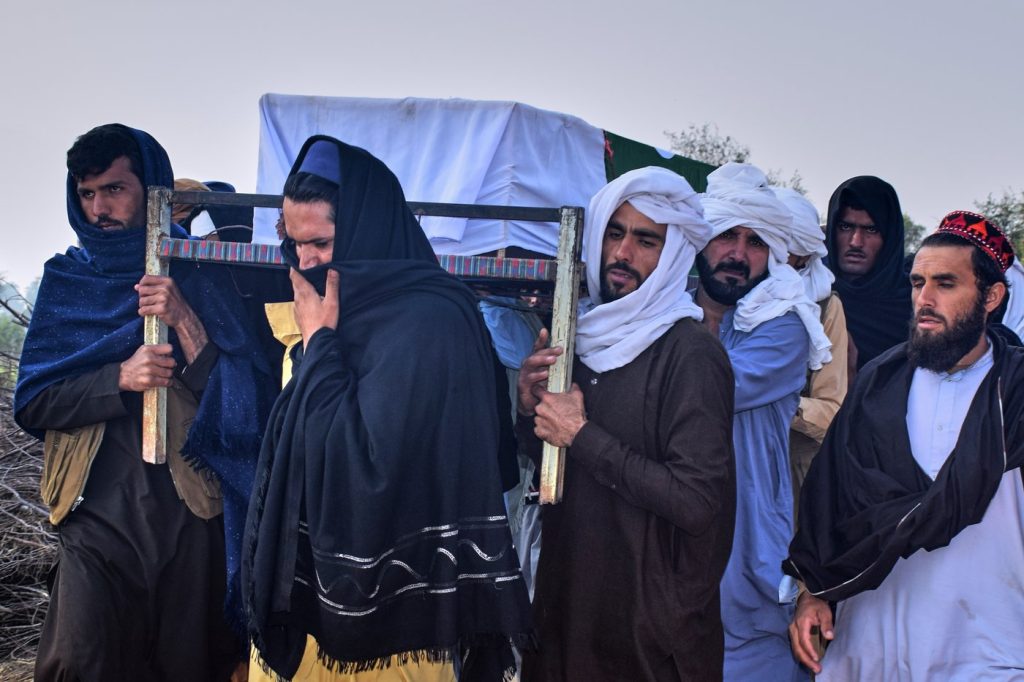
ISLAMABAD (AP) – The Pakistani military, supported by artillery and air power, launched extensive strikes on military installations within Afghanistan, resulting in the deaths of over 300 Afghan forces over a period of days, according to government officials and a spokesman. The cross-border clashes began on Thursday night after Afghanistan initiated an attack in response to a Pakistani airstrike that targeted alleged hideouts of the Tehrik-e-Taliban Pakistan (TTP) in Afghanistan on the previous Sunday, which Pakistan claims is an outlawed group. Afghanistan refuted this, stating the airstrikes resulted only in civilian casualties.
In the aftermath, Pakistan's Defense Minister Khawaja Mohammad Asif announced on Friday, "Our patience has now run out. Now it is open war between us." The situation escalated considerably, with Pakistan's Information Minister Attaullah Tarar reporting that more than 331 Afghan forces had been killed and over 500 wounded as military strikes continued across Afghan territory. He detailed significant losses for Afghanistan, including the destruction of 102 Afghan military posts and 163 tanks and armored vehicles.
Despite the Pakistani claims, there was no immediate response from Afghan authorities. On Friday, Afghan spokesperson Zabiullah Mujahid labeled the statements from Pakistan as false, asserting that the enemy's casualties were over-exaggerated. Reports from Pakistani state media indicated that the country's air force targeted critical military installations in several regions of eastern Afghanistan, further intensifying the conflict.
As tensions peaked, local residents around the Torkham border crossing have begun to flee the hostilities. Ejaz Ul Haq, an Afghan refugee near the Torkham border, expressed concerns about the rising fighting, emphasizing the struggle for basic necessities, especially during the fasting month of Ramadan.
In response to the airstrikes by Pakistan, Afghanistan's Defense Ministry confirmed on Saturday attacking Pakistani military bases in Miranshah and Spin Wam, destroying military infrastructure and inflicting heavy casualties. They accused Pakistan of targeting civilian areas, reporting the destruction of homes and civilian fatalities; however, Pakistan maintained its attacks were aimed solely at military assets.
Afghan officials have claimed that the military response to the Pakistani airstrikes serves as a powerful message underscoring Afghanistan's capacity to retaliate. Mujahid noted that the attacks on Pakistani military positions indicated that "our hands can reach their throats," criticizing Pakistan for not pursuing dialogue to resolve conflicts.
The overarching tensions stem from long-standing accusations by Pakistan of Afghanistan's government providing sanctuary to the TTP, claims that both the TTP and the Afghan Taliban government have denied. The Pakistan army spokesman, Lt. Gen. Ahmed Sharif Chaudhry, asserted that Afghanistan needed to make a critical choice: "either choose TTP or Pakistan."
The tensions along the border have escalated significantly since October, with numerous casualties reported on both sides during conflicts. Although a Qatari-mediated ceasefire was enacted in October, multiple negotiation attempts in Turkey the following month failed to yield a lasting peace agreement. Although sporadic skirmishes have occurred since, the ceasefire had generally held until recently when Pakistan's military operations resumed.
International players, including Turkey, Saudi Arabia, Qatar, and China, have actively sought to mediate the escalating situation. Qatar's Foreign Ministry revealed that its minister of state, Mohammed bin Abdulaziz Al-Khulaifi, engaged in discussions with the foreign ministers of both nations to help calm tensions.
In this fractured environment, the prospects for peace remain precarious as the cycle of retaliation continues to unfold amidst ongoing military exchanges, the consequences of which affect not just the armed forces involved but also the civilian populations caught in the crossfire.








