

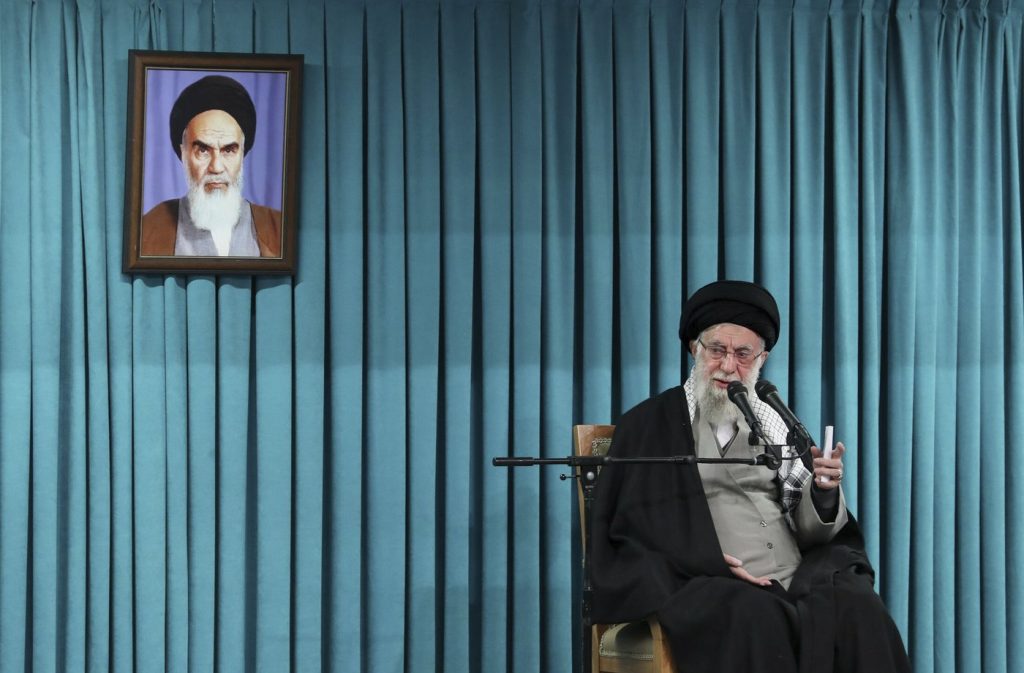
DUBAI, United Arab Emirates (AP) — Ayatollah Ali Khamenei, the supreme leader of Iran for over three decades, has died at the age of 86. His death was reported by Iranian state media following a major attack carried out by Israel and the United States, which U.S. President Donald Trump announced had resulted in Khamenei's death.
Khamenei took power after the death of Ayatollah Ruhollah Khomeini in 1989 and significantly reshaped the Islamic Republic of Iran. While Khomeini was a charismatic leader who inspired the 1979 revolution, Khamenei was seen as a more subdued figure with weaker religious credentials. His rule marked a shift from a revolutionary vision to entrenched clerical authority, ultimately expanding the Shiite clerical class and strengthening the paramilitary Revolutionary Guard.
Despite his long-standing rule, Khamenei faced mounting challenges including political repression and a struggling economy. The 2022 death of Mahsa Amini, arrested for not adhering to the hijab law, sparked mass protests that escalated into broader demonstrations against Khamenei's leadership, with many chants of “Death to Khamenei.” His regime responded with violent crackdowns, resulting in thousands of deaths during protests.
The geopolitical landscape also shifted during Khamenei’s leadership. Following Hamas’ attack on Israel on October 7, 2023, a regional conflict emerged that undermined Iran's previously constructed "Axis of Resistance." In 2024, Israel and Iran exchanged direct military strikes for the first time, which included a June 2025 Israeli assault on Iran targeting its nuclear capabilities.
Khamenei’s death highlights instability within the Islamic Republic. The 88-seat Assembly of Experts, primarily composed of hard-line clerics, is tasked with selecting his successor, yet no clear successor has emerged. Trump's comments during the attack indicated potential upheaval, urging Iranians to “take over your government." The future of the Iranian leadership may hinge on the Revolutionary Guard's willingness to maintain power through force amid widespread public discontent.
Ali Khamenei was born into a religious family in Mashhad and participated in the anti-shah movement, eventually joining the Revolutionary Council after the 1979 Islamic Revolution. He was elected Iran's president in 1981, but his term coincided with violence, including a bombing that left him partially paralyzed. Under his leadership, Iran saw significant bureaucratic expansion, with the Revolutionary Guard becoming both a military force and a major economic player.
Under Khamenei’s regime, Iran focused on supporting proxy groups, such as Hezbollah and the Houthi rebels in Yemen. These alliances allowed Iran to project power through allied militant groups rather than conventional military means. Khamenei's focus on expanding influence in the Middle East led to both direct conflict and covert operations, including alleged involvement in international terrorism.
On the nuclear front, Khamenei pursued a controversial program that drew international scrutiny and led to sanctions. Although he publicly prohibited the development of nuclear weapons, Iran advanced its nuclear capabilities, particularly after the U.S. withdrawal from the 2015 nuclear deal during Trump’s presidency, leading to heightened tensions and military strikes.
Khamenei’s governance saw a cycle of protests and crackdowns, with significant unrest emerging intermittently throughout his rule. Notable protest movements were witnessed during the presidency of Mahmoud Ahmadinejad and, more recently, linked to economic grievances. The combination of Khamenei's growing unpopularity, intensified social restrictions, and an economy in freefall set the stage for potential turmoil following his death.








