

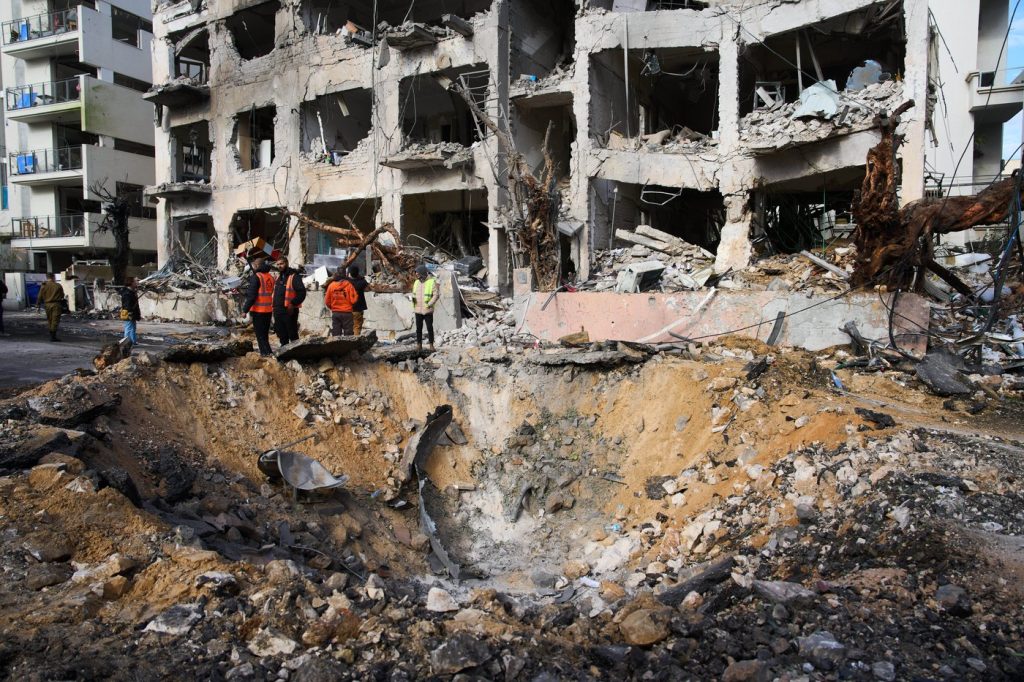
DUBAI, United Arab Emirates (AP) — An enormous explosion reverberated through Tehran, Iran’s capital, on Sunday as the Israeli military confirmed it was targeting strategic locations within the city. This came shortly after Iran launched missiles at Israel and Gulf Arab nations in retaliation for the assassination of Supreme Leader Ayatollah Ali Khamenei by the United States and Israel. The blast, which sent a significant plume of smoke into the air, was believed to have originated close to a neighborhood housing both the police headquarters and the Iranian state television.
Khamenei’s death occurred during a joint Israeli-American airstrike on his office on Saturday, leading to uncertainty regarding the future of the Islamic Republic and increasing the potential for regional instability. The Iranian Cabinet declared that such a "great crime will never go unanswered," while the paramilitary Revolutionary Guard threatened to launch its most intense offensive yet against Israeli and American interests.
In a televised speech, Iran’s parliamentary speaker, Mohammad Bagher Qalibaf, issued a strong warning, stating, "You have crossed our red line and must pay the price. We will deliver such devastating blows that you yourselves will be driven to beg." U.S. President Donald Trump also reacted, warning that retaliation would only escalate the conflict. "THEY BETTER NOT DO THAT," Trump stated emphatically on social media, adding that any aggression would be met with unprecedented force.
The strikes in Tehran were compounded by another airstrike that resulted in the deaths of high-ranking Iranian military officials, including the army chief of staff and defense minister, along with the head of the Revolutionary Guard and a top adviser to Khamenei. The rapid succession of events sparked protests, with hundreds of Shiite Muslims storming the U.S. Consulate in Karachi, Pakistan, resulting in clashes that left at least six people dead.
Oman reported that an oil tanker, the Palau-flagged Skylight, was attacked in the strategically significant Strait of Hormuz, wounding four crew members. Although it's unclear who was responsible for the attack, Iran had previously threatened shipping in the strait, particularly after the U.S. and Israeli operations commenced.
Meanwhile, in Iraq, a militant group claimed responsibility for a drone attack aimed at U.S. bases in Irbil, although it's unclear if any damage occurred. In response to the initial assaults, Iran launched missiles and drones targeting Israel and U.S. military installations in Bahrain, Kuwait, and Qatar. The Israeli military reported that many of these missiles were intercepted, but there were civilian casualties, including the death of a woman in Tel Aviv due to an Iranian missile strike.
Flight operations across the Middle East faced significant disruption, with air defense systems being activated even in Dubai. In the UAE capital, debris from intercepted missiles caused fires at the city's main port and the Burj Al Arab hotel, resulting in one fatality according to state media.
Amidst the chaos, Saudi Arabia confirmed that Iranian missiles targeted its capital; however, they were successfully intercepted. Jordan also reported dealing with numerous drones and missiles directed towards it. The unfolding conflict raised fears over potential impacts on global markets, particularly concerning oil transport through the Strait of Hormuz, where approximately one-third of global oil exports pass.
The assassination of Khamenei has plunged Iran into uncertainty, as discussions regarding succession begin. The Iranian government announced 40 days of public mourning alongside a seven-day national holiday. Eyewitness accounts in Tehran reported a mix of jubilation and mourning among citizens reacting to Khamenei’s death.
The coordinated U.S.-Israel operation reportedly took months of planning and unfolded during the Muslim holy month of Ramadan, marking a significant escalation in direct military action against Iran. Targets included Revolutionary Guard command centers and military airfields, and while U.S. officials reported minimal collateral damage on American bases, the strikes in Iran have led to numerous civilian casualties.
The geopolitical landscape remains fraught with tension as the implications of these events reverberate internationally, creating a potentially volatile situation that extends beyond the immediate conflict.








