

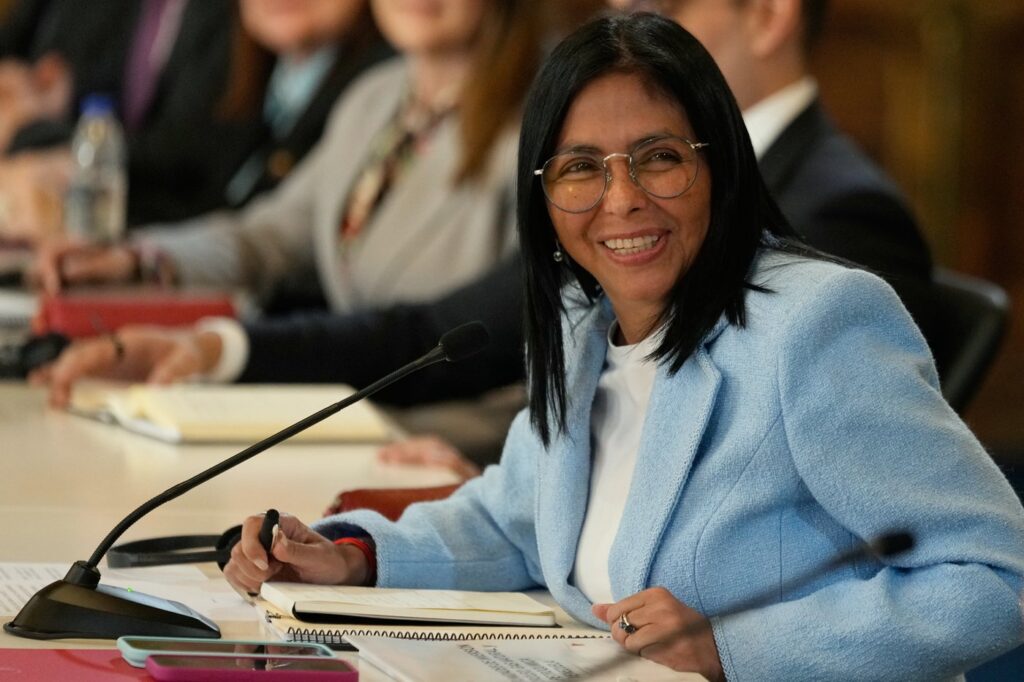
CARACAS, Venezuela (AP) — Colombian President Gustavo Petro is set to visit Venezuela for the first time on Friday, engaging in discussions with the country’s acting president, Delcy Rodríguez. The primary focus of their meeting is anticipated to revolve around border security and trade, particularly concerning the potential buying of Venezuelan gas by Colombia. This significant diplomatic dialogue comes in the wake of recent tensions, including the controversial military actions taken by the U.S. against former Venezuelan President Nicolás Maduro.
In recent developments, Colombia has expressed its interest in acquiring Venezuelan gas and sought exemptions from U.S. sanctions to facilitate investments in Venezuelan electricity and natural gas projects. One of the key proposals includes the reopening of a gas pipeline linking the two nations. The Colombian government has engaged with Venezuela's state-owned oil company, PDVSA, to discuss replacing the existing pipeline infrastructure in Colombia, signaling a potential revival of energy trade between the neighbors.
In addition to energy matters, Petro and Rodríguez are expected to address issues of illegal armed groups and drug trafficking that plague their shared border. These discussions come amid an acknowledgment that the United States is keen on promoting Colombia as a key buyer of Venezuelan gas, which could provide financial stabilizations to Venezuela under U.S. scrutiny, according to analysts from the Venezuela Observatory at the Universidad del Rosario.
The discussion about the Venezuelan economy was previously highlighted during Petro's meeting with U.S. President Donald Trump in February, although that interaction was marked by contrasts to earlier confrontational exchanges. Between accusations of drug trafficking and military threats from Trump, the two leaders now appear to share a common interest in revitalizing Venezuela’s economy by inviting foreign investments into its vast natural resources.
Petro has made it clear that he sees collaboration with Colombia as vital for the economic revitalization of Venezuela, suggesting that U.S. sanctions should be lifted to facilitate this process. However, with ongoing political instability, the future of Venezuela remains uncertain. As tensions remain high, especially in the Catatumbo region where armed groups vie for control, security concerns have been clearly articulated by Petro, who emphasizes the need for enhanced intelligence sharing to mitigate the risks of civilian casualties.
Despite aspirations to foster bilateral relationships, the history between Colombia and Venezuela has been fraught with tension, particularly as Petro refrained from recognizing Maduro as the legitimate president following the disputed elections in July 2024. While maintaining diplomatic channels, the Colombian government sees this meeting as crucial for addressing Venezuela’s ongoing political crises. Nevertheless, the effectiveness of Petro's mediation efforts may be constrained, given his term is scheduled to conclude in August 2024, leaving future interactions contingent upon the outcome of Colombia’s next presidential elections.
Initially, a meeting between Petro and Rodríguez was scheduled for last month at the border but was abruptly canceled under unspecified circumstances. Various Venezuelan NGOs had previously implored Petro to advocate for democratic principles and human rights in Venezuela, emphasizing the urgency of releasing political prisoners and halting state-sponsored persecution.
Ahead of the meetings on Friday, it remains to be seen how productive the dialogue will be and whether it can lead to significant developments in both border security and energy trade, along with the potential for political mediation in Venezuela.








