

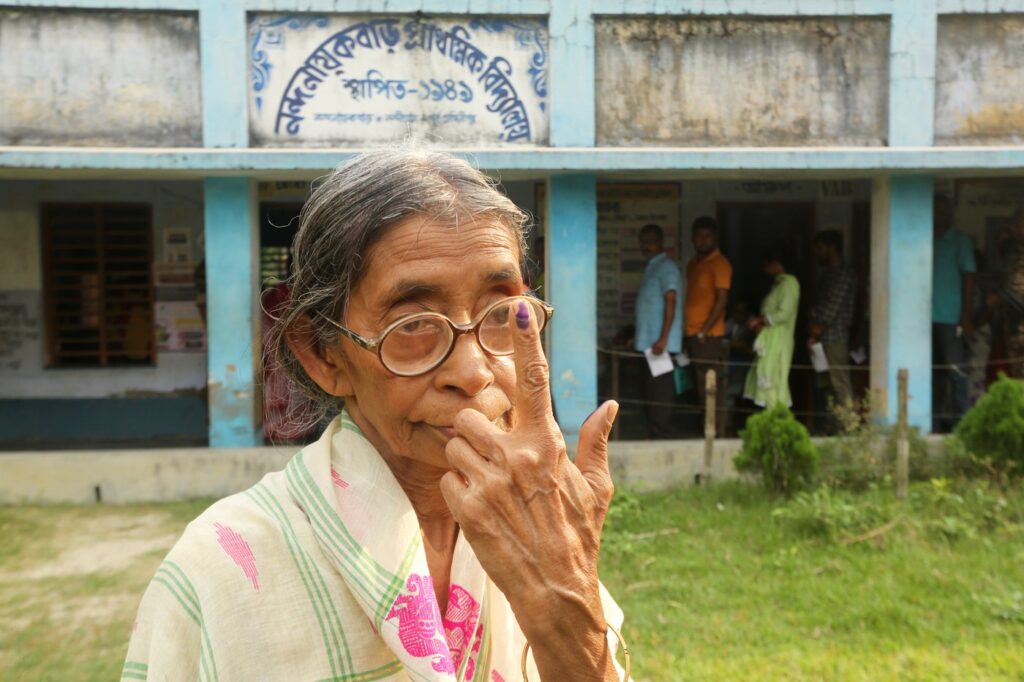
KOLKATA, India (AP) – Voting began on Thursday in one of India's most closely watched state elections amid a national voter roll revision that has sparked concerns over disenfranchisement in West Bengal. This state is notable as one of the few large regions not controlled by Prime Minister Narendra Modi's ruling Bharatiya Janata Party (BJP).
The stakes in this election are particularly high, as the BJP aims to make significant inroads in West Bengal, a state historically dominated by the opposition Trinamool Congress, led by Chief Minister Mamata Banerjee. A victory for Banerjee could further establish her status as a key opponent to Modi on the national stage.
The first phase of the election comes as part of a broader series of state elections across India, with results anticipated on May 4 for West Bengal alongside earlier polls conducted in Kerala, Assam, and the Union Territory of Puducherry. A second phase of polling is scheduled for next week, with simultaneous voting occurring in Tamil Nadu.
Significantly, the voter roll revisions conducted by the Election Commission of India have led to the removal of around 9 million names from the electoral list, which accounts for approximately 12% of the electorate. This adjustment is aimed at purging duplicate, deceased, and ineligible voters, with officials indicating that 6.3 million names were removed due to death or absence. An additional 2.7 million voters were marked as "doubtful," awaiting verification.
The impact of this roll revision has left many residents, who retained valid identification and had previously participated in elections, bewildered by their absence from the voting list. For instance, Sheikh Najrul Islam, a 53-year-old paramilitary officer involved in election duties, expressed frustration upon discovering that his name was no longer listed, despite having voted in the 2021 elections. He lamented, "The Election Commission has deputed me to ensure free and fair polls. Yet, it does not consider me a citizen of this country."
Similarly, Taibunessa Begum, a 62-year-old retired school administrator, stated her shock at finding her name deleted, despite holding a passport, pension records, and previous voter registration. "It felt like being told I don’t exist," she commented.
This situation has exacerbated fears among affected voters, with opposition leaders alleging that the deletions disproportionately impact marginalized communities, particularly Muslims. The Election Commission has refuted these claims, asserting that the revisions were essential to eliminate dead, duplicate, and fraudulent entries from the electoral rolls. In response to accusations of targeting specific demographics, BJP representatives characterized the voter roll revision as a routine administrative procedure, emphasizing that both Hindu and minority voter names had been removed in the process.
Critics, however, link the deletions to overarching political narratives propagated by Modi and other BJP leaders, who have implied that the voter list updates are a tactic aimed at undocumented migrants, particularly from Bangladesh. Such rhetoric has intensified concerns among minority communities regarding the implications of these changes on their voting rights.
Derek O’Brien, a member of the opposition Trinamool Congress, described the roll revision process as "invisible rigging," accusing the BJP of an intention to disenfranchise voters. Analysts warn that the ramifications of removing individuals from the electoral roll extend beyond mere voting rights, touching upon issues of identity, dignity, and citizenship. Political analyst Iman Kalyan Lahiri remarked that losing one’s place in the electoral roll can be profoundly unsettling, as it raises existential questions about one’s recognition within the nation.
For many disenfranchised voters like Begum, the matter is not just political but deeply personal, as it challenges their sense of belonging in India. "This is not just about politics," she stated. "It is about identity, about whether we belong to this country."








