

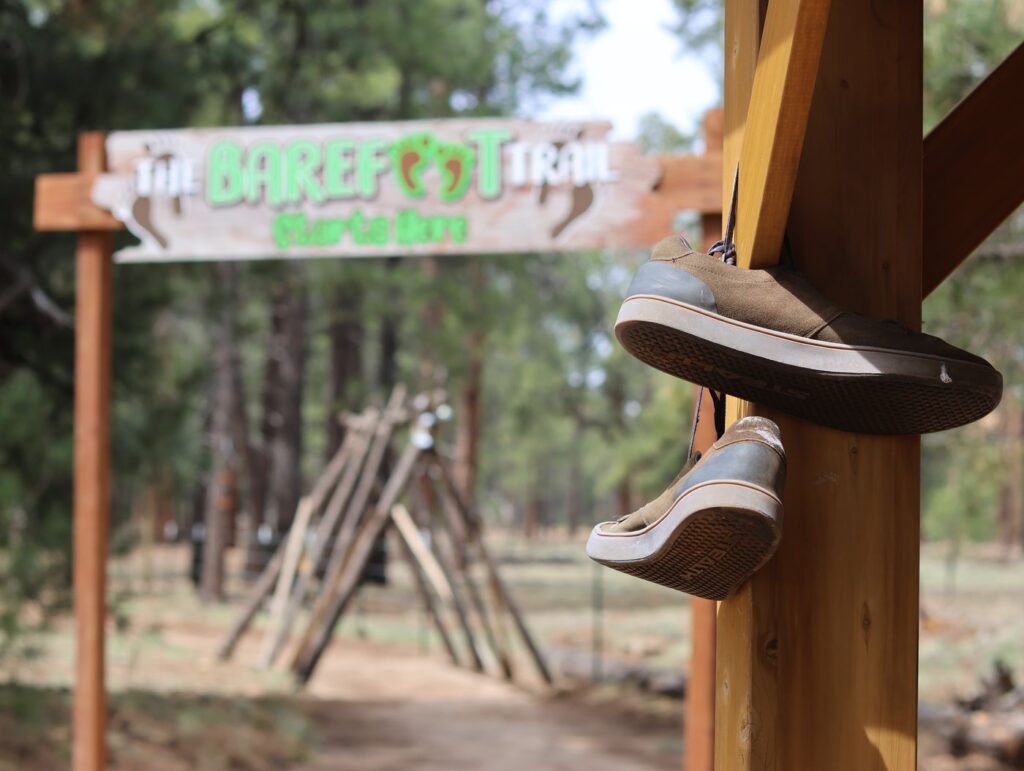
In Gutach, Germany, near the scenic Black Forest, visitors encounter waterlogged pathways that challenge their footing, while in the ponderosa forests of northern Arizona, a sandy trail features tree stumps as stepping stones. Despite being nearly 9,700 kilometers (6,000 miles) apart, both trails share a common attribute: they encourage guests to explore barefoot. Barefoot trails have emerged globally, inviting people to connect with nature through diverse sensations.
These trails offer a unique experience, allowing individuals to feel the textures of cool mud, pine needles, and even meditate in specially designed spaces. The practice of walking barefoot is gaining traction among enthusiasts and medical professionals alike due to its potential emotional benefits and contributions to foot health.
The barefoot trail concept can be traced back to the ideas of Sebastian Kneipp, a 19th-century German priest who advocated for nature exposure and bare feet for improved circulation and overall health. Kneipp's philosophy has influenced the creation of numerous paths across Europe, known as Kneipp paths, and in some parts of the United States. Asia also has reflexology trails, which utilize various natural materials to stimulate acupressure points on the feet.
Germany's Park mit allen Sinnen, or "Park with All Senses," exemplifies a broader trend towards wellness tourism in the Black Forest, which spans over 6,000 square kilometers (2,317 square miles). Visitors can enjoy fresh mountain air, thermal baths, and spa treatments incorporating local flora. The park charges admission and features a 2-kilometer (1 mile) barefoot trail designed for foot reflexology and back exercise.
In contrast, Leah Williams, the founder of The Barefoot Trail in Arizona, developed her park after experiencing a barefoot trail in Europe. The Arizona trail, also 2 kilometers long, opened two years ago near Route 66. Operating as a non-profit, Williams emphasizes the importance of integrating nature into communities. Her inspiration stems from her childhood experiences in nature and a desire to promote barefoot walking among people of all ages.
Attractive to families, The Barefoot Trail offers educational resources for schools and summer programs. Williams expresses her commitment to stewardship of the natural environment, showcasing the park as a space for local enjoyment. Visitors, regardless of whether they choose to walk barefoot or not, can engage with the sensory elements of the trail, which includes areas designed for meditation and sensory experiences.
The barefoot walking trend has gained international attention, with various countries such as Austria, Denmark, France, Switzerland, and the UK featuring their own barefoot trails. In Asia, parks in Hong Kong, Singapore, and Japan offer pebble trails for reflexology. Despite the scarcity of such trails in the U.S., Williams plans to replicate her barefoot trail concept in other locations, including a new park in Lawrence, Kansas, where they will be part of a larger commercial and residential development. Williams envisions creating safe spaces where people can interact with natural environments daily.








