

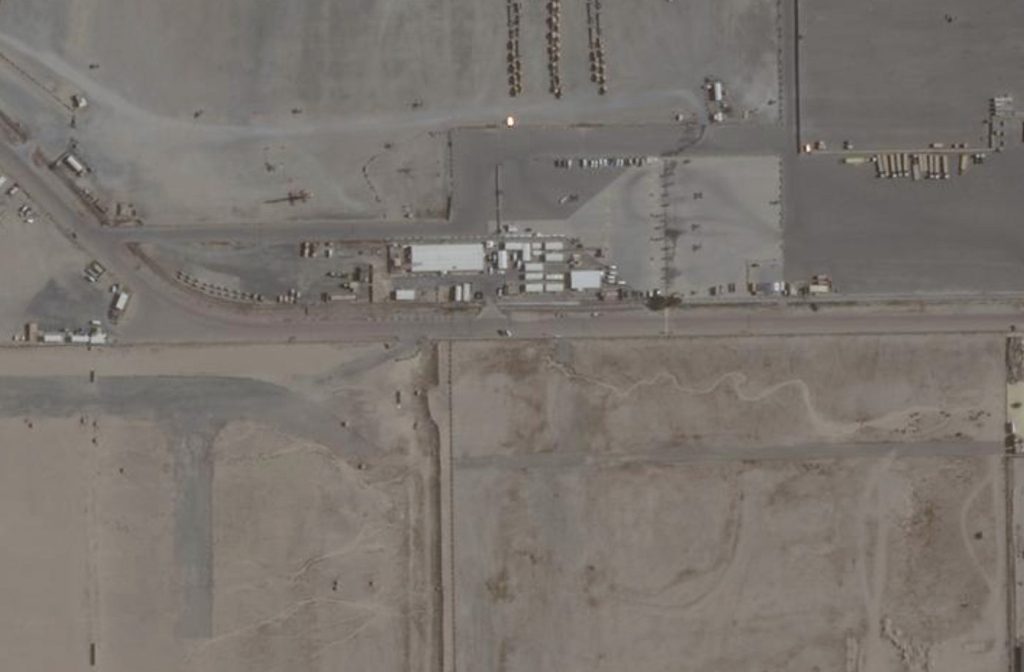
On March 1, 2026, a tragic Iranian drone strike targeted a U.S. operations center located in the bustling Port Shuaiba, Kuwait, resulting in the deaths of six American soldiers. The operations hub, described as a shipping container-style building, was reportedly without any defensive measures. This striking revelation raises serious concerns regarding the security protocols employed by the U.S. military in the region.
The center was situated a mere mile from the working commercial piers of the port and surrounded by critical infrastructure such as oil storage tanks, refineries, and a power plant. In contrast, the main Army base, Camp Arifjan, is located over ten miles south. The incident reflects a broader pattern of military strategy as U.S. forces, alongside Israel, have engaged in offensive operations against Iranian targets.
The husband of one of the deceased soldiers, Sgt. 1st Class Nicole Amor, shared that his wife’s unit had been relocated off-base to this vulnerable center just one week before the strike. This move was purportedly made out of fear that their original base would be targeted. Joey Amor reported that the decision was rooted in concerns for the safety of the soldiers, leading to a strategy to distribute them across smaller, separated locations.
The Pentagon confirmed the nature of the incident, revealing that the six soldiers were killed as a projectile bypassed existing air defenses at the operations center. Defense Secretary Pete Hegseth indicated that this center was officially classified as a “tactical operations center.” Following the attack, satellite imagery released depicts the significant destruction at the site, with visible damage and smoke rising from the wreckage.
Criticism surrounding the security practices of the U.S. military has intensified in light of this incident, especially with the Pentagon struggling to justify the lack of effective defense at such a strategically critical location. Public statements made by Pentagon officials claimed that the facility was fortified with 6-foot walls and asserted that the United States maintains a robust air defense capability over the Middle East. However, specific details regarding the types and capabilities of air defense systems in proximity to the command center remain unaddressed by military representatives.
As investigations continue into the circumstances surrounding the drone strike, U.S. Central Command has refrained from providing in-depth comments about the event. This incident not only highlights vulnerabilities in military operations but also reflects ongoing tensions between the U.S. and Iran, raising the possibility of further American casualties in the escalating conflict.
Ultimately, the complexity of military engagements in such sensitive areas underscores the critical need for enhanced protective measures and strategic planning, particularly in regions where tensions remain high and the threat of retaliatory strikes is ever-present.








