

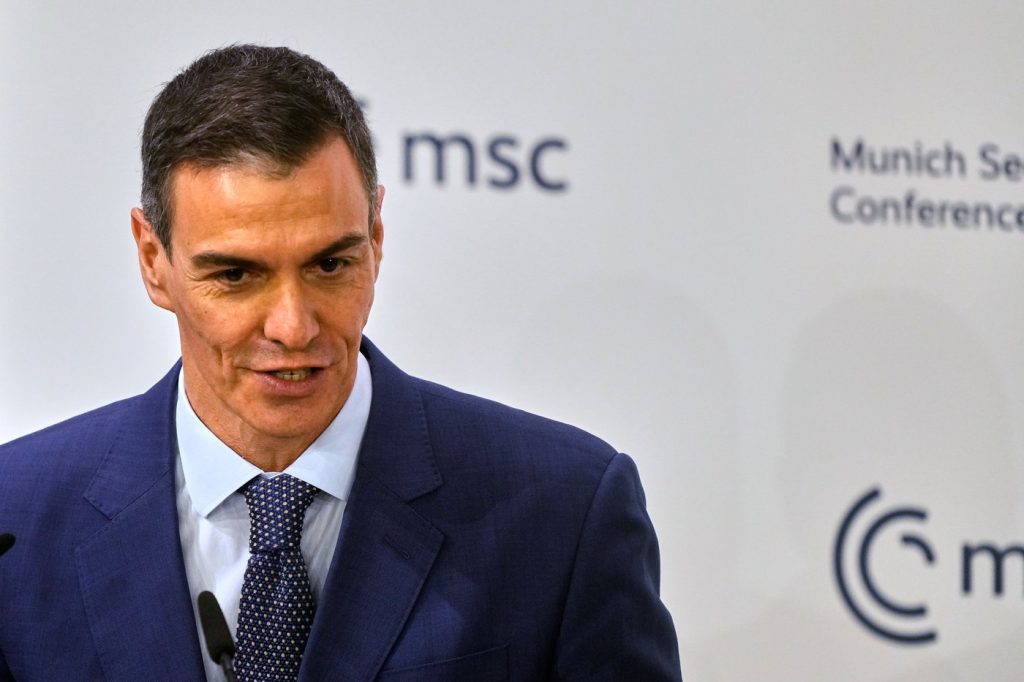
On Wednesday, Spain's Prime Minister Pedro Sánchez publicly criticized the ongoing military actions taken by the United States and Israel in Iran, maintaining a strong stance against new trade threats issued by U.S. President Donald Trump. Sánchez cautioned that the situation in Iran could be equated to “playing Russian roulette” with millions of lives at stake, emphasizing the moral implications of the military intervention.
On Tuesday, President Trump threatened to terminate U.S. trade relations with Spain because of its refusal to allow the United States to utilize joint military bases within its territory for operations against Iran. Despite this pressure, Sánchez asserted, “We are not going to be complicit in something that is bad for the world and is also contrary to our values and interests, just out of fear of reprisals from someone,” during a televised address. His comments reflected Spain's commitment to its principles in the face of external pressures.
The feasibility of Trump's threats to cut off trade with Spain remains uncertain, given that Spain is a member of the European Union, which manages trade negotiations collectively for all its 27 member nations. Trump, however, expressed a determination to utilize two military bases in southern Spain that are jointly operated but remain under Spanish control. He stated, “We could just fly in and use it. Nobody's going to tell us not to use it, but we don't have to,” signaling a willingness to act independently despite diplomatic protocols.
This latest warning from the Trump administration is part of a pattern where the U.S. President has threatened tariffs or trade embargoes as tools for political leverage. Following a recent ruling by the U.S. Supreme Court that invalidated Trump's sweeping global tariffs, which were deemed unconstitutional, Trump has asserted that he retains the authority to impose comprehensive embargoes on nations he selects.
Spain's firm stance on the Iran conflict is the most recent chapter in its complicated relationship with the Trump administration, which has been marked by criticism of Israel's military actions as well. Sánchez has condemned the U.S. and Israeli military actions against Iran, describing them as “unjustifiable” and “dangerous.” Drawing parallels with the Iraq War, Sánchez highlighted the long-term consequences of such military interventions, particularly in fostering extremist ideologies.
In a succinct summation of his government's position on military action, Sánchez concluded his address with the phrase, “No to the war,” underscoring Spain’s diplomatic resistance and its commitment to global peace. As tensions continue to rise in the Middle East, Sánchez's rhetoric serves as a reminder of the broader international implications of military interventions and the responsibilities of world leaders to advocate for peace.








