

DUBAI, United Arab Emirates (AP) — The ongoing conflict in the Middle East has escalated as Bahrain accused Iran of attacking a desalination plant on Sunday. This incident raised concerns that civilian infrastructure might be increasingly targeted in the ongoing nine-day-old war. Iran's President Masoud Pezeshkian responded with a vow to expand attacks across the region, amidst intense U.S. airstrikes and military responses from Israel.
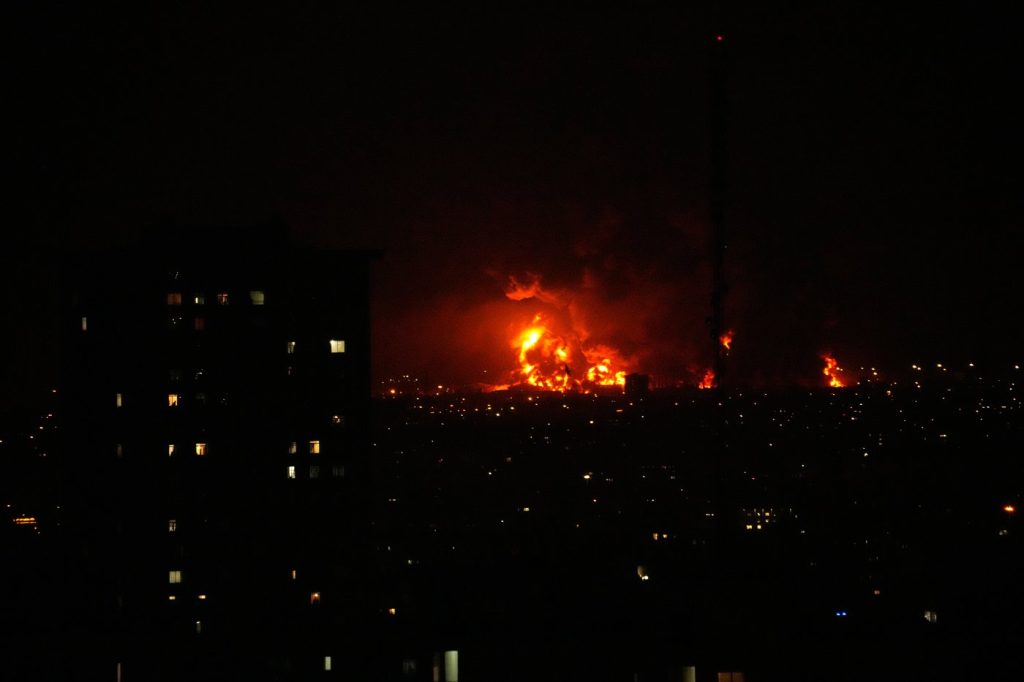
On the same day, Israeli airstrikes hit an oil facility near Tehran, engulfing the capital in smoke. As tensions rose, U.S. President Donald Trump and Israeli Prime Minister Benjamin Netanyahu reaffirmed their commitment to continue military operations, adding to the anxiety in the region. As the conflict, which began on February 28, escalated, it has resulted in at least 1,230 fatalities in Iran, over 300 in Lebanon, and around a dozen in Israel, with six U.S. troops also reported killed.
The war began following joint U.S.-Israeli strikes against Iran, significantly affecting global markets, disrupting air travel, and weakening Iran's leadership amid multiple airstrikes from both Israel and the U.S. Pezeshkian's tone shifted dramatically on Sunday as he indicated that Iran would not be submissive to outside pressures. "When we are attacked, we have no choice but to respond," he stated, reaffirming Iran’s resilience against external aggression.
Despite previously expressing regret over Iranian strikes affecting neighboring Gulf states, Pezeshkian's remarks were contradicted by hard-liners within his leadership council. Judiciary chief Gholam Hossein Mohseni-Ejei declared that certain geographic areas were under enemy control, indicating that Iran’s military actions would continue unabated.
Iran's infrastructure has faced considerable damage, as evidenced by the claims from both Iran and Bahrain about the targeting of civilian installations. Bahrain reported that Iranian strikes had damaged one of its desalination plants, although it did not detail whether the water supply had been interrupted. Concurrently, Iran’s Foreign Minister Abbas Araghchi noted that a U.S. airstrike had previously harmed an Iranian desalination facility, impacting water supplies to around 30 villages.
Evidence of the conflict's intensity was also present in Tehran, where Israel's overnight strikes hit oil storage tankers and a petroleum transfer terminal, resulting in the deaths of four individuals. The smoke from the fires led local officials to urge residents to wear masks due to increased air pollution, while Israel claimed that these oil depots were utilized by Iranian military operations.
Meanwhile, in Lebanon, the Israeli military resumed its offensive early Sunday, resulting in 12 additional casualties and pushing the death rate there to over 300. Israel had ordered evacuations in several areas, particularly around Beirut, as its military aimed to dismantle Iran-supported Hezbollah. This renewed aggression comes after Hezbollah had targeted northern Israel with rocket fire, leading to heightened military actions from Israel.
The Israeli military's offensive represents the most significant assault since a ceasefire in November 2024, with continuing airstrikes focused primarily on southern Lebanon, as Israel claims Hezbollah was in the process of rebuilding its positions. Hezbollah’s leadership has stated that their patience had worn thin due to ongoing Israeli attacks, leaving them no choice but to retaliate.
This rapidly developing situation signifies a potential widening of the conflict, with implications for not only regional stability but also international relations and security. The ongoing exchanges of fire and military operations underline the volatility of the area as actors within Iran and its neighbors engage in a complex and dangerous power struggle.








